Story analysis Normal Reading Fiction Worksheets for Ages 3-9
4 filtered results
-
From - To
Unlock your child's storytelling potential with our engaging Story Analysis Normal Reading Fiction Worksheets designed for ages 3-9. These interactive worksheets encourage young learners to explore the essential components of fiction, including characters, settings, and plot development. Tailored to foster critical thinking and comprehension skills, our resources promote creativity and active engagement with literature. Each worksheet is designed to challenge your child's understanding while making learning fun! Ideal for home or classroom use, these story analysis activities support literacy development and inspire a love for reading. Perfect for early grade teachers and parents alike, watch your child's imagination flourish with each page!
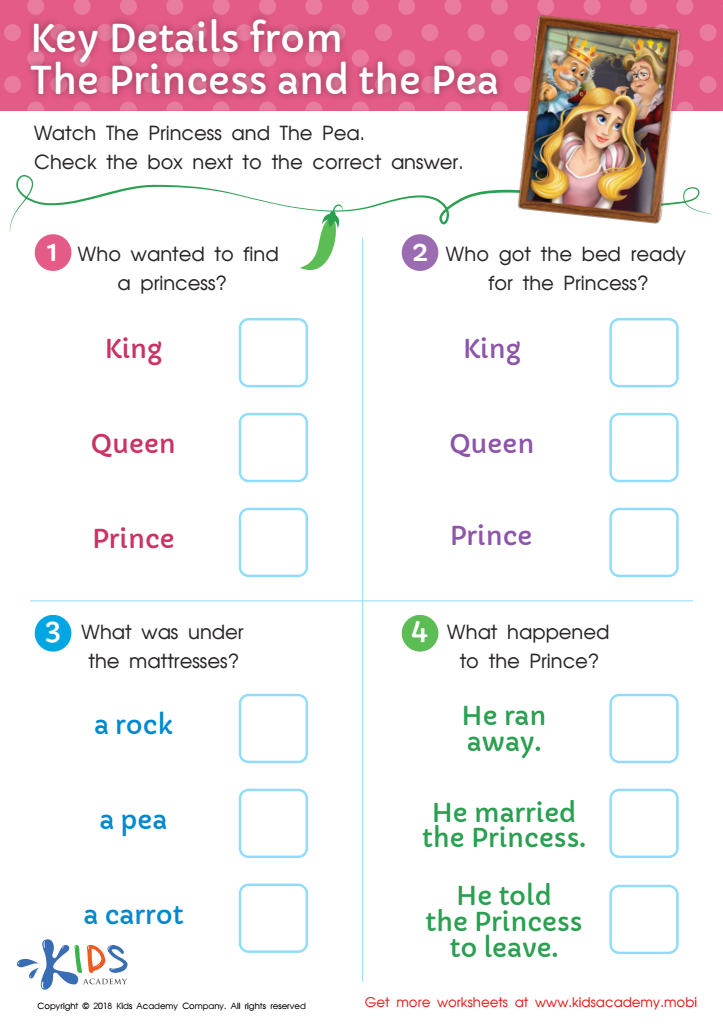
Key Details from the Princess and the Pea Worksheet
 Assign to My Students
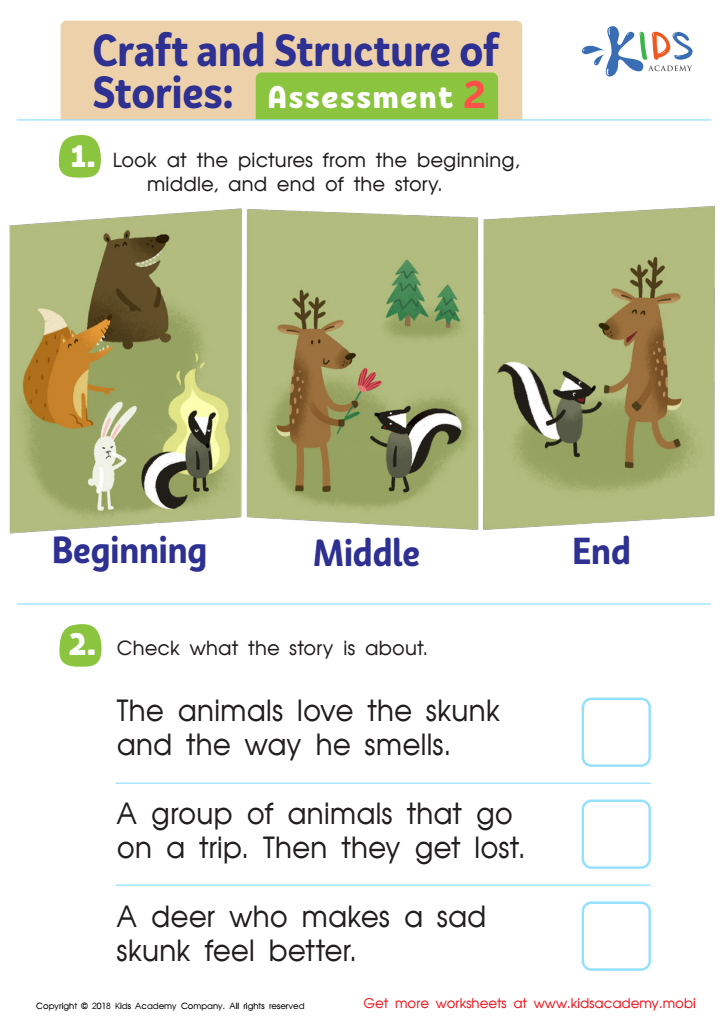
Craft and Structure of Stories: Assessment 2 Worksheet
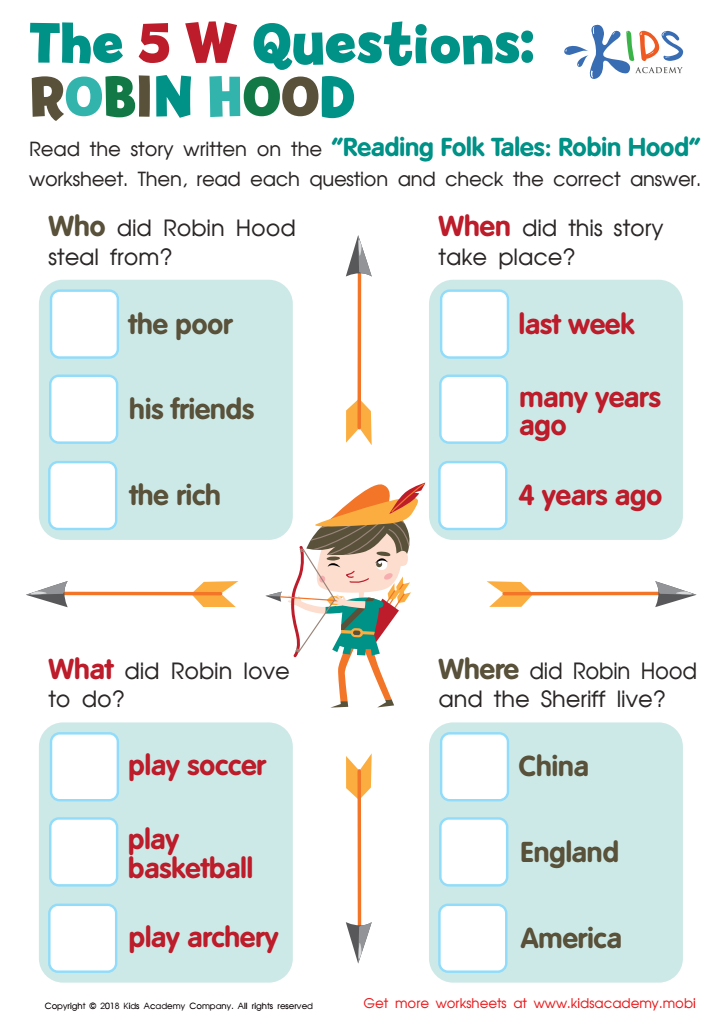
The 5 W Questions: Robin Hood Worksheet
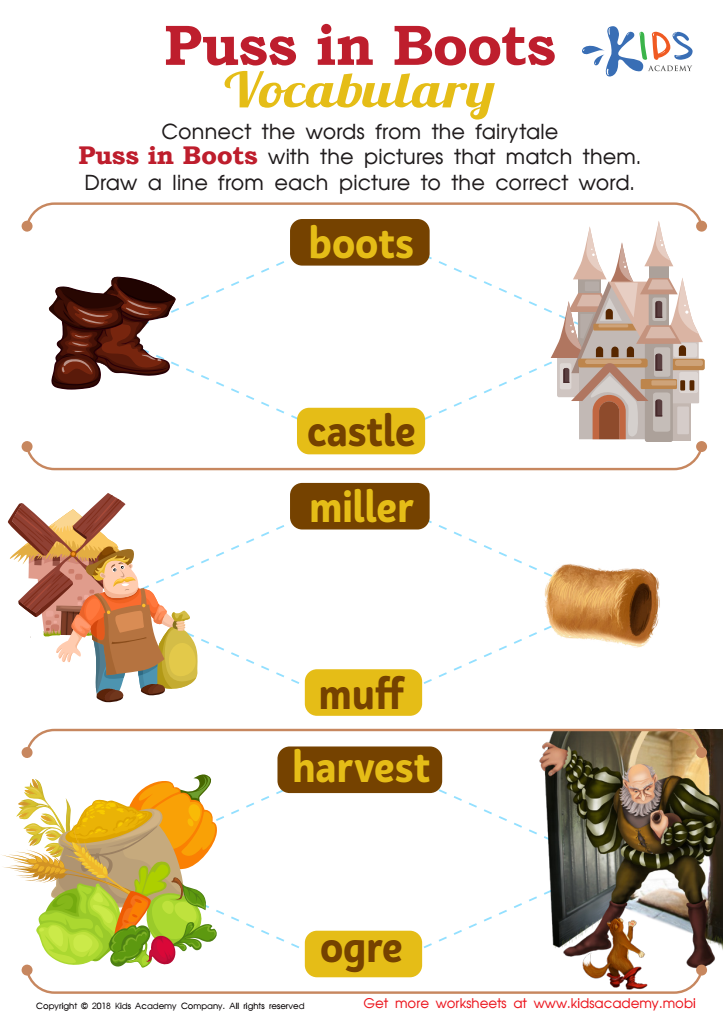
Puss in Boots Vocabulary Worksheet







Parents and teachers should care about story analysis in normal reading fiction for ages 3-9 because it plays a crucial role in children's language development and critical thinking skills. Engaging with stories stimulates imagination, enriches vocabulary, and fosters comprehension. Analyzing narratives helps children understand structure, characters, settings, and themes, allowing them to connect personally and emotionally with the text.
Furthermore, story analysis encourages children to think critically about plots and decisions, promoting problem-solving skills as they consider alternative outcomes and character motivations. This mental engagement nurtures empathy as children learn to see perspectives different from their own, crucial for emotional intelligence.
Additionally, stories often convey morals and lessons that can guide young learners in understanding complex societal norms and values. This practice not only enhances literacy skills but also encourages an appreciation for literature and storytelling, crucial for lifelong learning. In collaborating with parents and teachers in story analysis, we create a rich community of learners who thrive on dialogue and shared exploration of narratives, ultimately supporting the holistic development of children.







