Logical Reasoning Normal Reading Non-Fiction Worksheets for Ages 3-9
3 filtered results
-
From - To
Explore our engaging "Logical Reasoning Normal Reading Non-Fiction Worksheets" designed specifically for children ages 3-9. These worksheets combine captivating non-fiction content with critical thinking exercises to enhance logical reasoning skills. Perfect for early learners, each activity promotes comprehension and analytical abilities through fun and interactive formats. Children will discover the joys of reading while developing essential cognitive skills in an enjoyable way. The worksheets cover a variety of topics, allowing for diverse learning experiences. Ideal for teachers and parents alike, these resources support young minds in their quest for knowledge and encourage a love for learning. Start your child's journey today!
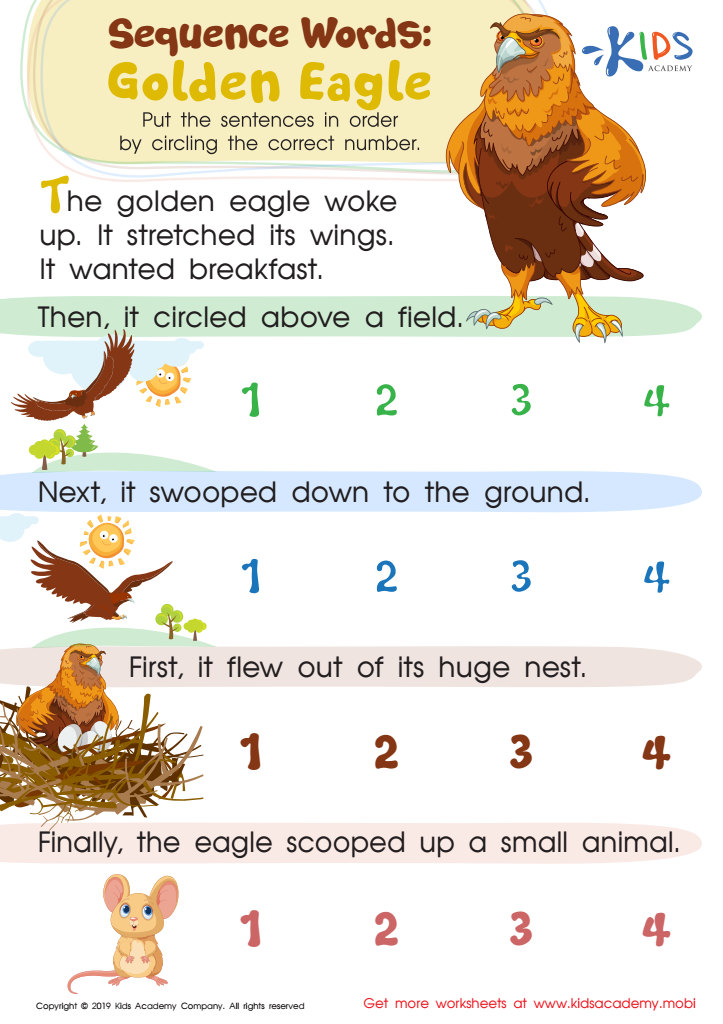
Sequence Word Eagle Worksheet
 Assign to My Students
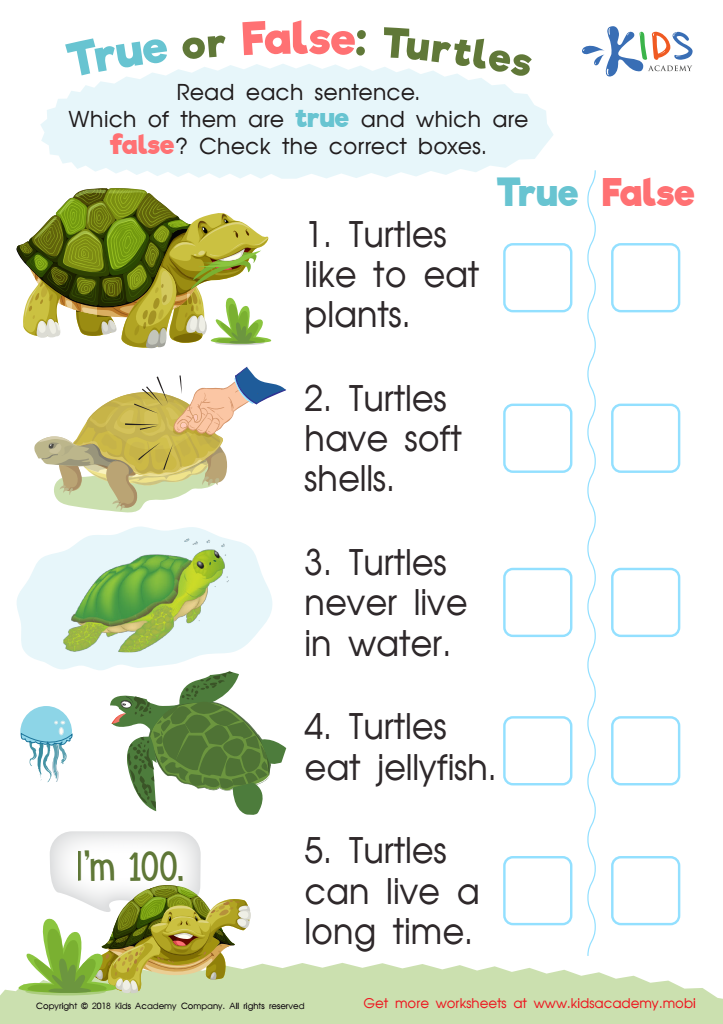
True or False: Turtles Worksheet
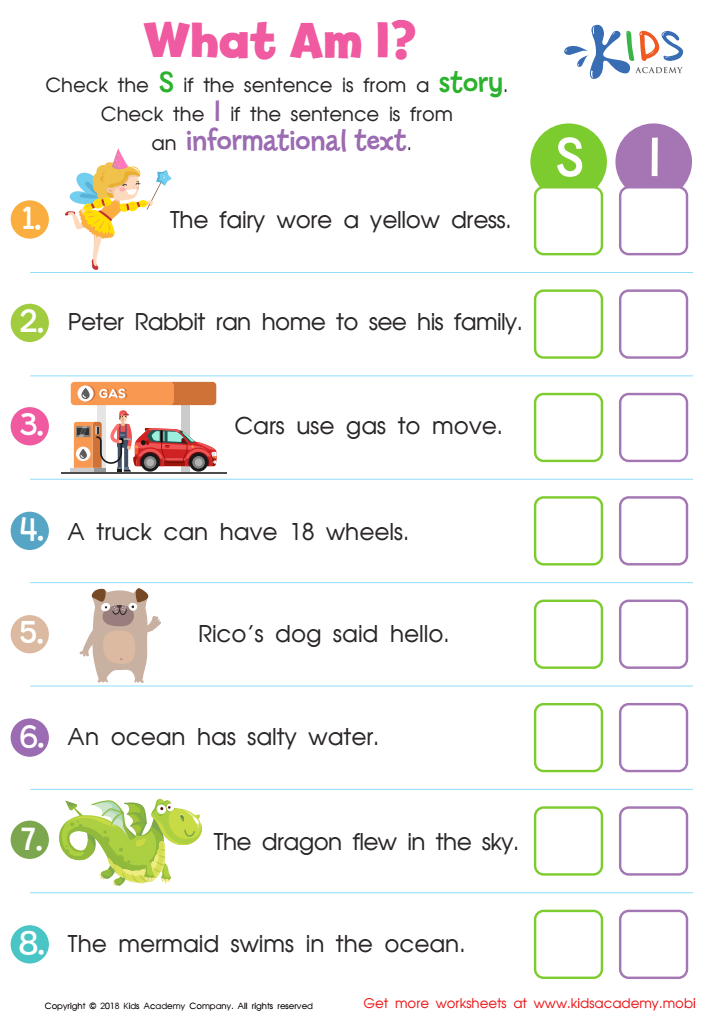
What Am I? Worksheet








Logical reasoning skills are foundational for children's cognitive development and are especially important for ages 3-9. During these early years, children develop critical thinking abilities that serve as building blocks for later academic success. Engaging with non-fiction texts in particular encourages curiosity about the world.
When parents and teachers utilize logical reasoning combined with non-fiction reading, they help children grasp how to process information, make connections, and draw conclusions. For instance, a non-fiction book about animals not only provides facts but also invites children to ask questions about habitats, diets, and behaviors. This multifaceted approach stimulates their thought processes, encouraging them to use logic and reasoning to make sense of new information.
Moreover, logical reasoning enhances problem-solving skills, allowing children to navigate both academic challenges and everyday situations. It cultivates patience, analytical thinking, and the ability to focus—all essential skills for lifelong learning.
Prioritizing logical reasoning in the context of engaging, age-appropriate non-fiction reading can have profound effects on a child's developmental trajectory, ultimately fostering independent thinkers ready to excel in school and life. Thus, it is vital for parents and teachers to recognize and support this integral aspect of education.