Vocabulary Building Normal Reading Non-Fiction Worksheets for Ages 3-9
3 filtered results
-
From - To
Enhance your child's vocabulary with our engaging Vocabulary Building Normal Reading Non-Fiction Worksheets, designed specifically for ages 3-9. These worksheets provide fun, age-appropriate activities that encourage comprehension through real-world topics, helping young learners expand their language skills. Each worksheet combines captivating non-fiction content with interactive challenges, promoting active learning and discovery. Perfect for classrooms or at-home studies, our resources empower children to explore new words while developing their reading abilities. Foster a love for learning and strengthen vocabulary with these essential tools tailored for early-grade learners. Start building a strong foundation in language today!
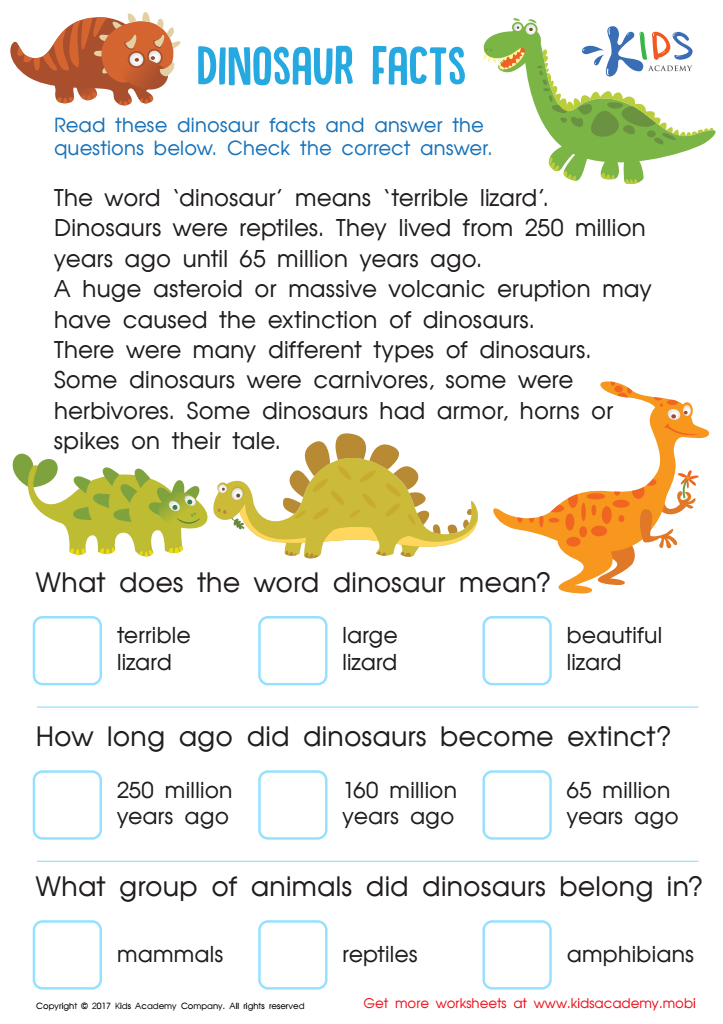
Dinosaur Facts Worksheet
 Assign to My Students
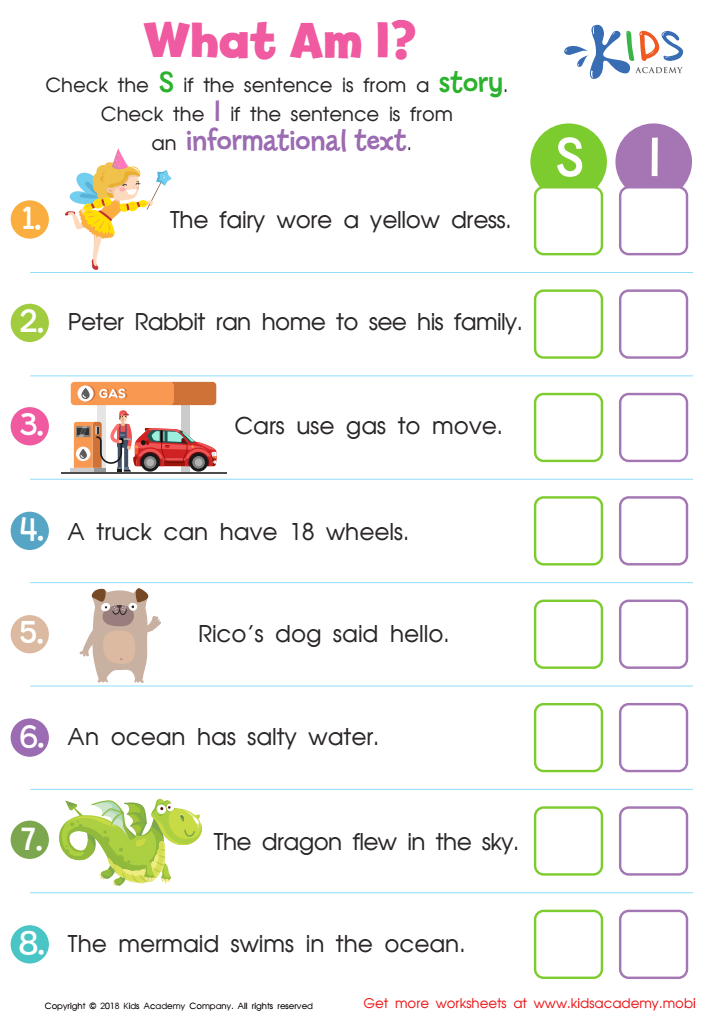
What Am I? Worksheet
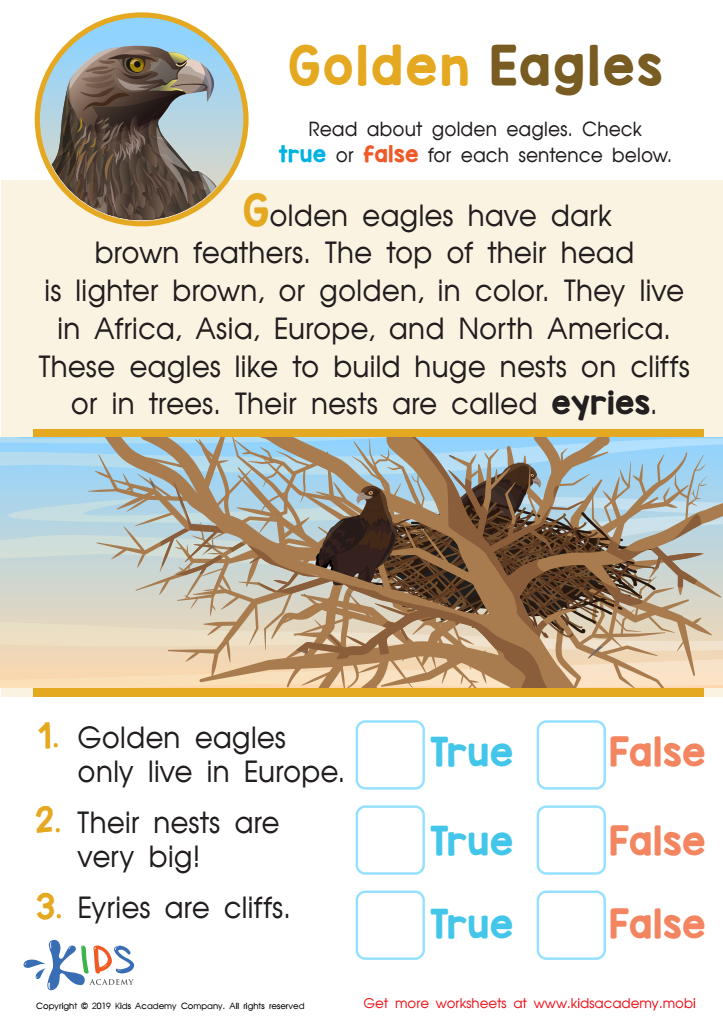
Golden Eagles Worksheet








Vocabulary building through reading non-fiction is crucial for children aged 3-9, as it lays the foundation for lifelong learning and comprehension skills. At this young age, children are naturally curious and eager to explore the world around them. Engaging with non-fiction texts exposes them to rich, contextually relevant vocabulary that enhances their understanding of everyday concepts and experiences.
By reading non-fiction, children discover how things work, learn about various topics such as nature, animals, cultures, and science, which broadens their general knowledge and fuels their curiosity. This genre often uses language that’s specific and descriptive, providing exceptional opportunities for vocabulary acquisition. When children encounter new words in context, they better understand their meaning and usage, facilitating both oral and written expression.
Moreover, vocabulary knowledge is directly linked to academic success. Students with a robust vocabulary are more adept at reading comprehension, critical thinking, and writing skills, essential for succeeding in school and beyond. Parents and teachers play a pivotal role in nurturing this development. By introducing and discussing non-fiction materials, they can help children cultivate a rich vocabulary, foster their interest in learning, and build a stronger foundation for future academic endeavors.