Information retention Normal Science Worksheets for Ages 3-9
3 filtered results
-
From - To
Boost your child's learning with our Information Retention Normal Science Worksheets, specifically designed for ages 3-9. These captivating printable worksheets help enhance memory and understanding by incorporating interactive activities and engaging experiments. Kids will explore various scientific concepts while improving cognitive skills like observation, analysis, and recall. Our carefully curated materials ensure young learners absorb and retain crucial information effortlessly. Perfect for both classroom and at-home learning, these worksheets make science exciting and accessible, laying a solid foundation for long-term educational success. Discover the joy of learning with our fun and effective science retention resources today!
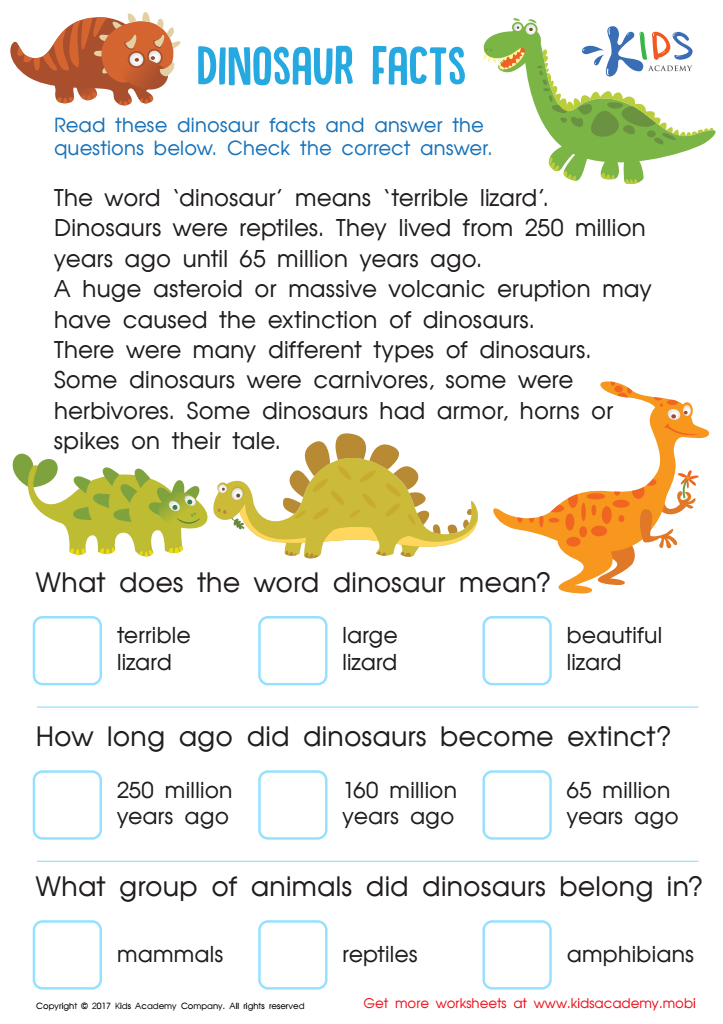
Dinosaur Facts Worksheet
 Assign to My Students
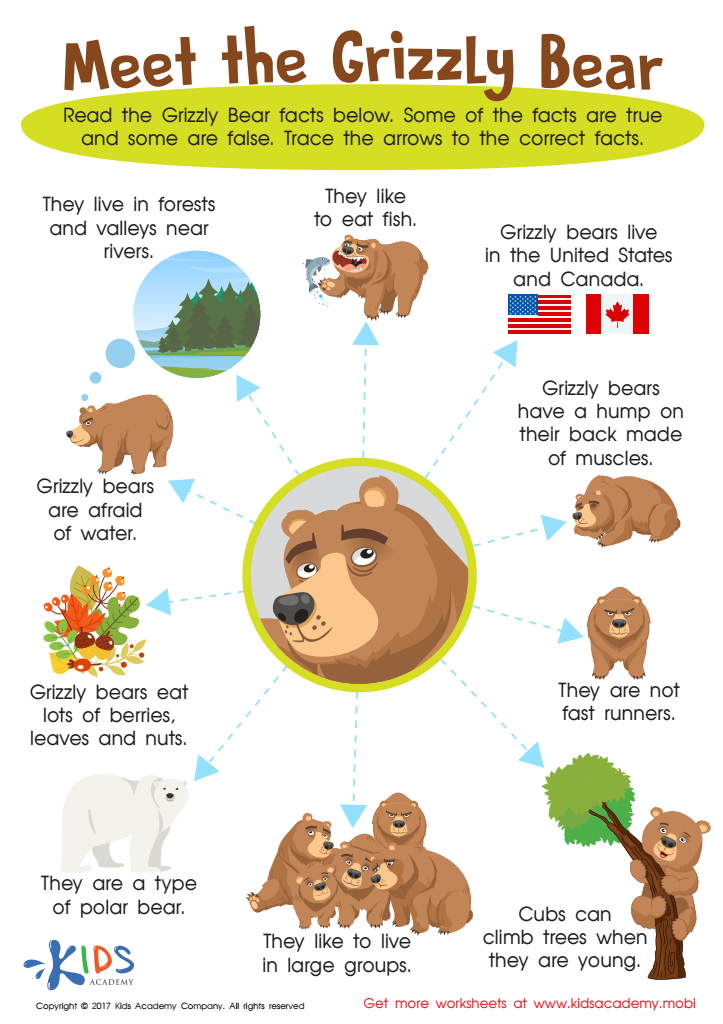
Grizzly Bear Facts Worksheet
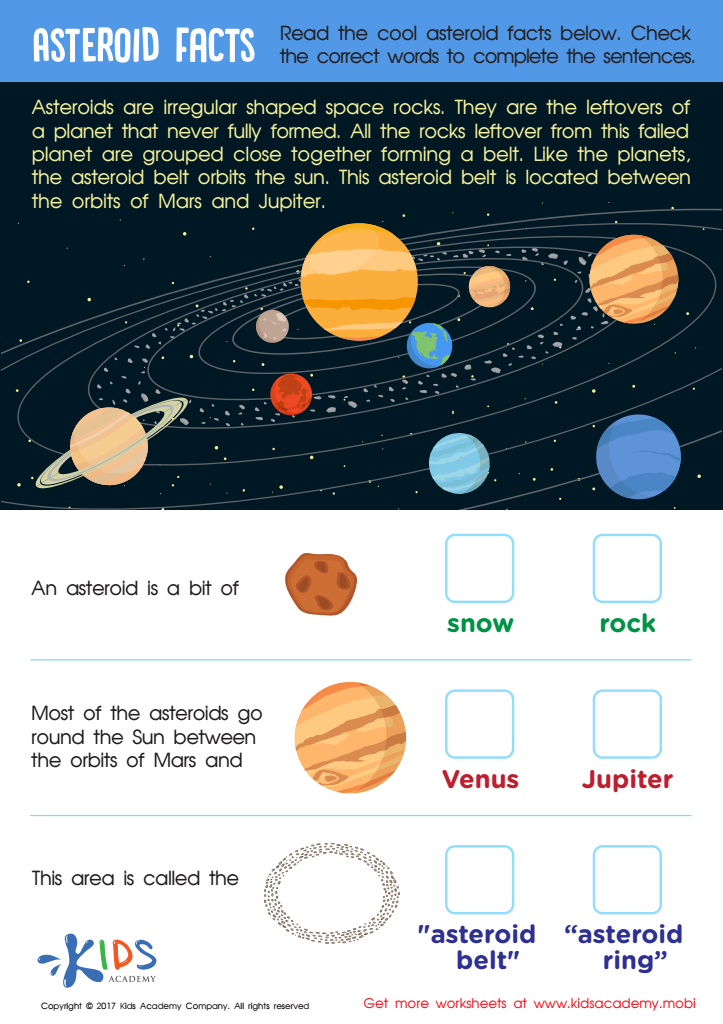
Asteroid Facts Worksheet






Parents and teachers should care deeply about information retention in early science education for children aged 3-9 because these formative years lay the groundwork for lifelong learning and cognitive development. At this age, children’s brains are like sponges, absorbing incredible amounts of information and forming essential neural connections. Ensuring effective information retention in science not only fosters curiosity and a love for learning but also builds foundational knowledge that is critical for future academic success.
Science cultivates critical thinking and problem-solving skills. When children retain scientific information, they develop the ability to observe, ask questions, and think systematically about the world around them. This early exposure helps them understand and retain concepts such as cause and effect, categorization, and basic scientific principles, making complex future learning more accessible.
Moreover, science isn’t just about facts; it’s also about nurturing an inquisitive mindset. Engaging children in science through hands-on activities and consistent reinforcement can spark their natural curiosity and encourage a lifelong interest in exploration and discovery. In addition, strong retention in early science education boosts confidence, which can positively impact their overall academic performance and attitude towards challenging subjects in the future.
Investing in information retention for young learners is a crucial step toward producing innovative thinkers and problem solvers, who are essential for future scientific and societal advancements.







