Understanding magnetism Normal Science Worksheets for Ages 3-9
4 filtered results
-
From - To
Explore the fascinating world of magnetism with our "Understanding Magnetism Normal Science Worksheets for Ages 3-9". These engaging, educational worksheets are designed to simplify complex scientific concepts, making learning fun and effective for young minds. Ideal for kids aged 3-9, the worksheets offer hands-on activities, vivid illustrations, and easy-to-follow explanations to help children grasp the basics of magnetism. Whether it's discovering which objects are magnetic or understanding the magnetic poles, our carefully crafted materials ensure a solid foundation in this essential science topic. Ignite curiosity and boost learning with Kids Academy science worksheets!
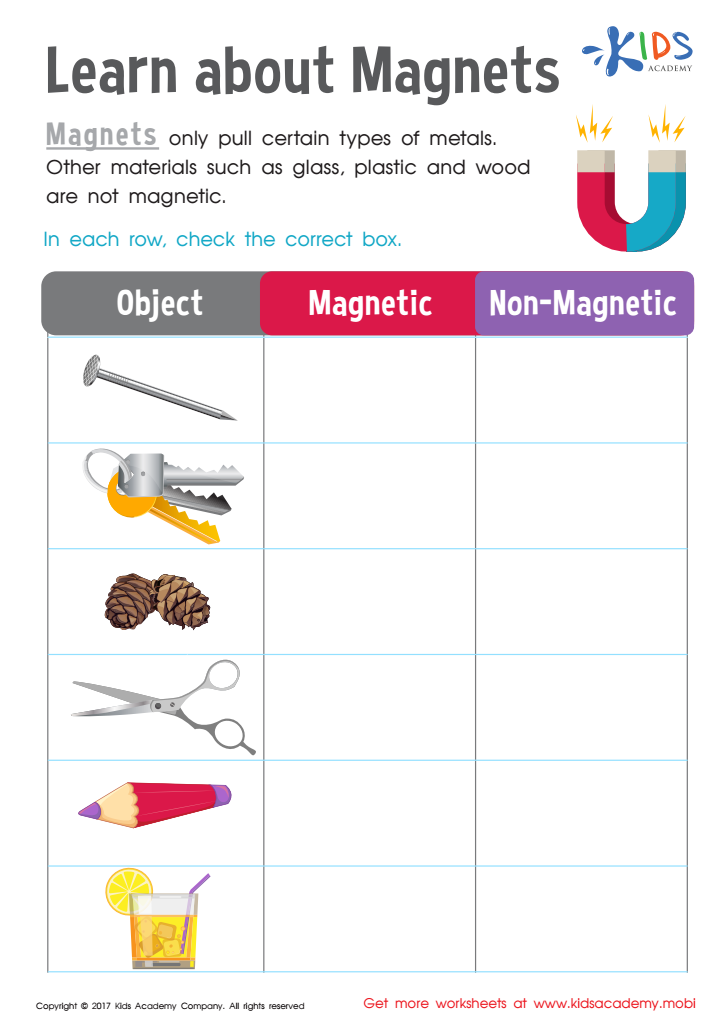
Magnetic Or Not Worksheet
 Assign to My Students
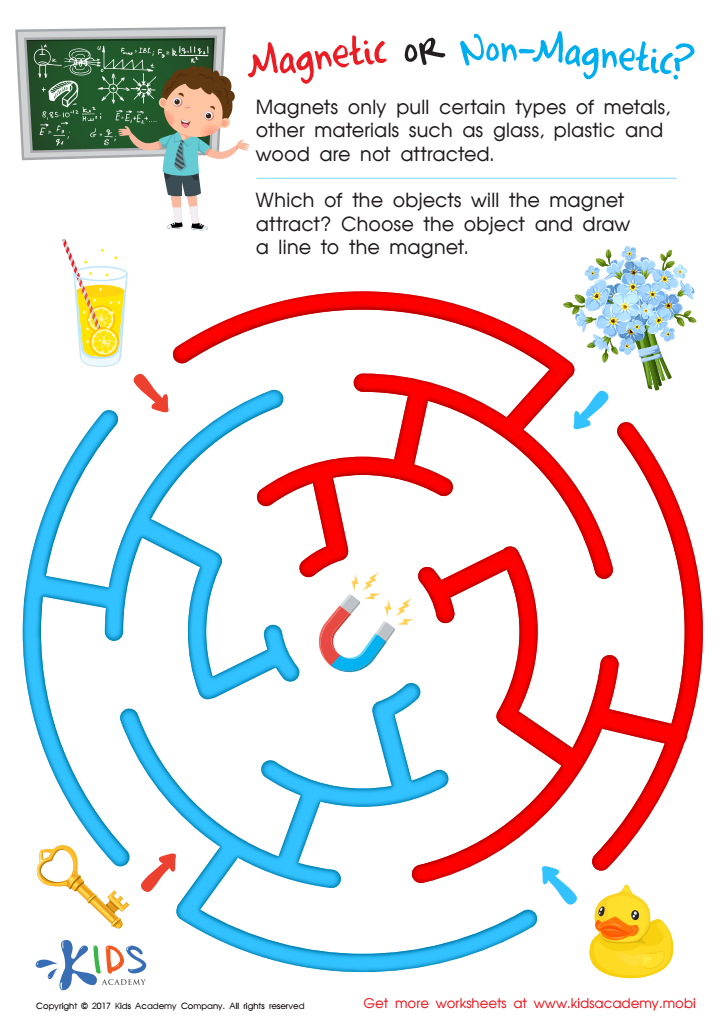
Magnetic or Non–Magnetic Worksheet
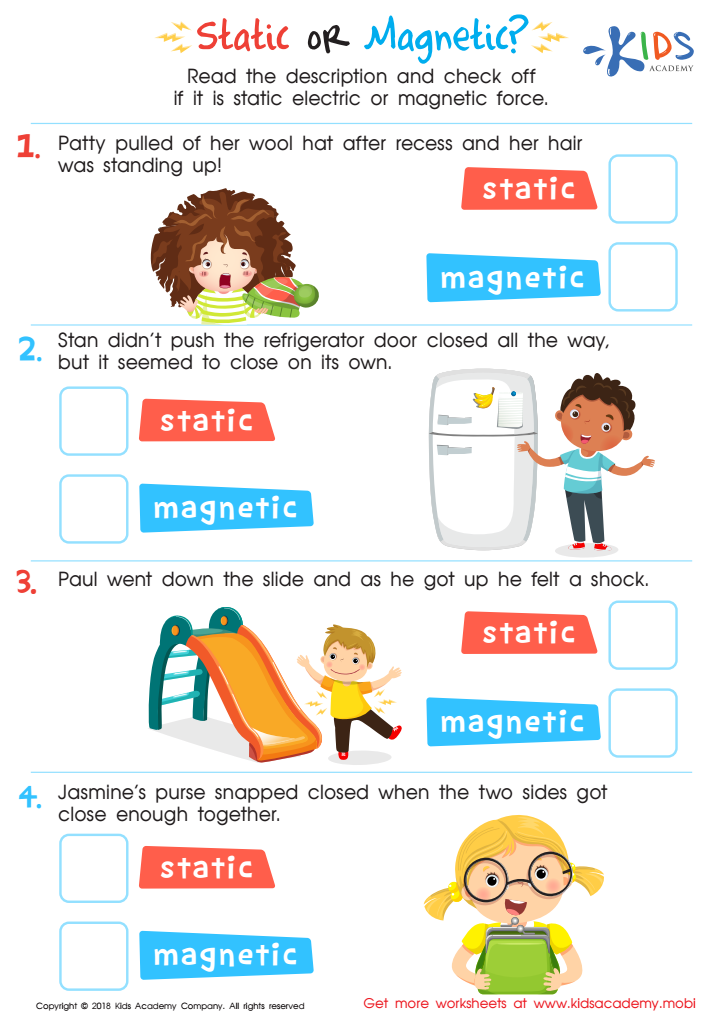
Static or Magnetic Printable Worksheet
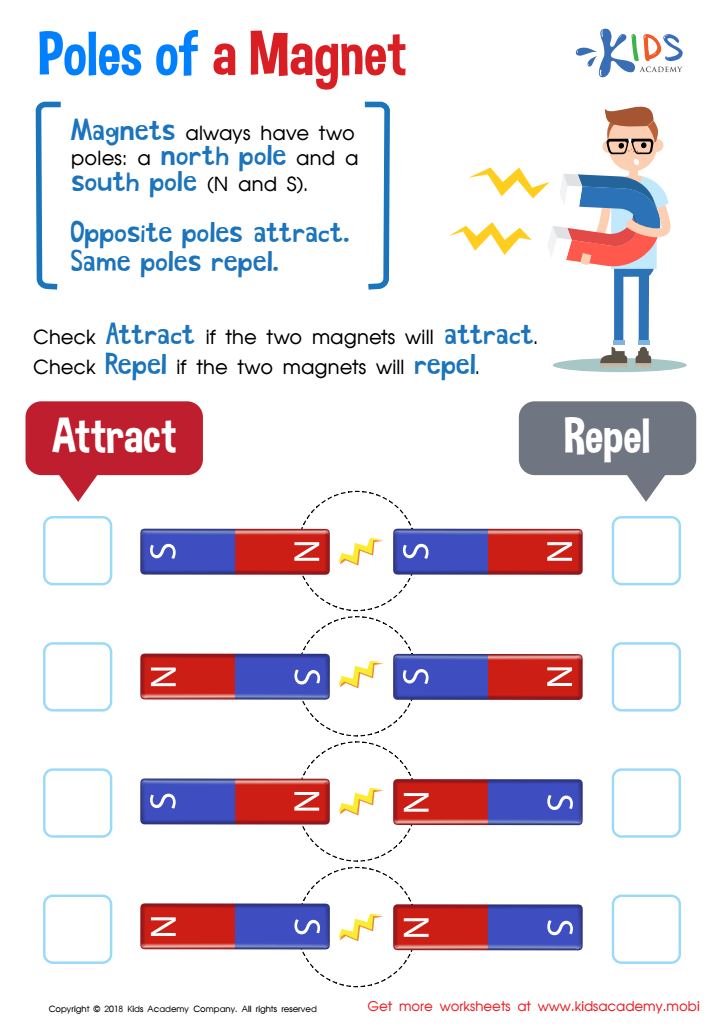
Magnet Poles Attract or Repel Worksheet







Understanding magnetism is crucial for young minds because it lays the foundation for critical thinking and scientific exploration. For children aged 3-9, learning about magnetism helps ignite their natural curiosity about how the world works. Engaging early learners with magnetic activities like playing with magnetic toys or simple science experiments can make learning both fun and memorable.
For parents and teachers, introducing magnetism aids in developing critical STEM (Science, Technology, Engineering, Mathematics) skills. Young children who play with magnets learn basic scientific concepts such as attraction, repulsion, and magnetic fields. These hands-on experiences help cultivate problem-solving abilities and spatial awareness.
Moreover, magnetism can be related to everyday experiences, such as how refrigerator magnets stick, which bridges the gap between theory and real-world applications. Understanding these small yet significant wonders fosters a child's imagination and can inspire a lifelong interest in science.
Lastly, early exposure to such concepts encourages logical thinking and reasoning. These cognitive skills are not only essential for academic success but also for daily decision-making. Thus, teaching magnetism to young children is vital because it enhances cognitive development, promotes curiosity, and lays a strong scientific foundation for future learning.







