Understanding moon phases Normal Science Worksheets for Ages 3-9
3 filtered results
-
From - To
Explore the wonders of the night sky with our "Understanding Moon Phases" Normal Science Worksheets, designed specifically for children ages 3-9. These engaging worksheets introduce young learners to the fascinating phases of the moon through interactive activities and colorful visuals. Children will develop essential observational and critical thinking skills while learning about the cycle of the moon, its significance, and its impact on our planet. Perfect for both classroom and home use, these worksheets make learning enjoyable and memorable. Dive into the cosmos and ignite a passion for science in your little ones today with this educational resource!
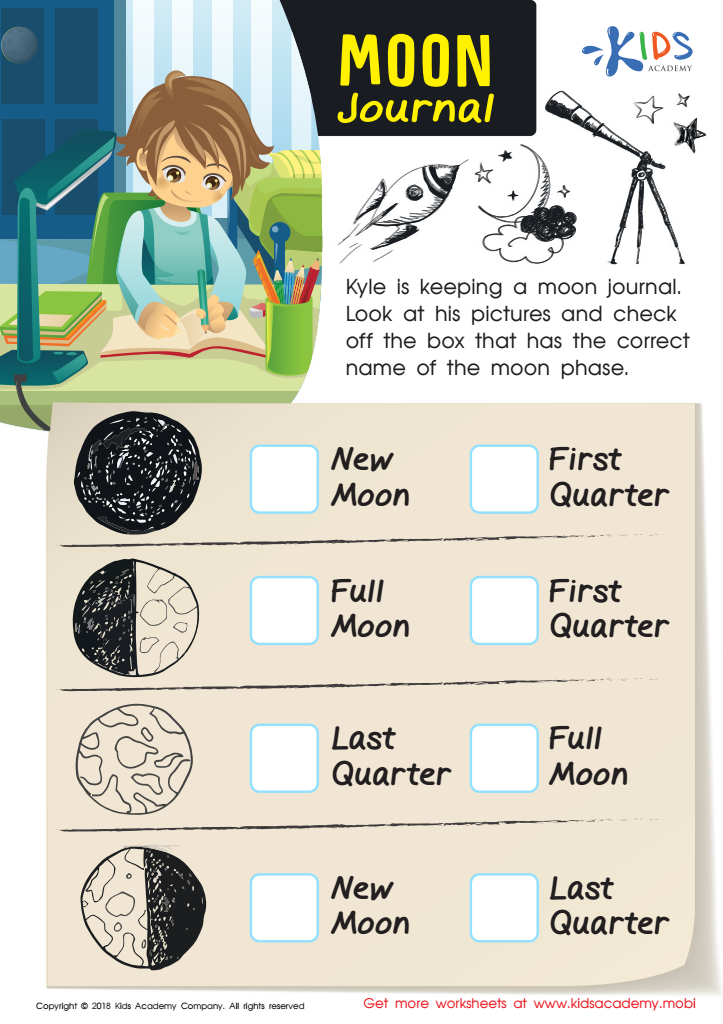
Moon Journal Worksheet
 Assign to My Students
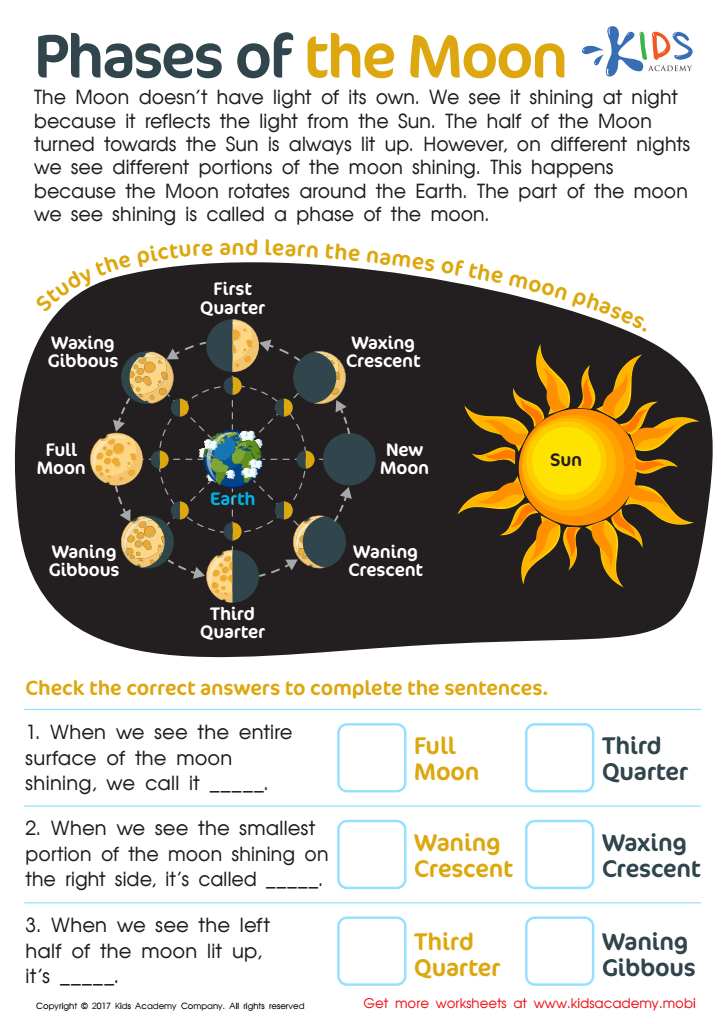
Phases of The Moon Worksheet
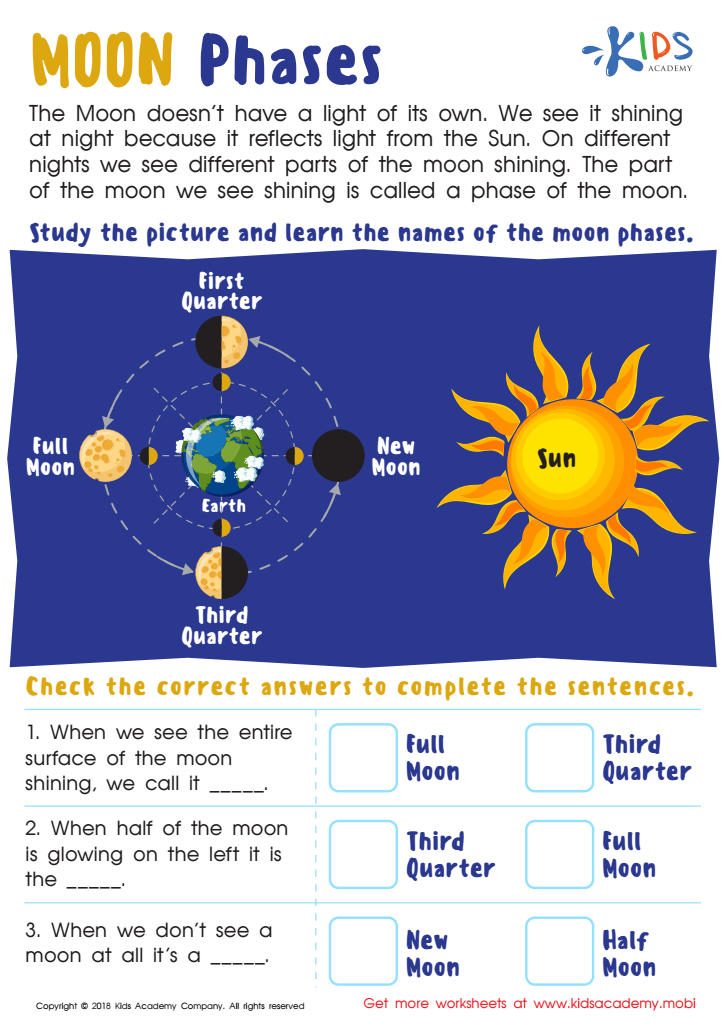
Moon Phases Worksheet



.jpg)


Understanding moon phases is crucial for early childhood education for several reasons. Firstly, it offers an engaging way to introduce children to basic scientific concepts. Young learners, ages 3-9, are naturally curious about their environment, and the moon presents a fascinating subject that can spark interest in astronomy and science overall.
Additionally, learning about moon phases teaches children how to observe and think critically about the world around them. As children learn to recognize the different shapes of the moon—even using simple tools like drawings or stories—they develop skills in observation, reasoning, and pattern recognition, which are foundational for scientific literacy.
Moreover, moon phases can enhance lessons in various subjects, from math (through counting days or comparing sizes) to language arts (by crafting stories or poems about the moon). Teaching about the moon connects children to broader ideas, like time, change, and nature’s cycles, making learning holistic and interdisciplinary.
Finally, understanding moon phases fosters a sense of wonder and respect for the universe. Parents and teachers can cultivate a deeper appreciation for nature in children, encouraging lifelong curiosity and discovery, which are essential components of education and personal growth.







