Weather identification Normal Science Worksheets for Ages 3-9
4 filtered results
-
From - To
Discover the exciting world of weather with our Weather Identification Normal Science Worksheets, specially designed for children ages 3-9! Our engaging and interactive worksheets help young learners identify different weather conditions, develop observational skills, and enhance their understanding of nature. Through colorful illustrations and fun activities, kids will explore concepts like sunny, rainy, snowy, and windy days. Perfect for at-home learning or classroom activities, these worksheets foster curiosity and promote critical thinking. Equip your little ones with essential knowledge about the weather as they play and learn with our specially crafted resources. Start your weather adventure today!
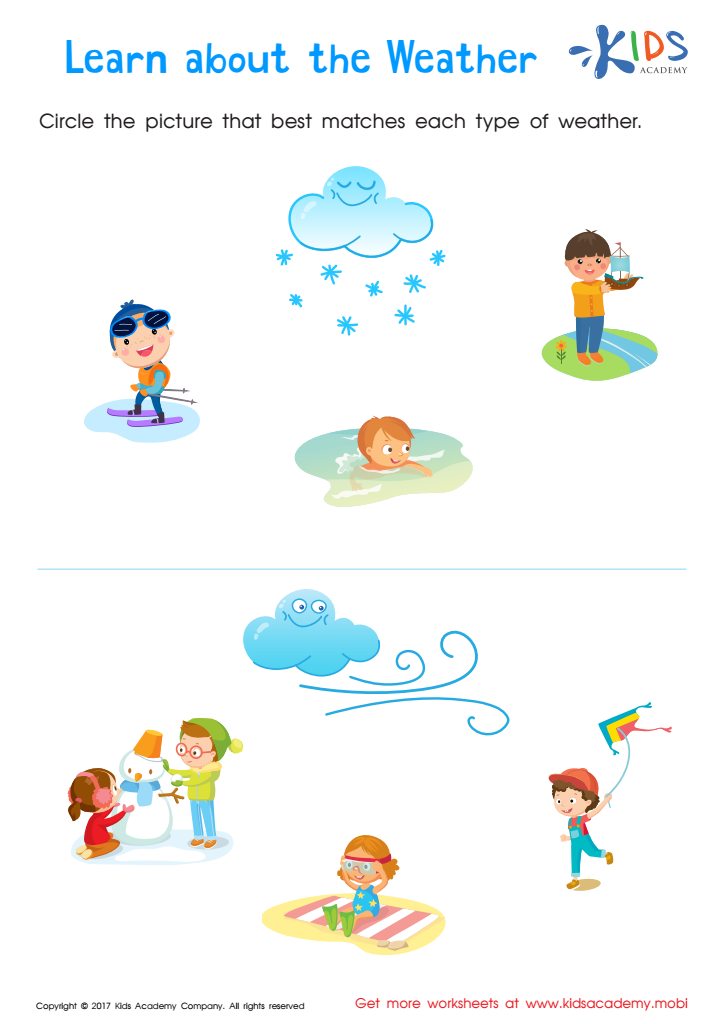
About the Weather Printable
 Assign to My Students
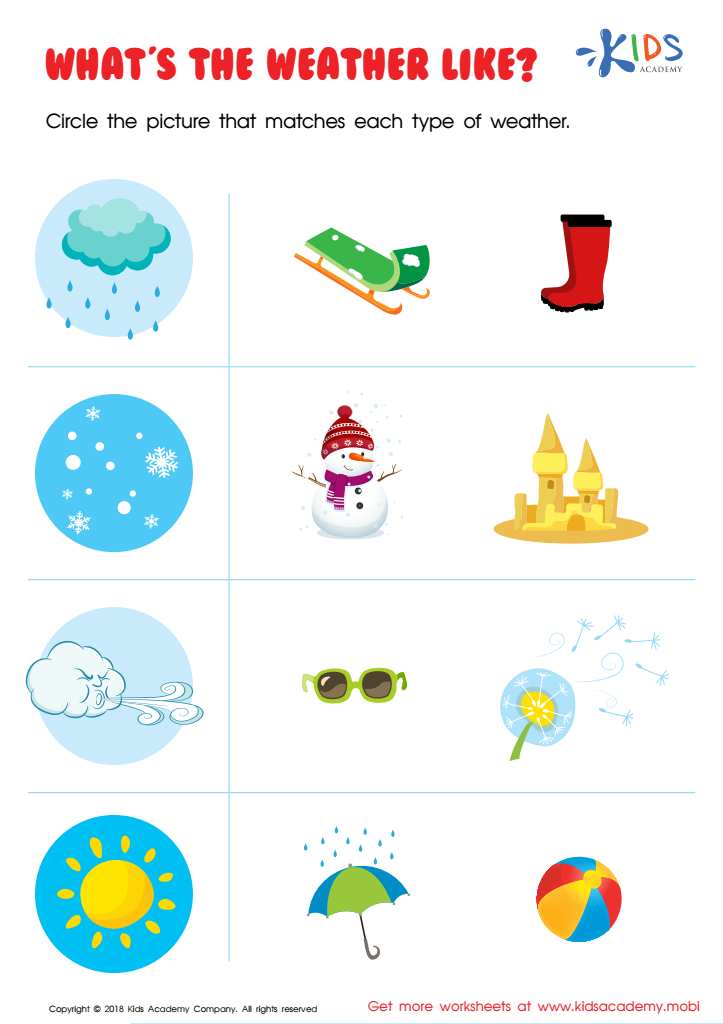
What's the Weather Like? Worksheet
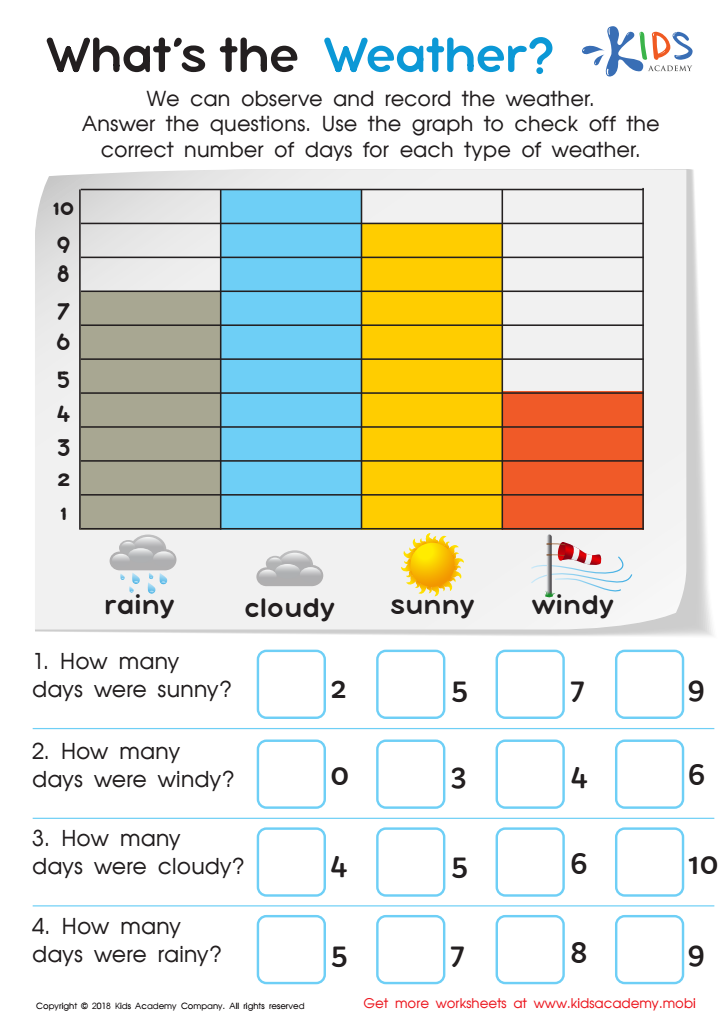
What's the Weather? Worksheet
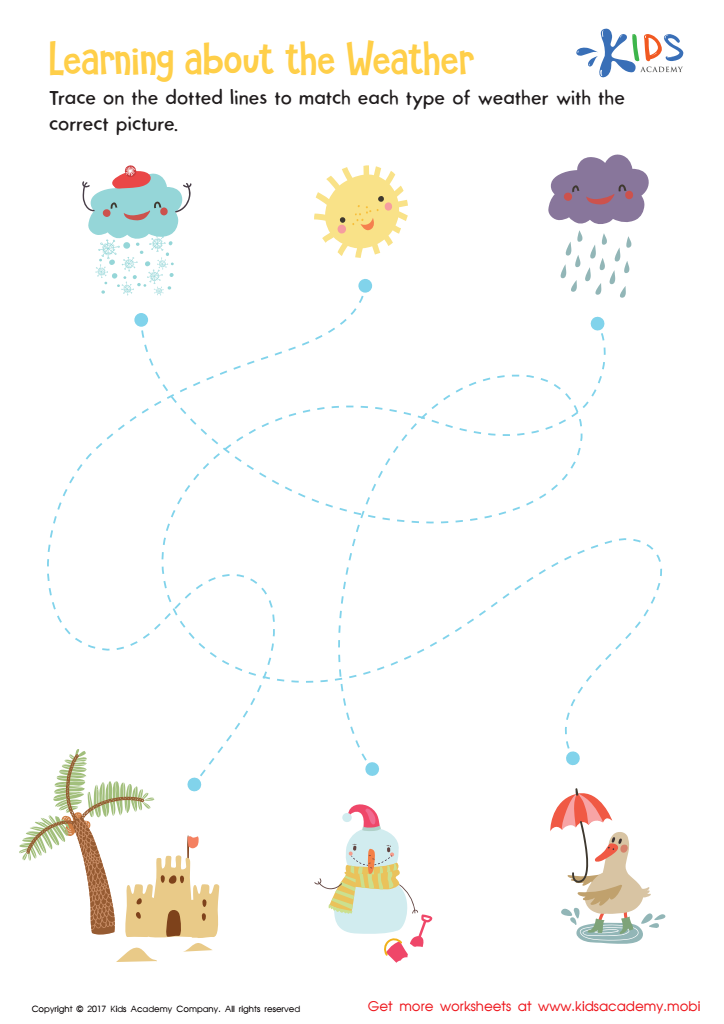







Weather identification is a crucial aspect of Normal Science education for children aged 3 to 9. It nurtures curiosity, enhances observational skills, and promotes critical thinking. Understanding weather fosters a sense of connection with the environment, allowing children to observe changes in their surroundings and make sense of them. This foundational knowledge prepares young learners to recognize patterns, such as the difference between rainy and sunny days, and encourages them to ask questions about why these changes occur.
Incorporating weather identification into early learning also presents an opportunity to teach essential scientific concepts in a relatable way. Children gain experience with the scientific method as they predict weather conditions and observe outcomes, building a foundation for future scientific exploration. Furthermore, it raises awareness about climate and environmental issues, encouraging a sense of responsibility towards the planet.
Parents and teachers should also remember that weather discussions can help develop language skills as children learn new vocabulary related to atmospheric phenomena. Activities such as keeping a weather diary or crafting weather reports foster creativity and communication skills. Ultimately, exploring weather promotes a holistic development approach, making science enjoyable and impactful, laying the groundwork for lifelong learning and appreciation of the world around them.







