Animal Classification Normal Plants and Animals Worksheets for Ages 3-9
6 filtered results
-
From - To
Explore our engaging "Animal Classification Normal Plants and Animals Worksheets" designed for children aged 3-9! These fun and interactive printables introduce young learners to the fascinating world of animal classification. Through vibrant illustrations and hands-on activities, kids will discover various animal types, from mammals to reptiles and more. Our worksheets encourage critical thinking, creativity, and enhance understanding of ecosystems. Perfect for classroom use or at-home learning, these resources foster early science skills while keeping learning enjoyable. Let your child explore and identify the wonders of nature with our thoughtfully crafted worksheets! Download now and watch their curiosity grow!
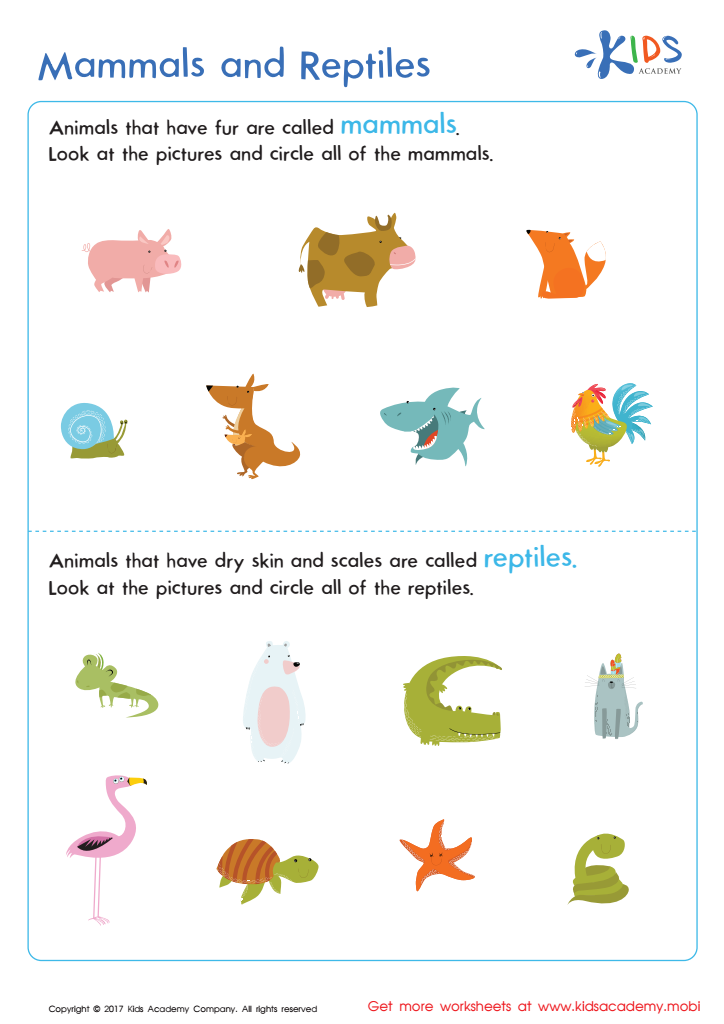
Mammals and Reptiles Worksheet
 Assign to My Students

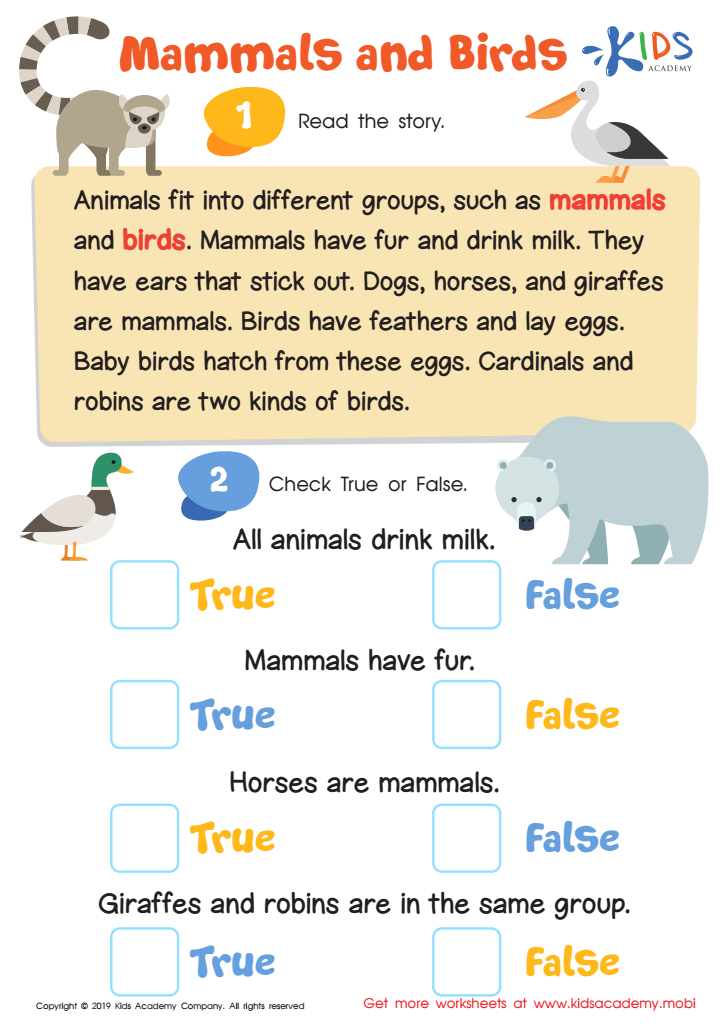
Mammals and Birds Worksheet
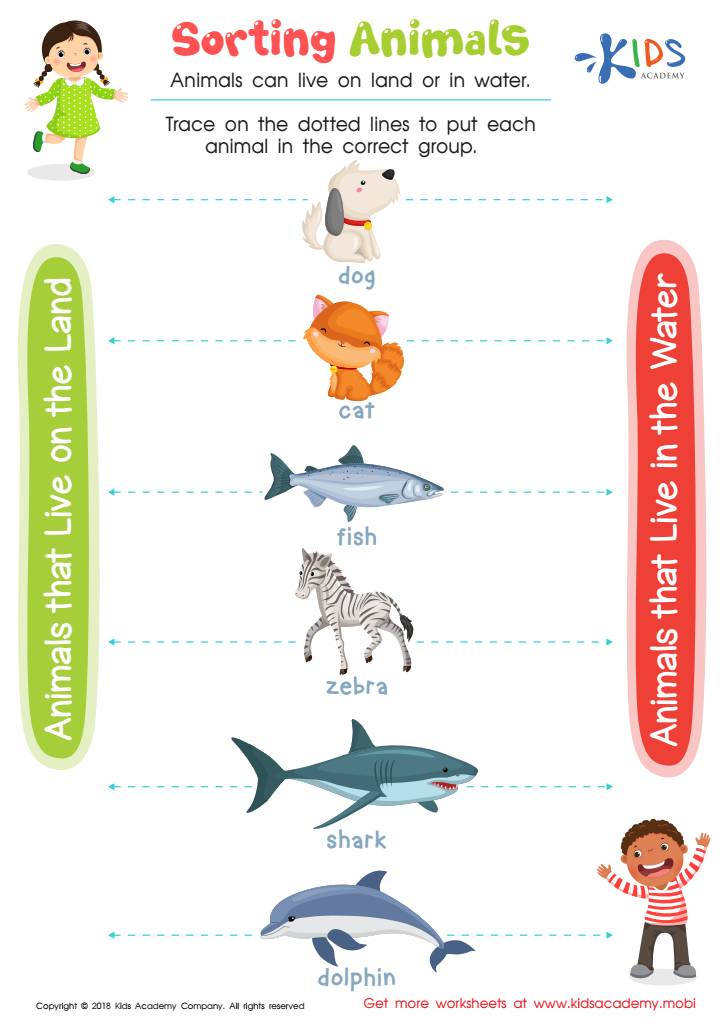
Sorting Animals Worksheet
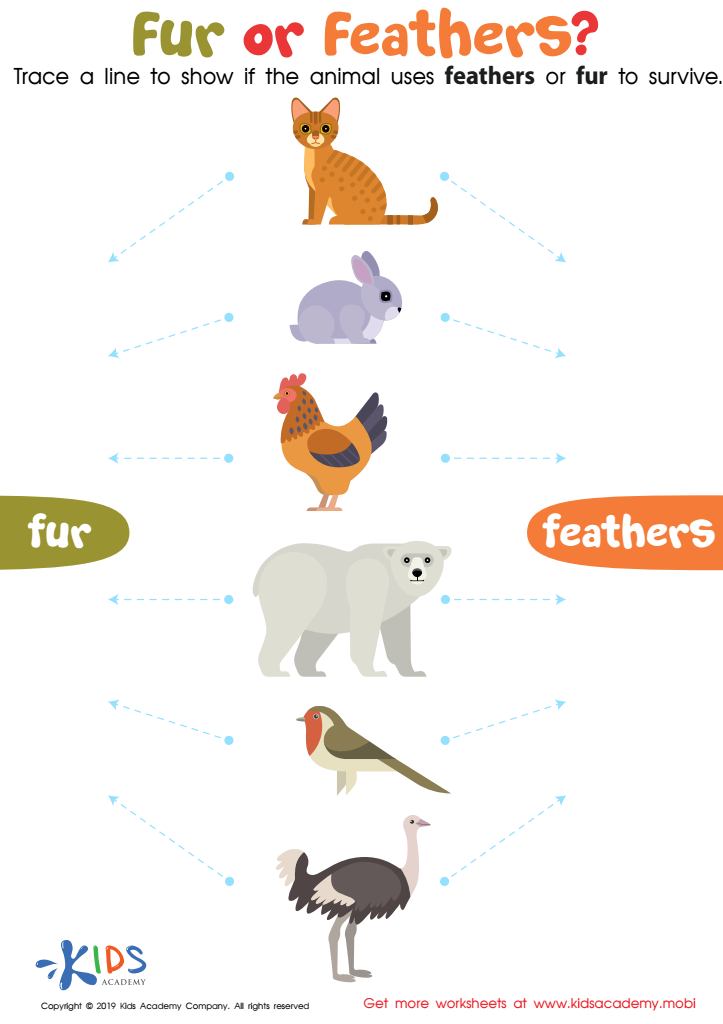
Fur or Feathers? Worksheet
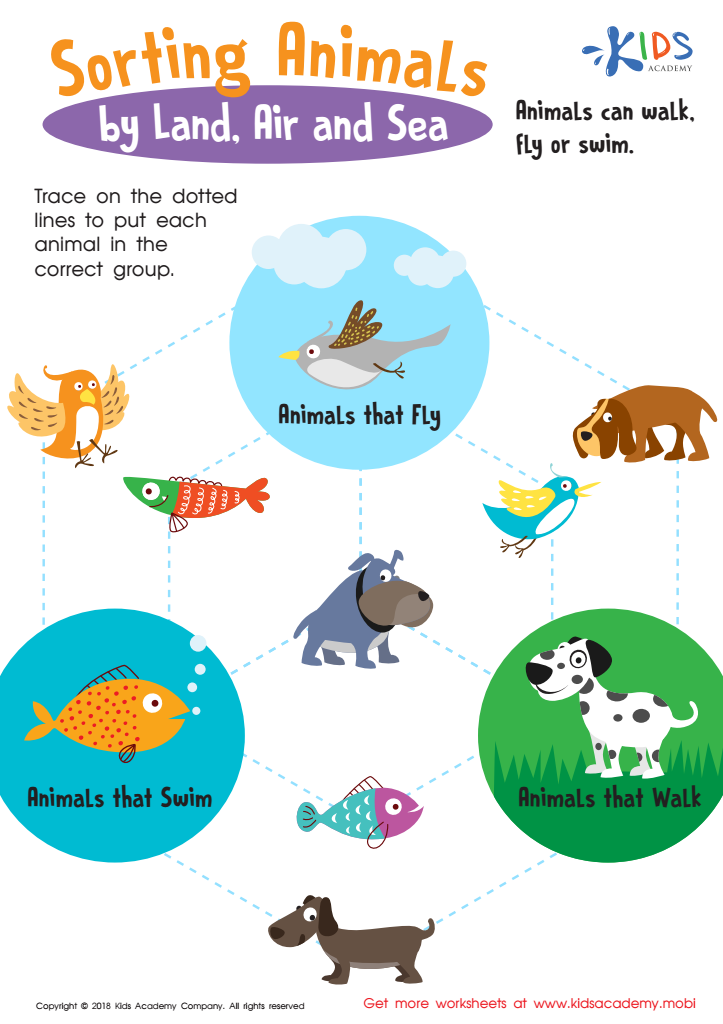
Sorting Animals by Land, Air and Sea Worksheet
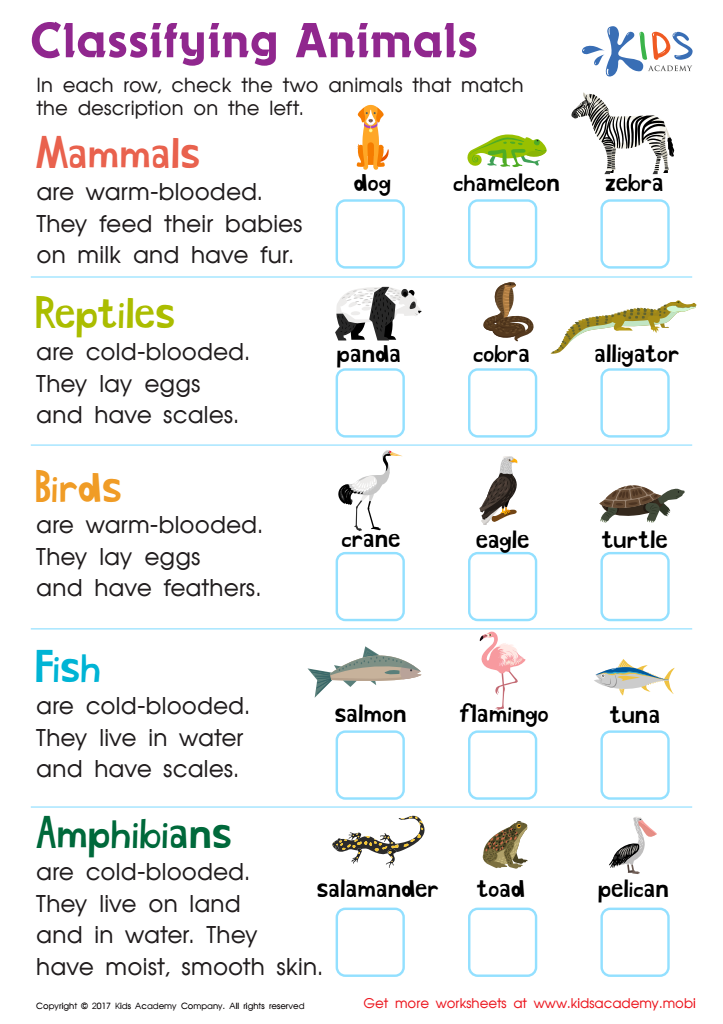
Classifying Animals Worksheet








Understanding animal classification is crucial for children ages 3-9 as it lays the foundation for scientific thinking and nurtures curiosity about the natural world. Introducing concepts of normal plants and animals helps young learners develop observational skills, critical analysis, and an appreciation for biodiversity.
When children classify animals and plants—identifying their characteristics, habitats, and behaviors—they enhance their decision-making and problem-solving abilities. This foundational knowledge fosters a sense of responsibility for the environment, preparing them to understand concepts such as ecosystems and conservation as they grow.
Additionally, learning about animal and plant classification aligns with early education standards and integrates with broader educational themes, including literacy, art, and geography. Engaging activities, such as sorting, categorizing, and researching different species, promote active learning, encourage collaboration among peers, and enhance vocabulary development.
Parents and teachers also play a vital role in nurturing a child's intrinsic curiosity. When they emphasize the importance of classification in daily life—even through everyday observations of nature—they can inspire lasting interest in science. Ultimately, equipping children with an understanding of normal plants and animals fosters a deeper connection to the world around them, contributing to their overall growth and learning journey.







