Categorization skills Normal Plants and Animals Worksheets for Ages 3-9
4 filtered results
-
From - To
Boost your child's understanding and mastery of the natural world with our "Categorization Skills: Normal Plants and Animals Worksheets for Ages 3-9". Specially designed for young learners, these engaging and educational worksheets help children recognize, differentiate, and classify various plants and animals. Each activity supports the development of critical thinking and early science skills through vibrant illustrations and interactive tasks. Perfect for at-home learning or classroom use, these worksheets make learning about nature an exciting adventure. Prepare your little explorers to excel in science with these fun and insightful resources!
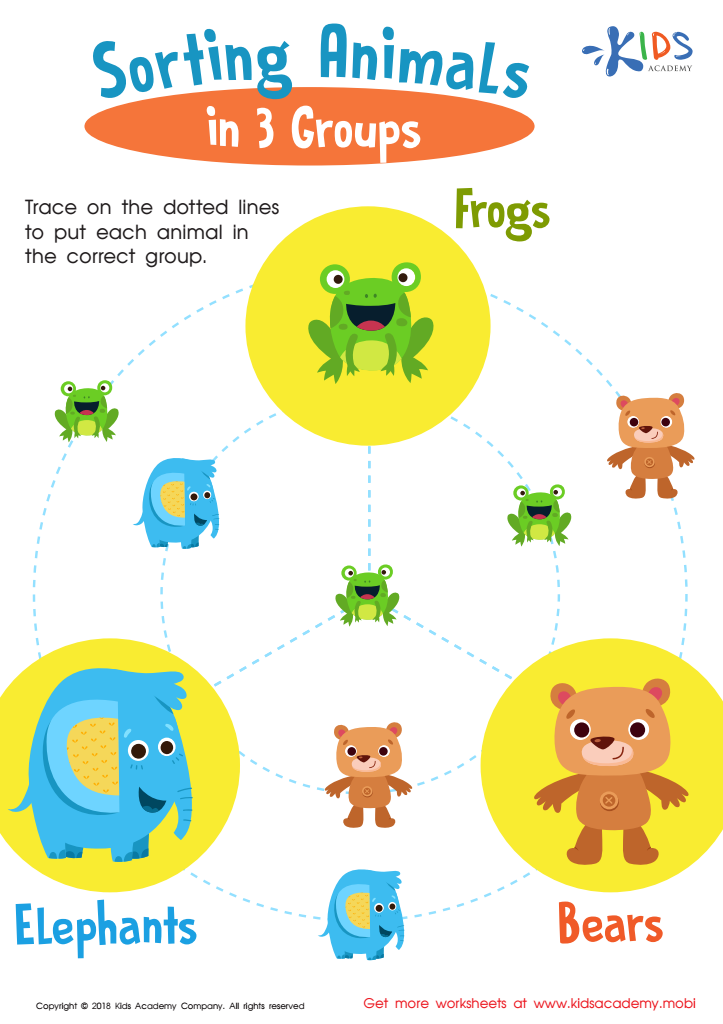
Sorting Animals in 3 Groups Worksheet
 Assign to My Students











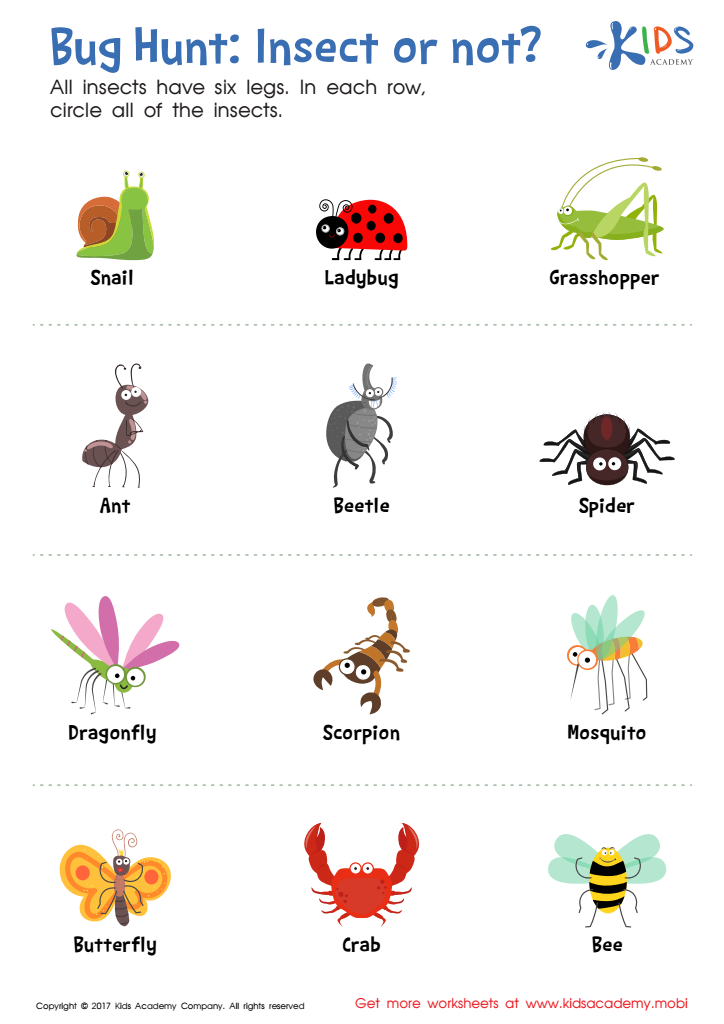
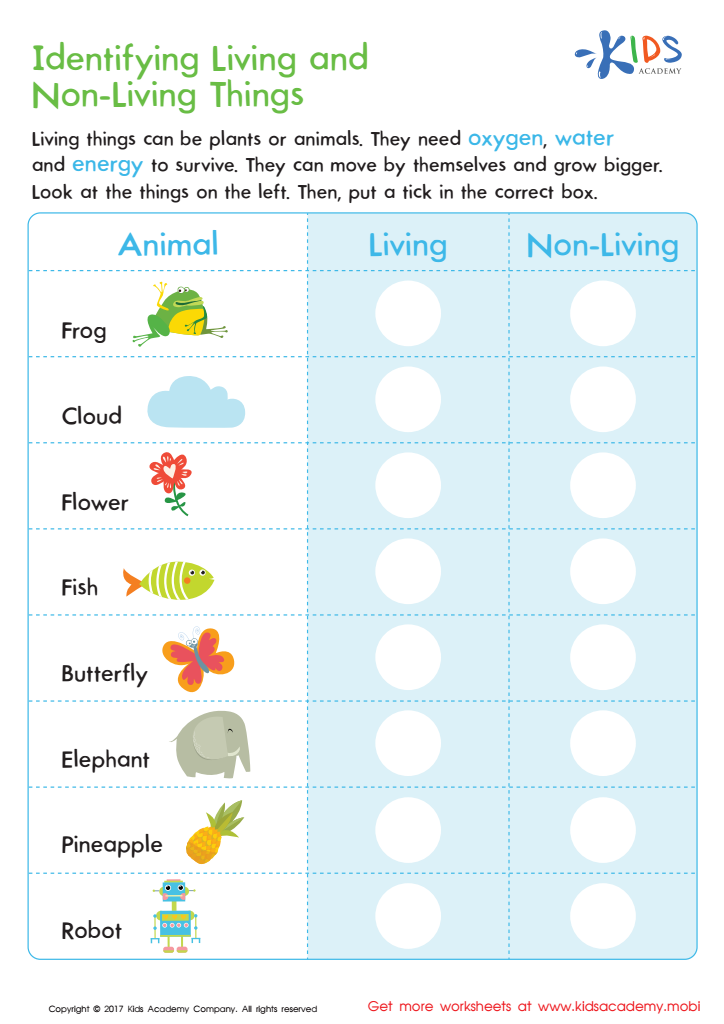
Identifying Living or Non–living Worksheet
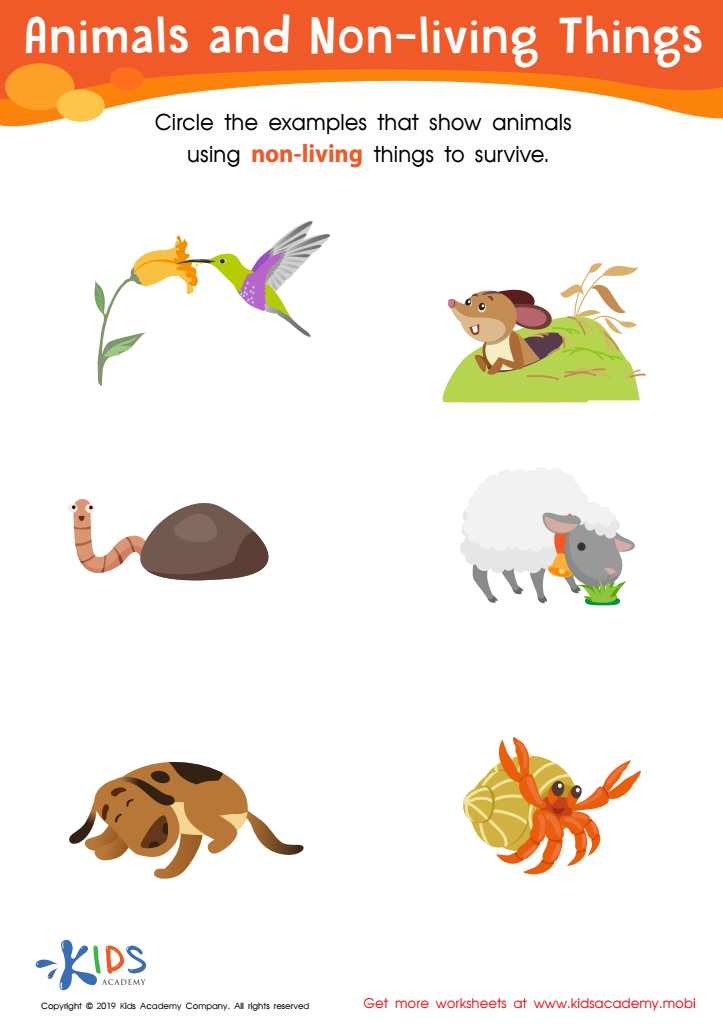
Animals and Non-Living Things Worksheet



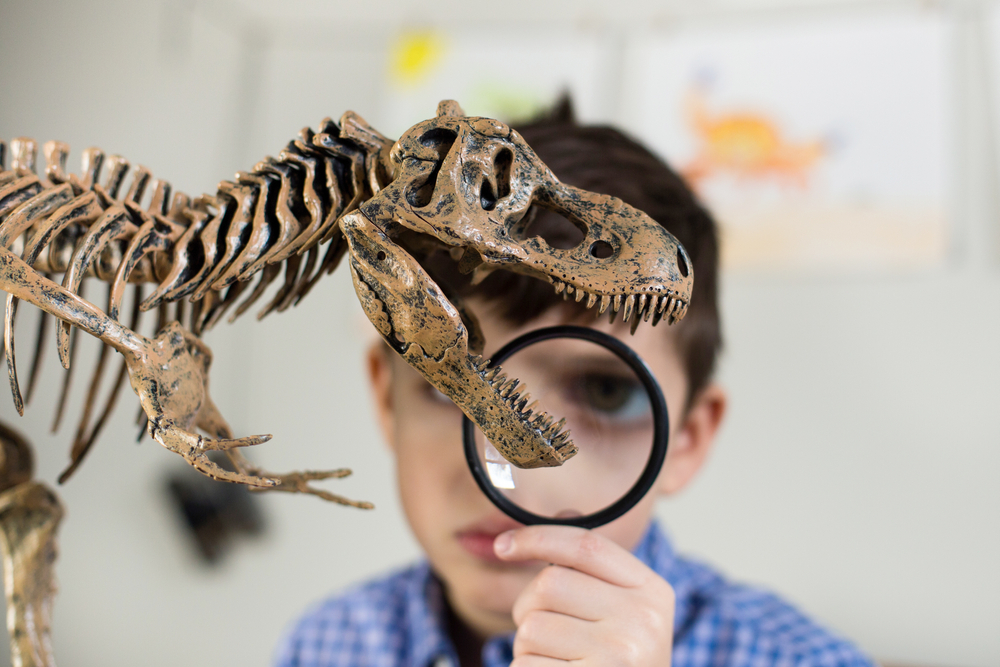




Categorization skills, especially in the context of normal plants and animals, are critical developmental milestones for children ages 3-9. These skills enable young learners to organize and make sense of their environment by grouping objects based on shared characteristics. For parents and teachers, encouraging these categorization abilities is essential because they underpin cognitive development, language skills, and scientific curiosity.
During these formative years, children start to distinguish between living and non-living things, and to identify plants and animals, which lays the groundwork for biological understanding. By categorizing plants (like trees, bushes, and flowers) and animals (like mammals, reptiles, and birds), children learn to observe and process the world systematically. This hones their ability to recognize patterns, a crucial skill for math and reading.
Furthermore, engaging in categorization exercises enhances language development by expanding children's vocabulary and comprehension. When discussing plants and animals, children learn specific terms and concepts, enriching their communication skills.
Incorporating categorization into early education fosters curiosity and a love for science. The inquiry-driven aspects of identifying and grouping different plants and animals can spark a lifelong interest in the natural world. Thus, parents and teachers should prioritize cultivating these skills to support holistic growth and nurture young minds eager to explore and understand their surroundings.







