Weather Vocabulary Normal Weather Worksheets for Ages 3-9
3 filtered results
-
From - To
Our "Weather Vocabulary Normal Weather Worksheets" for ages 3-9 are designed to make learning about everyday weather fun and engaging. With these printable worksheets, children will explore common weather terms through a variety of interactive activities that enhance their vocabulary and comprehension. Each worksheet features age-appropriate exercises tailored to young learners, from preschoolers to elementary school kids. Developed by educational experts, these resources use colorful visuals and simple instructions to support independent learning and classroom integration. Help your child build a strong foundation in weather concepts with our expertly crafted vocabulary worksheets!
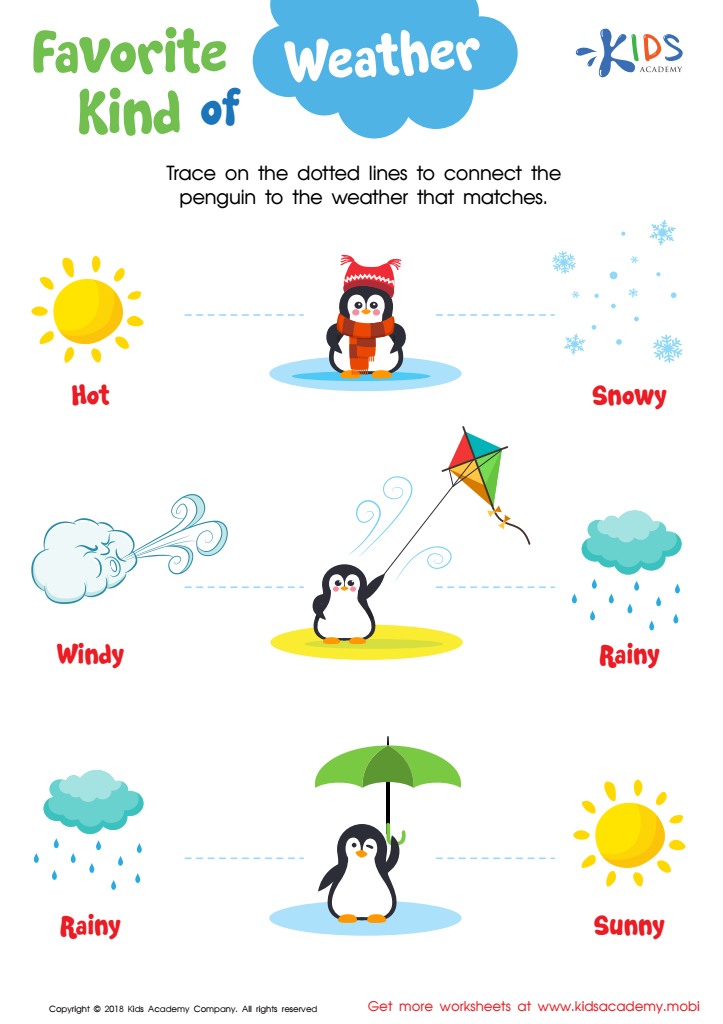
Favorite Kind of Weather Worksheet
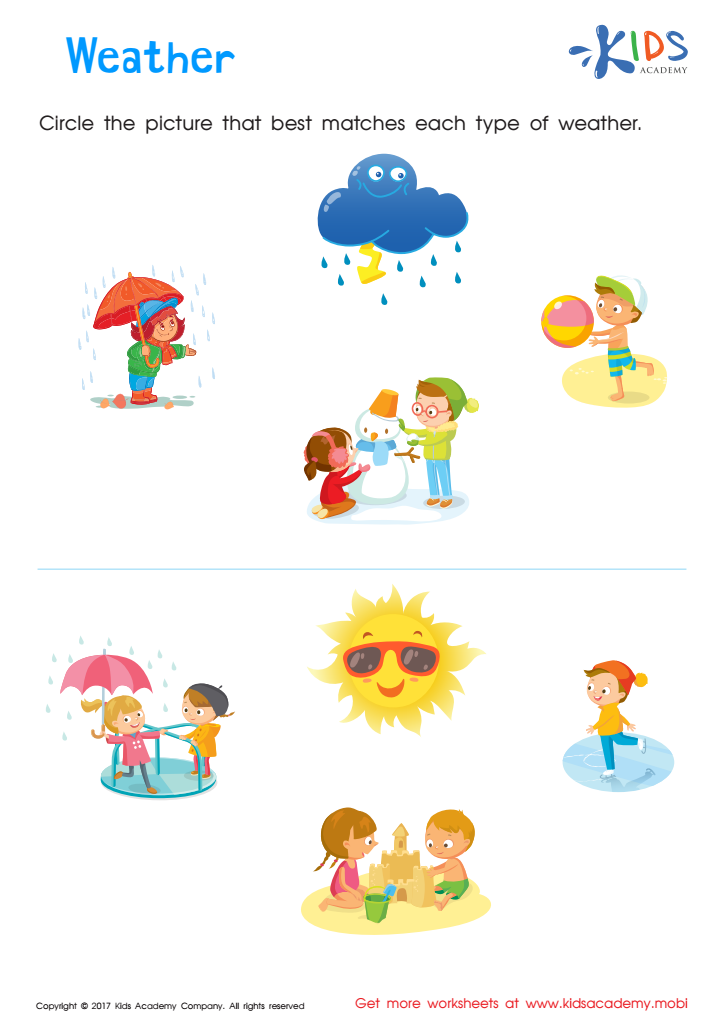
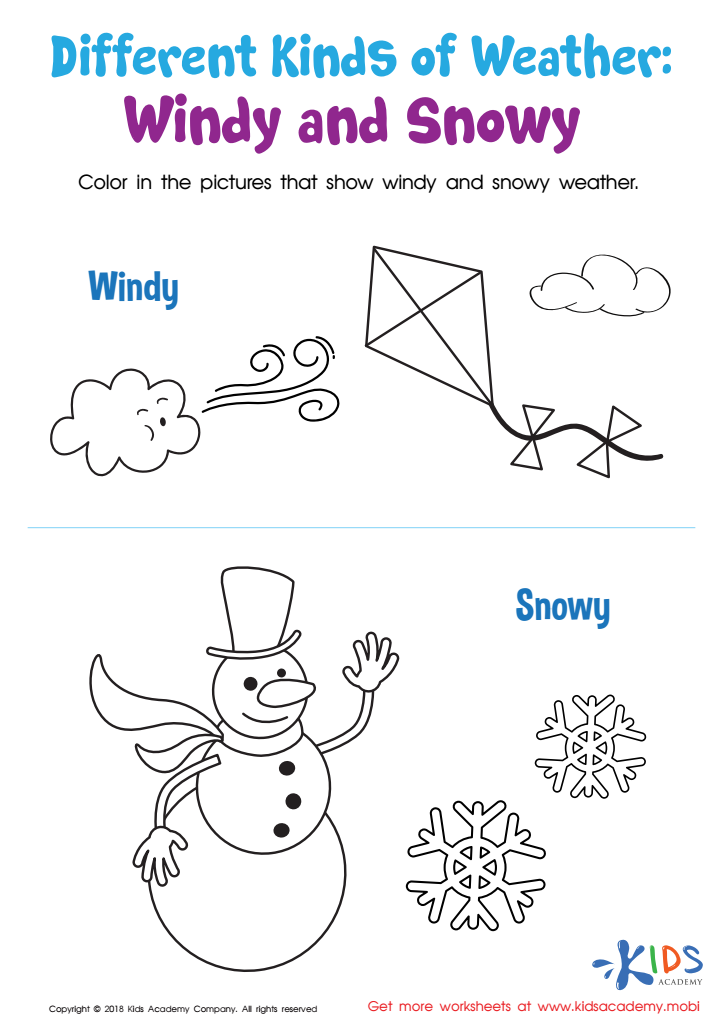
Different Kinds of Weather: Windy and Snowy Worksheet
 Assign to My Students






%20(1).jpg)

Parents and teachers should care about teaching weather vocabulary to children aged 3-9 because it plays a crucial role in their cognitive and linguistic development. At this formative stage, kids are rapidly acquiring language skills, and incorporating weather terms helps expand their vocabulary in a meaningful context. Understanding weather patterns builds awareness and curiosity about the natural world, fostering a sense of environmental stewardship from an early age.
Knowledge of weather-related terms helps children make sense of their daily experiences and routines. For instance, knowing what “sunny,” “rainy,” or “windy” means can help them understand why they need a jacket some days or an umbrella on others. It provides opportunities for observational learning, where kids can associate words with visual and sensory experiences, thereby reinforcing memory retention.
Moreover, weather discussions can be a platform for teaching scientific concepts like the water cycle, seasons, and climate changes, laying a foundation for STEM learning. It can stimulate critical thinking skills as children predict weather and recognize patterns. Collaborative activities centered around weather, such as weather charts or craft projects, can also improve social skills through group work. Therefore, integrating weather vocabulary into early education enriches a child's knowledge and supports holistic development.








