Map reading Normal Geography Worksheets for Ages 3-9
3 filtered results
-
From - To
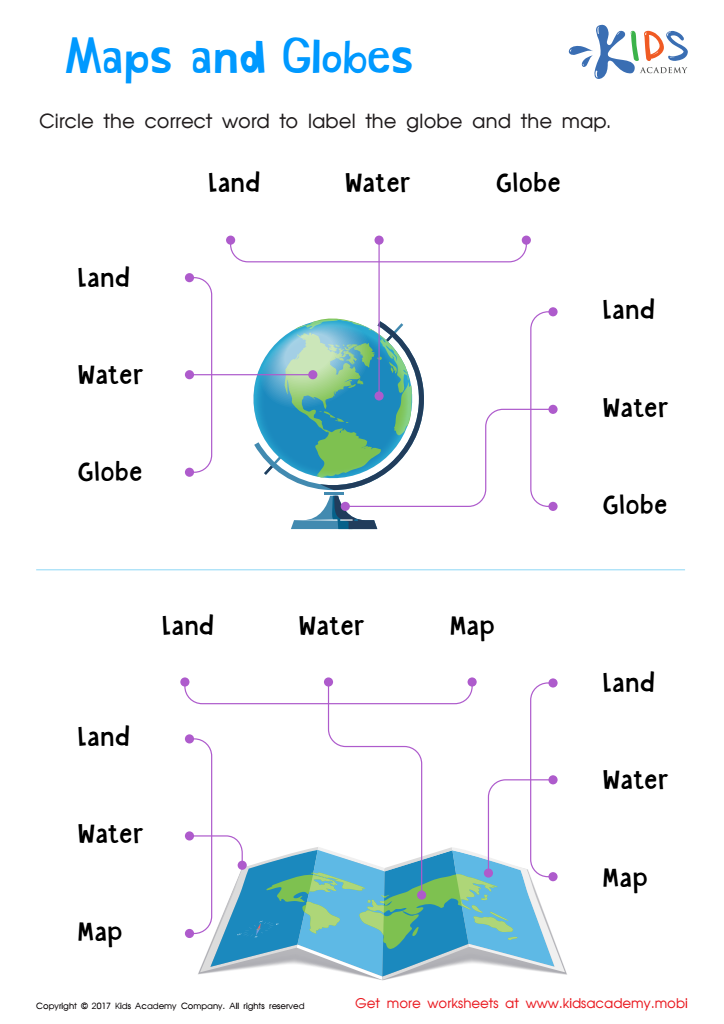
Discover the joy of map reading with our engaging Normal Geography Worksheets designed for children aged 3 to 9. These fun and interactive worksheets help young learners develop essential map skills while exploring their surroundings. With vibrant visuals and age-appropriate activities, your child will gain confidence in understanding maps, identifying symbols, and recognizing directions. Perfect for home or classroom use, our worksheets support early social studies education in a playful manner. Encourage your child's curiosity about the world around them and lay the foundation for lifelong learning with these carefully crafted map reading resources. Get started today!
 Assign to My Students
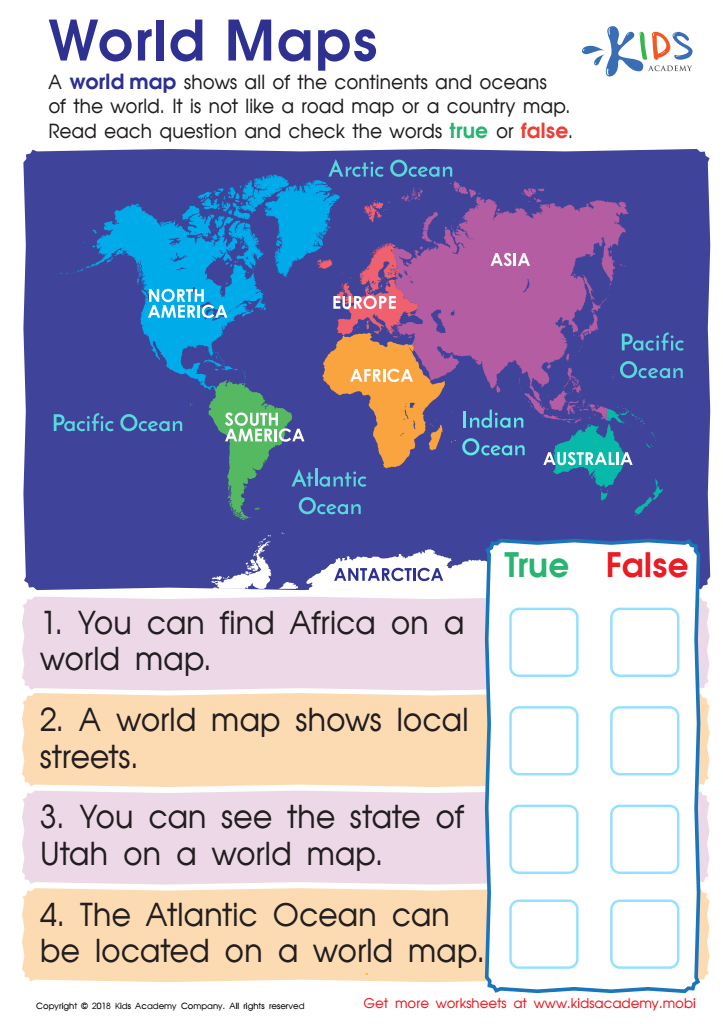
World Maps Worksheet
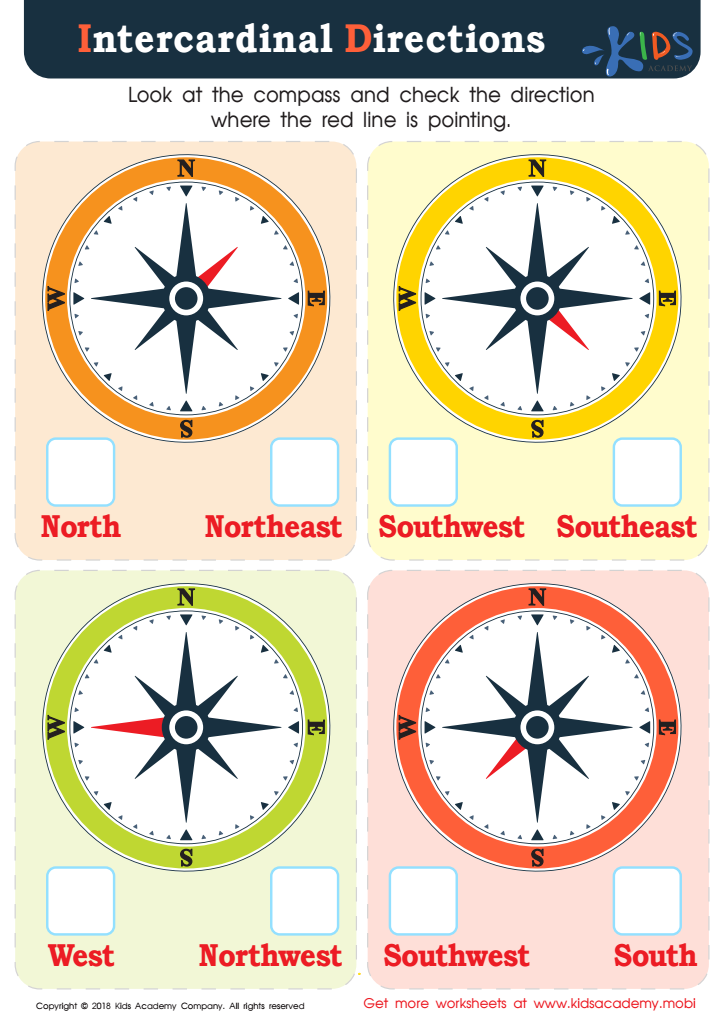
Intercardinal Directions Worksheet







Map reading and understanding basic geography concepts are essential skills for children aged 3-9, as they lay the foundation for critical thinking and spatial awareness. At this young age, children are naturally curious, and introducing them to maps ignites their interest in the world around them. Learning to interpret maps enhances their ability to understand relationships between places, navigating their environment, and developing a sense of direction.
For parents and teachers, fostering these skills encourages independence and empowerment. When children can read a map, they become more confident in exploring their surroundings. Furthermore, engaging with maps promotes communication, problem-solving, and collaboration through activities like treasure hunts or community exploration.
Normal geography education also cultivates cultural awareness and appreciation. It helps children understand diverse landscapes, communities, and customs, promoting inclusivity and environmental responsibility. By connecting geography with storytelling and play, educators can make learning enjoyable and relatable.
In summary, prioritizing map reading and geography for young learners is vital. It enriches their cognitive and social development, encourages lifelong learning, and empowers them to become informed and curious global citizens. As influential figures, parents and teachers play a critical role in nurturing these essential skills during formative years.