Understanding seasons Normal Geography Worksheets for Ages 3-9
4 filtered results
-
From - To
Explore our engaging "Understanding Seasons" geography worksheets, specifically designed for children aged 3-9. These interactive resources introduce young learners to the four seasons—spring, summer, autumn, and winter—while enhancing their grasp of basic geographic concepts. Each worksheet features vibrant illustrations, fun activities, and easy-to-follow instructions that promote critical thinking and creativity. Perfect for home or classroom use, these worksheets help children identify seasonal changes, associate weather patterns, and recognize how nature transforms throughout the year. Foster a love for learning and an appreciation for the world around them with our comprehensive collection of season-themed activities!
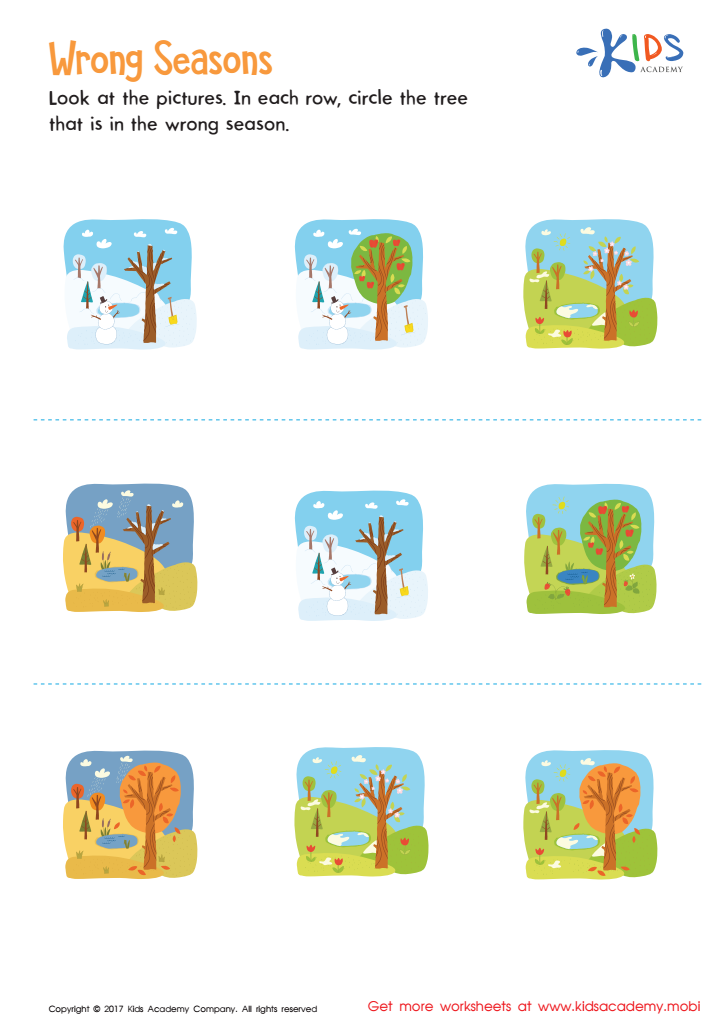
Wrong Seasons Worksheet
 Assign to My Students
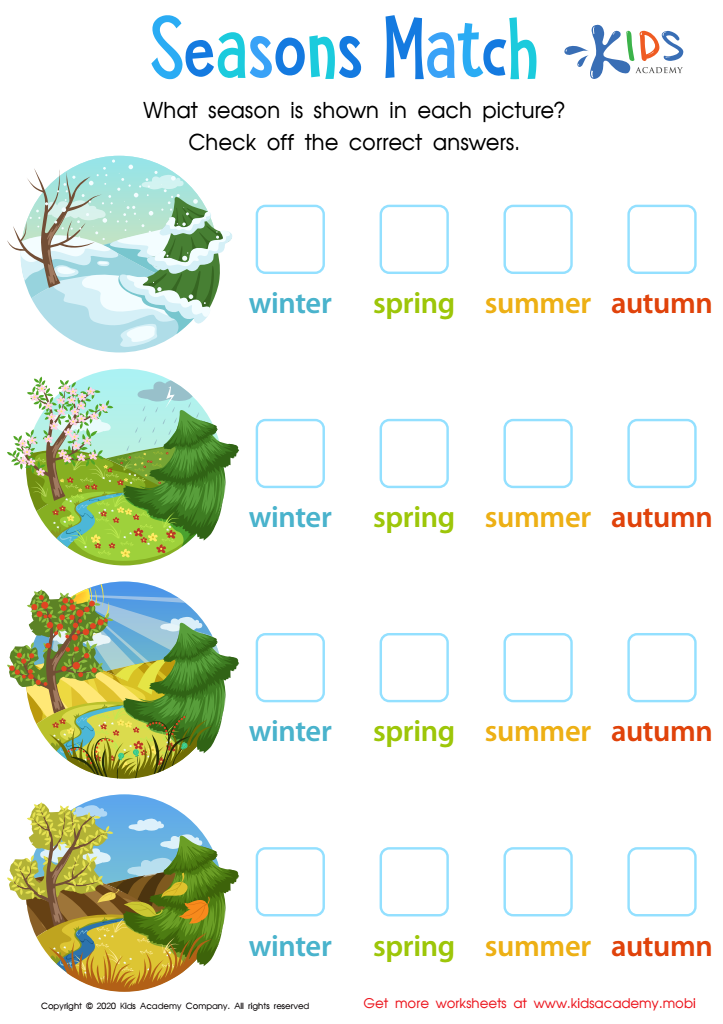
Seasons Match Worksheet
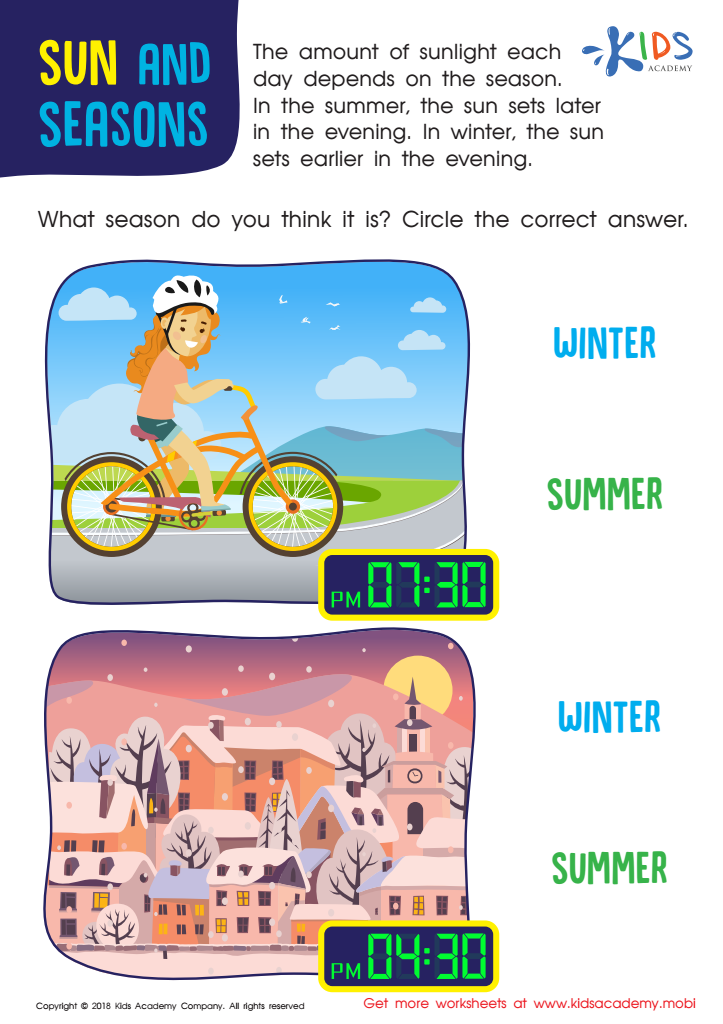
Sun and Seasons Worksheet
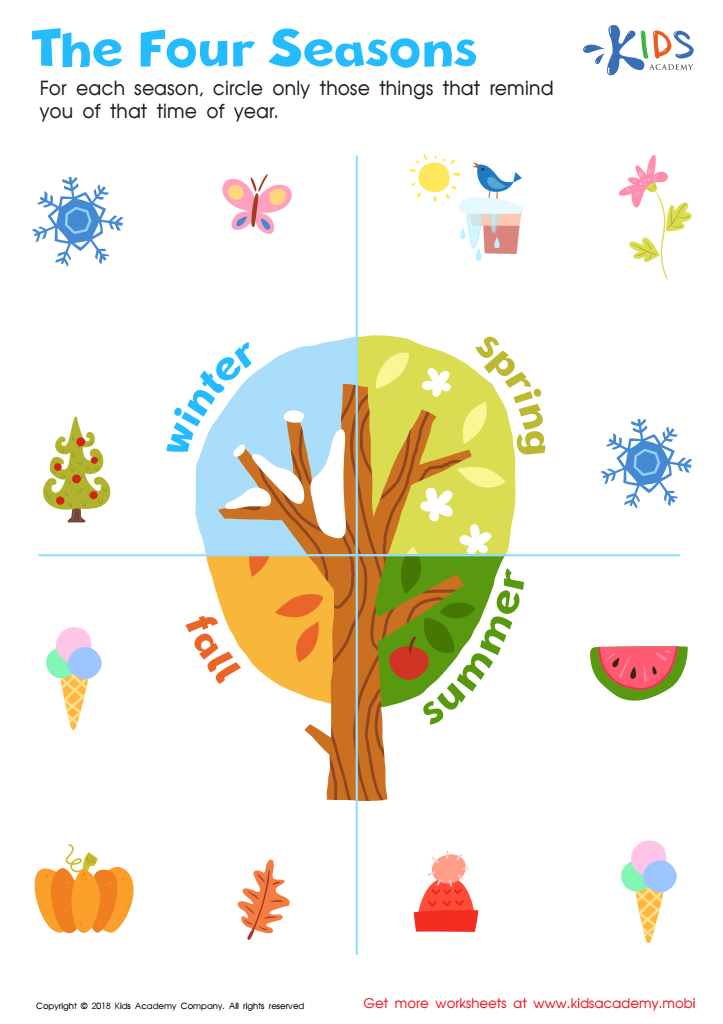
The Four Seasons Worksheet






Understanding seasons and normal geography is essential for children aged 3-9 as it lays the foundation for their curiosity and comprehension of the world around them. Teaching young learners about the four seasons—spring, summer, autumn, and winter—helps them recognize patterns in nature, enhance their observational skills, and cultivate an appreciation for environmental changes. Weather variations influence clothing choices, activities, and festivals, which can lead to engaging discussions and academic exploration.
Furthermore, understanding geography helps children develop spatial awareness and a sense of place. By learning about the world’s continents, oceans, and various habitats, children can connect with diverse cultures and ecosystems. This knowledge fosters empathy and cultural appreciation at an early age, encouraging inclusivity.
Parents and teachers play crucial roles in igniting this passion for learning. Incorporating seasonal themes into activities and lessons makes education dynamic and relatable. Outdoor activities can lead to hands-on experiences where children observe and interact with their environment. Overall, nurturing an understanding of seasons and geography not only equips children with vital knowledge, but also supports their emotional and cognitive development, setting the stage for lifelong learning.