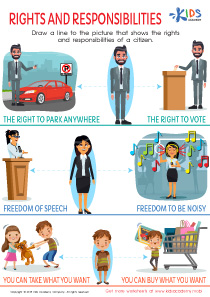
Critical Thinking Normal Governance and Civics Worksheets for Ages 3-9
6 filtered results
-
From - To
Discover our engaging collection of "Critical Thinking Normal Governance and Civics Worksheets for Ages 3-9," designed to nurture young minds. These expertly crafted resources foster essential thinking skills while introducing children to fundamental concepts of governance and civics. Perfect for early learners, our worksheets encourage kids to analyze, evaluate, and build strong problem-solving abilities in a fun and accessible way. Empower your students with activities that inspire curiosity and active participation in their communities. Explore and enhance critical thinking with age-appropriate tasks that make governance and civics relatable and exciting for young adventurers. Unlock potential now!
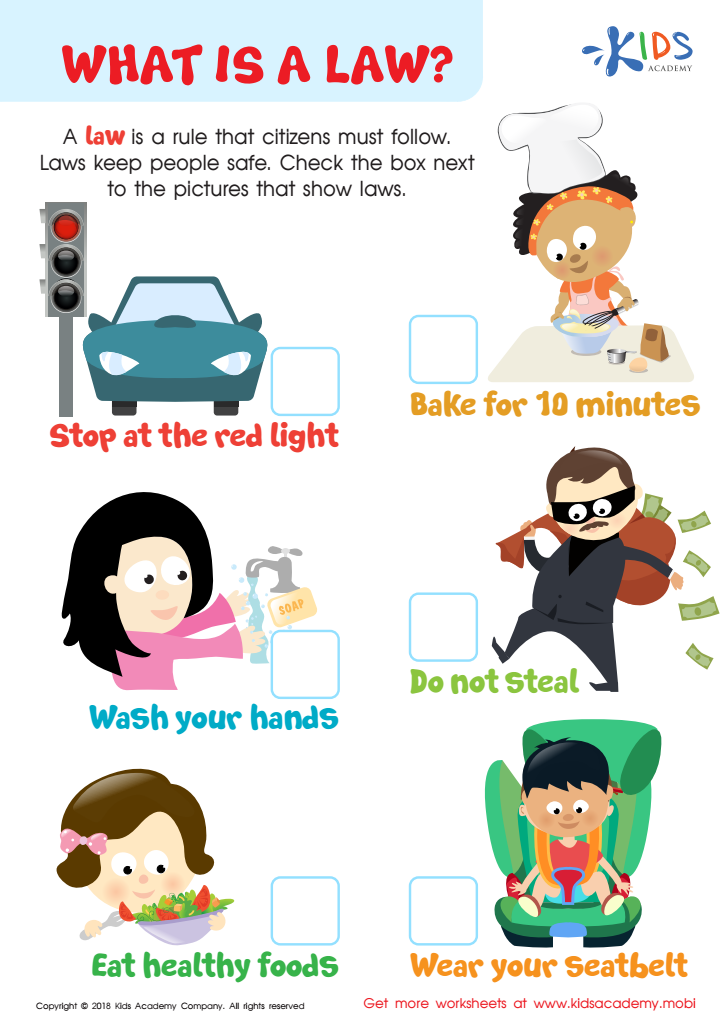
What is a Law? Worksheet
 Assign to My Students
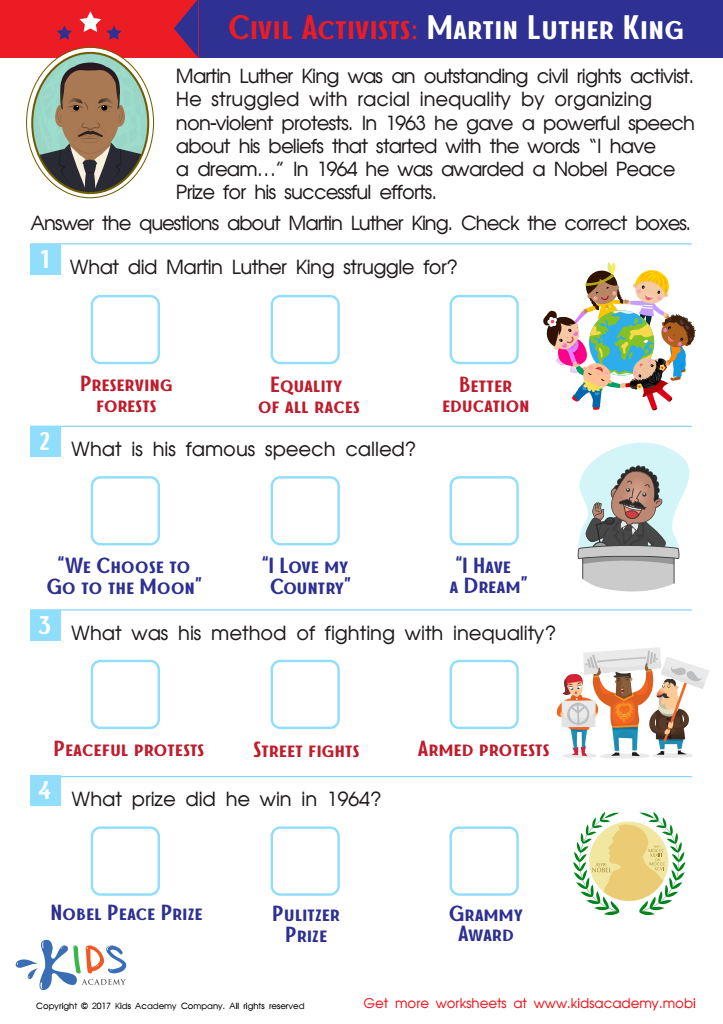
Martin Luther King Worksheet
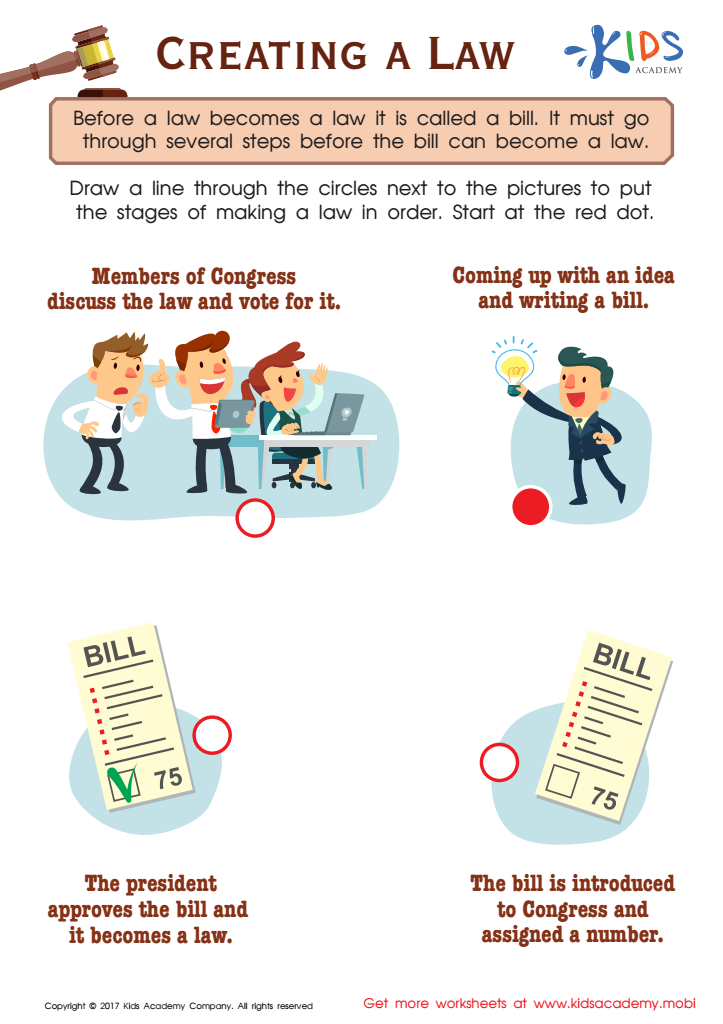
Creating a Law Worksheet
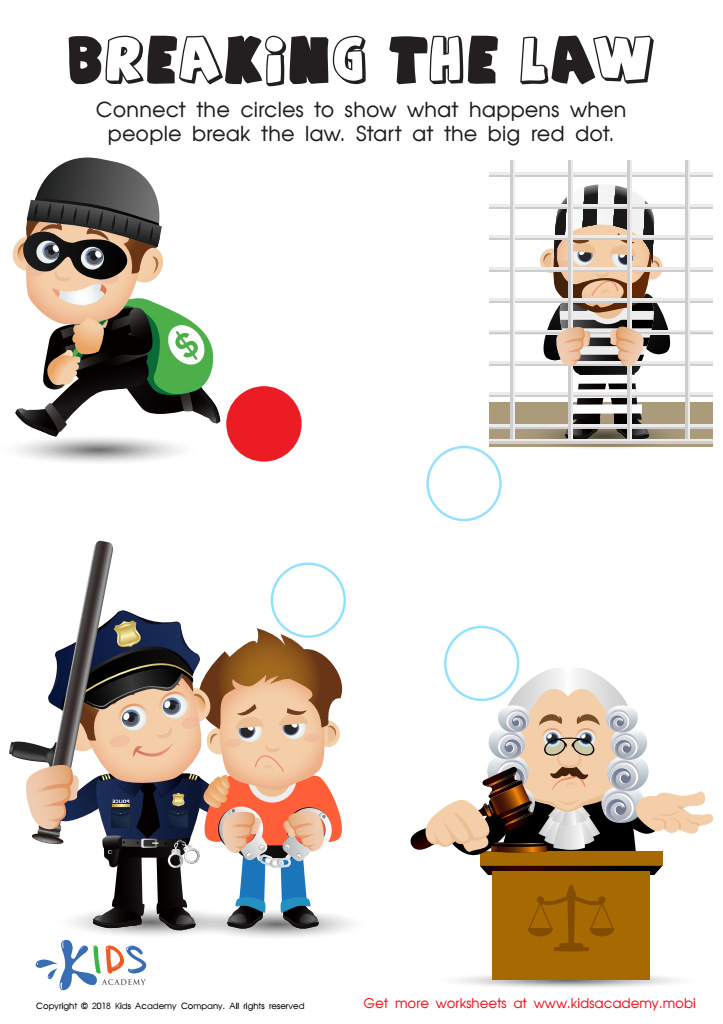
Breaking the Law Worksheet
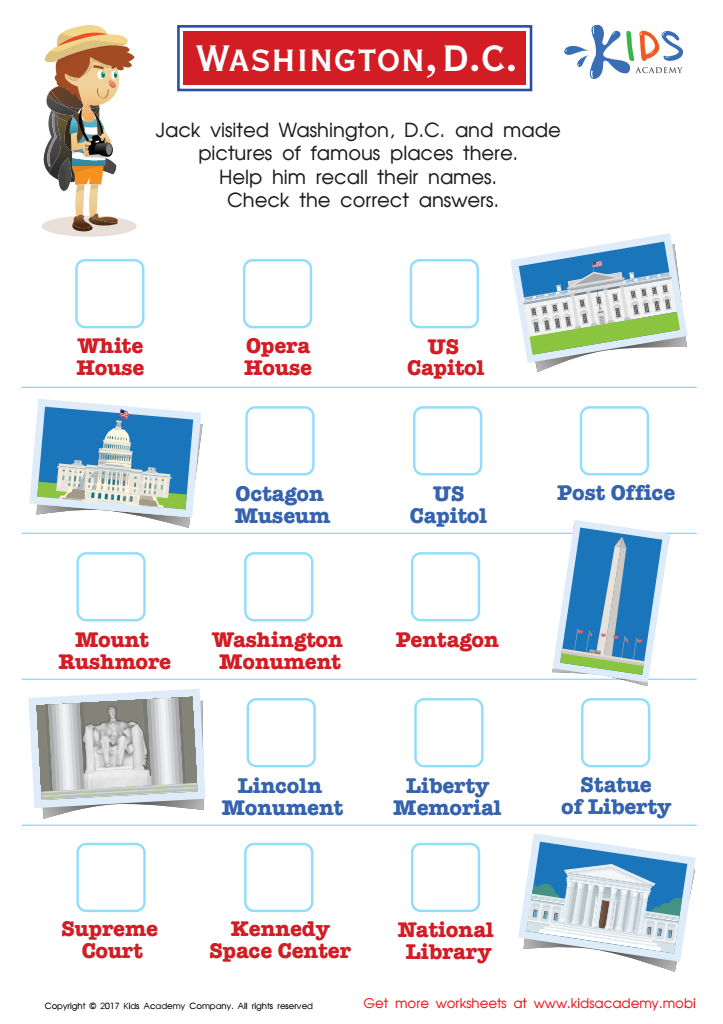
Washington D.C. Printable Worksheet
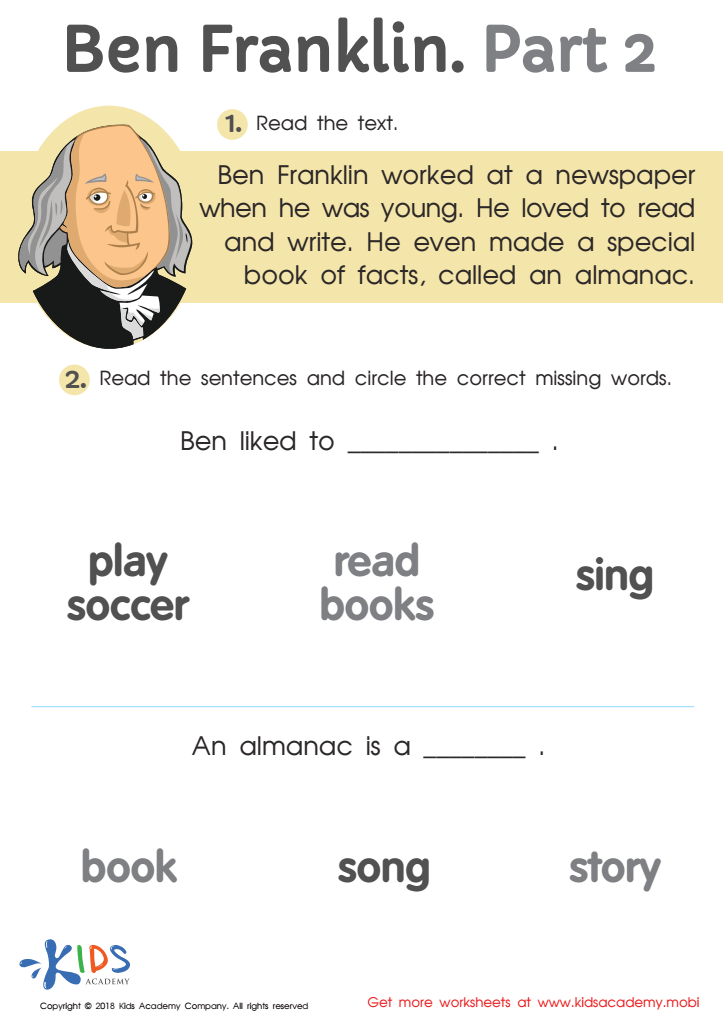
Ben Franklin Part 2 Worksheet


Parents and teachers should prioritize Critical Thinking, Normative Governance, and Civics education for children aged 3-9 because these foundational skills cultivate responsible, informed, and engaged citizens. Early childhood is a crucial period for cognitive and moral development; introducing critical thinking during this phase helps children learn to question, analyze, and understand their world. This skill not only enhances academic performance but also fosters reasoning capabilities essential for problem-solving in everyday life.
Normative Governance and Civics education instill an understanding of societal rules, roles, and responsibilities. Teaching these concepts early helps children grasp the importance of cooperation, fairness, and empathy, forming the bedrock of moral and ethical behavior. When children learn about community and governance, they appreciate the importance of contributing positively to their environment, understanding their rights and the rights of others, and developing respect for diverse viewpoints.
Integrating these topics into early education prepares children to navigate complexities thoughtfully and ethically. This not only benefits individual growth but also builds stronger, more compassionate societies. Engaged and informed young citizens are more likely to become proactive, respectful, and responsible adults who contribute positively to their communities and the larger world. Therefore, investing in these educational values early on yields long-lasting, impactful benefits.