Logical Reasoning Normal Social Studies Worksheets for Ages 3-9
4 filtered results
Difficulty Level
Grade
Age
-
From - To
Subject
Activity
Standards
Discover engaging Logical Reasoning Normal Social Studies Worksheets designed for children aged 3-9! These thoughtfully curated resources promote critical thinking and problem-solving skills through fun, interactive activities. Each worksheet introduces young learners to essential social concepts while challenging them to evaluate information and draw logical conclusions. Perfect for both home and classroom use, these worksheets foster cognitive development and enrich social studies learning. With vibrant illustrations and age-appropriate tasks, kids will enjoy exploring their world while enhancing their reasoning abilities. Download our worksheets today to help shape confident thinkers and inquisitive learners in the early years!
Favorites
With answer key
Interactive
 Assign to My Students
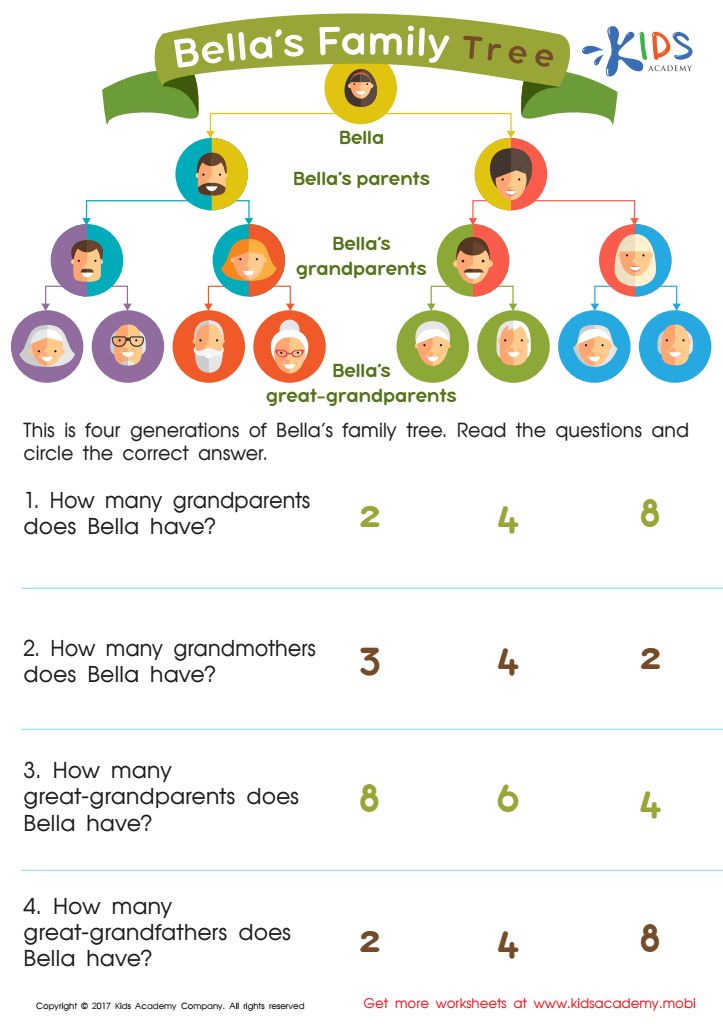
Bella's Family Tree Worksheet
Grade 2 kids learn 4 generations of a family with Kids Academy's new family tree worksheet. They explore Bella's tree, reading and answering questions about her grandparents and great-grandparents. It's an easy way to understand family relationships.
Bella's Family Tree Worksheet
Worksheet
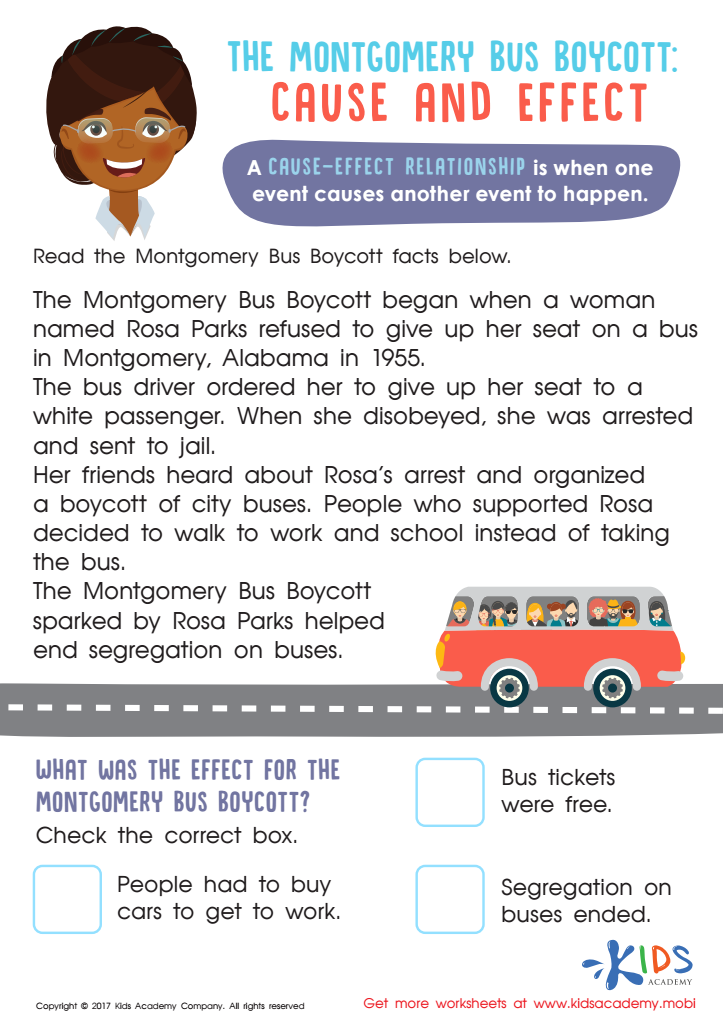
The Montgomery Bus Boycott Cause and Effect Worksheet
Kids Academy's cause-effect worksheet PDF introduces 2nd graders to cause-effect relationships through the Montgomery bus boycott. Kids read the story based on real facts and check the answers to demonstrate their understanding.
The Montgomery Bus Boycott Cause and Effect Worksheet
Worksheet
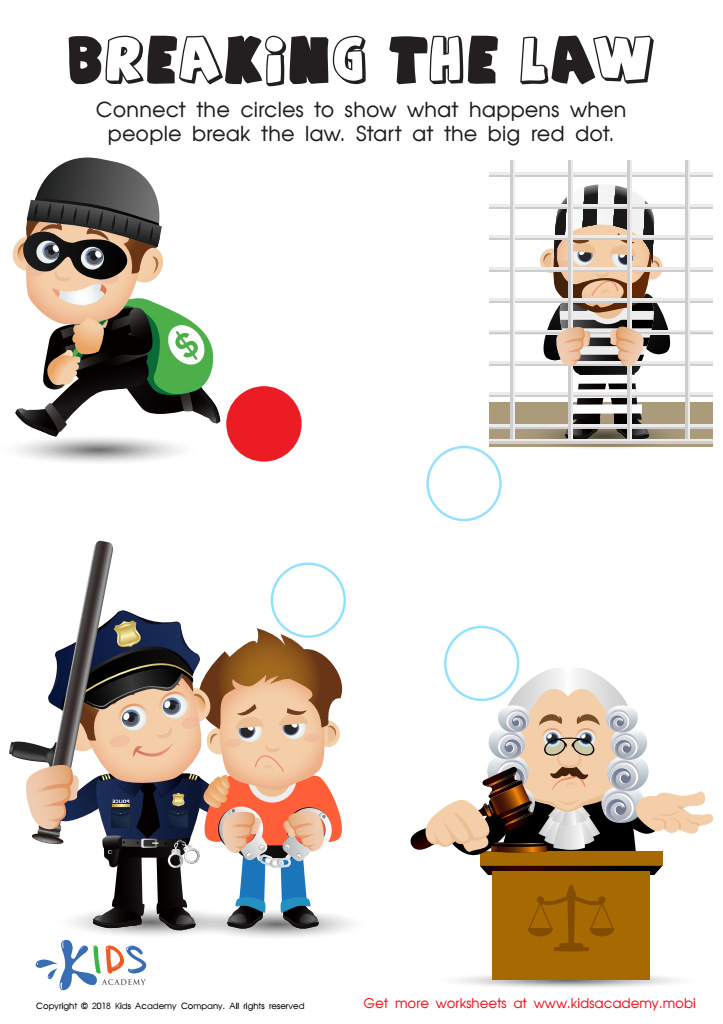
Breaking the Law Worksheet
Explain to your child why people go to jail. Show them this worksheet; it illustrates the stages a criminal goes through from breaking the law to receiving their punishment. Guide them in connecting the circles from the big red dot. Finish with a discussion on why it's important to follow the law.
Breaking the Law Worksheet
Worksheet
Join Kids Academy for Free
Who is primarily going to use this learning content?








Logical reasoning is a fundamental skill that can significantly affect a child's overall cognitive development, especially in the critical ages of 3-9. Within the domain of Social Studies, engaging children in logical reasoning helps them better understand their environment, communities, and the relationships between individuals and societies. Parents and teachers should care about this subject because it equips children with the skills to identify patterns, make connections, and solve problems—critical elements in their academic journey and real-world interactions.
By teaching logical reasoning through Social Studies, children develop empathy, critical thinking, and decision-making skills. It encourages active participation and enhances their ability to question and analyze information. For instance, understanding cause and effect within historical events helps foster a deeper appreciation of their cultural heritage while linking past experiences to current societal issues.
Moreover, these skills lay the groundwork for future learning. Students who engage with logical reasoning in their early years tend to perform better academically across all subjects, including mathematics and literacy. Therefore, by focusing on Logical Reasoning within Social Studies, parents and educators can nurture well-rounded individuals capable of critical thought and informed citizenship, ultimately benefiting both the children and the broader community.