Weather Vocabulary Normal World Around Us Worksheets for Ages 3-9
3 filtered results
-
From - To
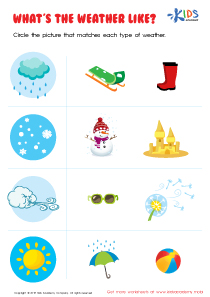
Introduce your child to the fascinating world of weather with our "Weather Vocabulary Normal World Around Us Worksheets for Ages 3-9". These engaging, printable worksheets are designed to enrich young minds and help kids understand daily weather patterns. Fun activities featuring colorful images and interactive exercises make learning weather-related terms like sunny, rainy, cloudy, and stormy exciting. Perfect for early learners, these worksheets support vocabulary development, matching games, and practical learning experiences about the weather they see every day. Enhance your child's educational journey and boost their confidence with our comprehensive weather vocabulary resources.
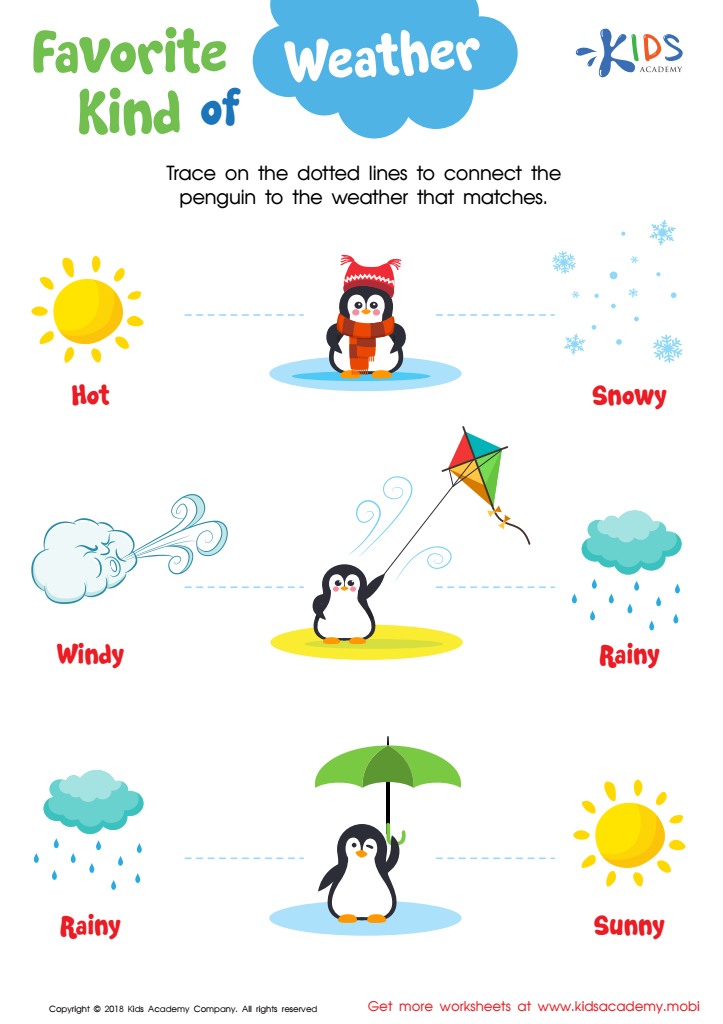
Favorite Kind of Weather Worksheet
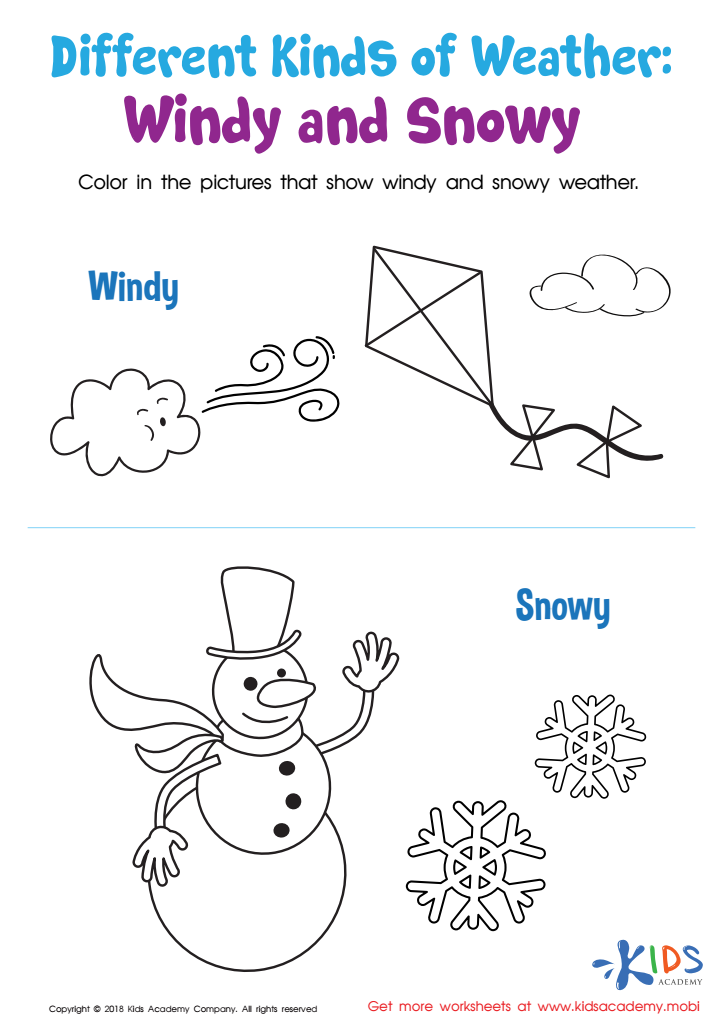
Different Kinds of Weather: Windy and Snowy Worksheet
 Assign to My Students



.jpg)




Introducing weather vocabulary to children ages 3-9 is crucial for multiple reasons. At this formative stage, young minds are naturally curious and eager to understand the world around them. Teaching them about weather not only answers their immediate questions but also lays a foundation for essential life skills.
Firstly, comprehension of weather terms like “sunny,” “rainy,” “windy,” or “snowy” helps children develop linguistic abilities and cognitive thinking. They can accurately describe their environment, enhancing their communication skills. Moreover, discussing weather phenomena promotes observational skills and scientific thinking, fostering early interest in STEM (Science, Technology, Engineering, Mathematics) fields.
Secondly, weather awareness is vital for safety and preparedness. Understanding warnings like "storm," "thunder," or "tornado" can help children react appropriately in the face of adverse conditions, potentially reducing anxiety during unforeseen events.
Moreover, incorporating weather topics into daily routines also enriches social interactions. Children can engage in conversations about their experiences, leading to improved social skills and better emotional health through shared experiences and understanding.
In summary, incorporating weather vocabulary into early education nurtures linguistic prowess, critical thinking, safety awareness, and social development. For these reasons, parents and teachers should prioritize teaching weather vocabulary to children as a fundamental aspect of understanding their world.