Letter recognition Normal Tracing Words Worksheets for Ages 3-9
3 filtered results
Difficulty Level
Grade
Age
-
From - To
Subject
Activity
Standards
Welcome to our Letter Recognition Normal Tracing Words Worksheets! Designed for kids aged 3-9, these printable worksheets help young learners develop essential early literacy skills. Our engaging activities promote letter recognition through fun tracing exercises, allowing children to visually connect letters with corresponding words. Each worksheet combines learning with play, making it easy for children to practice letter formation while enhancing their vocabulary. Ideal for homeschool or classroom use, these resources ensure a comprehensive approach to writing readiness. Watch your child gain confidence as they master their letters and words with our thoughtfully crafted worksheets. Start their learning journey today!
Favorites
With answer key
Interactive
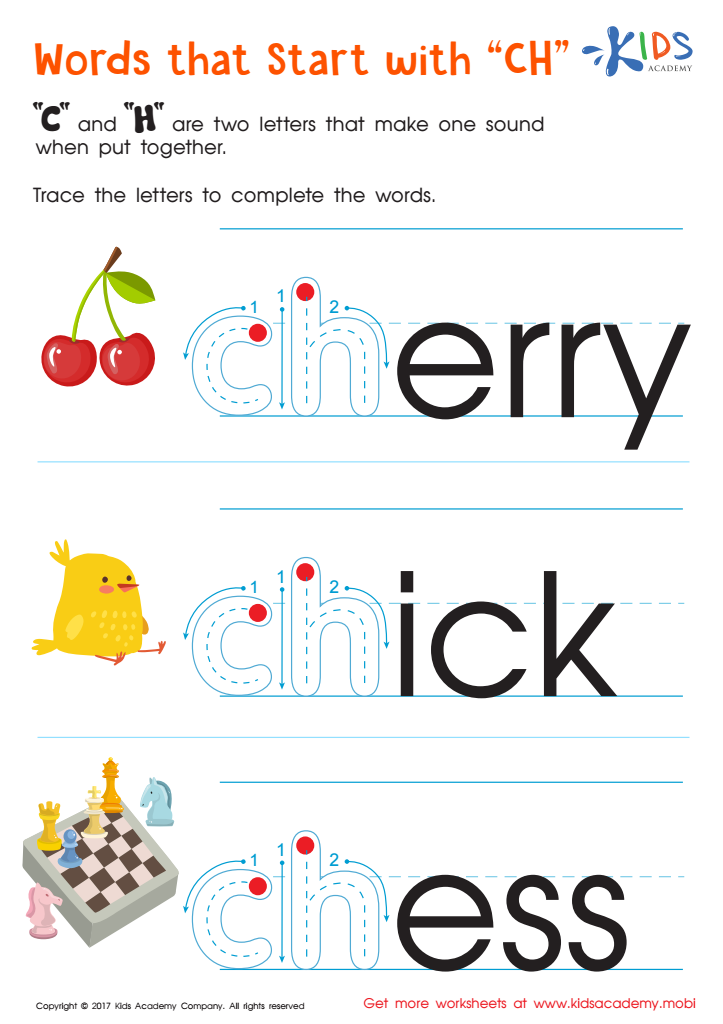
Words That Start with "ch" Spelling Worksheet
With Kids Academy, learning phonics and spelling has never been easier.
Kids Academy's "ch" tracing worksheet makes it easy for your little one to learn phonics and spelling. It features cute, brightly colored images to help them trace familiar words, making learning fun and enjoyable.
 Assign to My Students
Words That Start with "ch" Spelling Worksheet
Worksheet
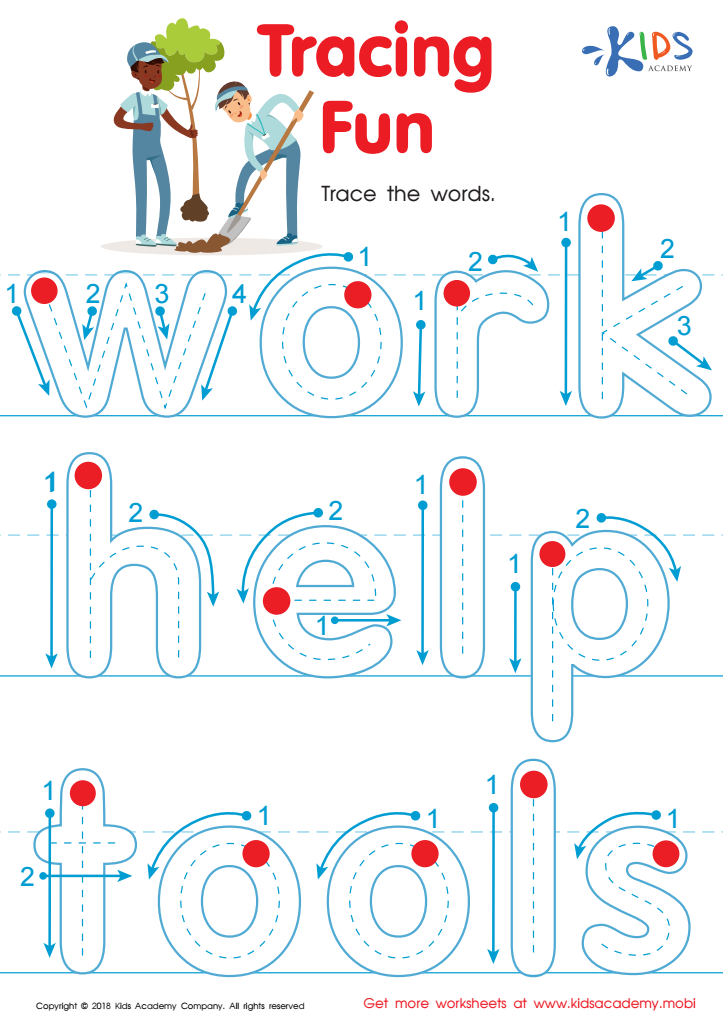
Tracing Fun Worksheet
Believe it or not, good handwriting helps with reading! Starting at the top left and writing legibly builds reading skills. This free worksheet helps little learners practice basic sight words. Red dots show them where to start and the words provide reinforcement without them realising. An enjoyable way to boost their reading and writing.
Tracing Fun Worksheet
Worksheet
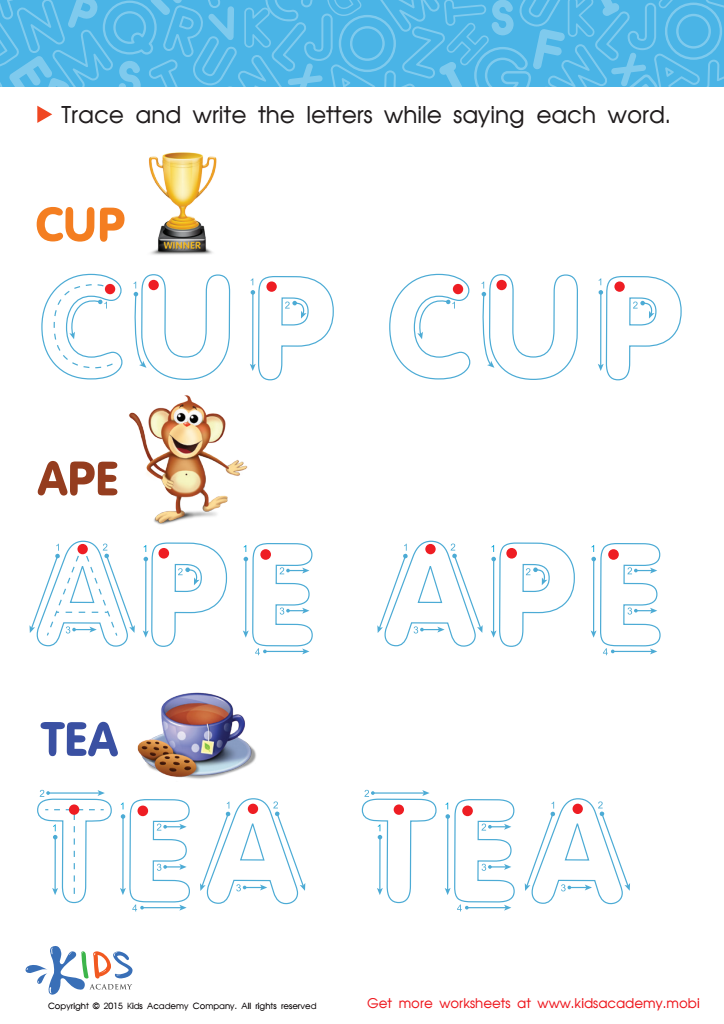
A Cup, an Ape and Tea Spelling Worksheet
Check out Kids Academy's new English vocab worksheet! You'll find three lines with three words each. Practice your pronunciation and writing by writing them one by one. We have more free spelling word worksheets on our website, so download and practice today!
A Cup, an Ape and Tea Spelling Worksheet
Worksheet
Join Kids Academy for Free
Who is primarily going to use this learning content?








Letter recognition and tracing words are fundamental skills for children aged 3-9, serving as the building blocks for literacy and communication. Parents and teachers should prioritize these skills as they form the foundation for reading and writing. When children can recognize letters, they begin to understand that these symbols represent sounds and words, leading to early reading development.
Tracing words enhances fine motor skills, crucial for effective writing. As children trace letters, they increase their hand-eye coordination and dexterity, which are essential for holding writing tools and forming letters accurately. Additionally, this practice promotes visual recognition and memory retention of letter shapes and sounds.
Encouraging letter recognition and tracing also fosters a child’s confidence. Mastery of these skills can motivate them to engage more fully in language-related activities, leading to enhanced vocabulary and comprehension. Furthermore, a strong early literacy foundation has been shown to correlate with future academic success.
By focusing on letter recognition and tracing, parents and teachers can create a supportive learning environment that nurtures a love for reading and writing, ultimately contributing to a child's lifelong educational journey. Investing in these skills now prepares children for future challenges and opportunities in their academic and personal lives.