
Alphabet Learning Normal Alphabet Worksheets for 3-Year-Olds
3 filtered results
Difficulty Level
Grade
Age
-
From - To
Subject
Activity
Standards
Discover fun and engaging Alphabet Learning Normal Alphabet Worksheets designed for 3-year-olds! Our printable worksheets provide a creative way for young learners to explore letters and develop essential literacy skills. Each worksheet features colorful illustrations and interactive activities, helping children recognize letters, practice tracing, and build vocabulary. Suitable for home or classroom use, these resources promote hands-on learning while keeping little ones entertained. Whether starting their literacy journey or reinforcing existing knowledge, our Alphabet Learning worksheets are perfect for nurturing curiosity and confidence in early learners. Spark a love for reading with these essential tools for children aged 3! Download for free today!
Favorites
With answer key
Interactive
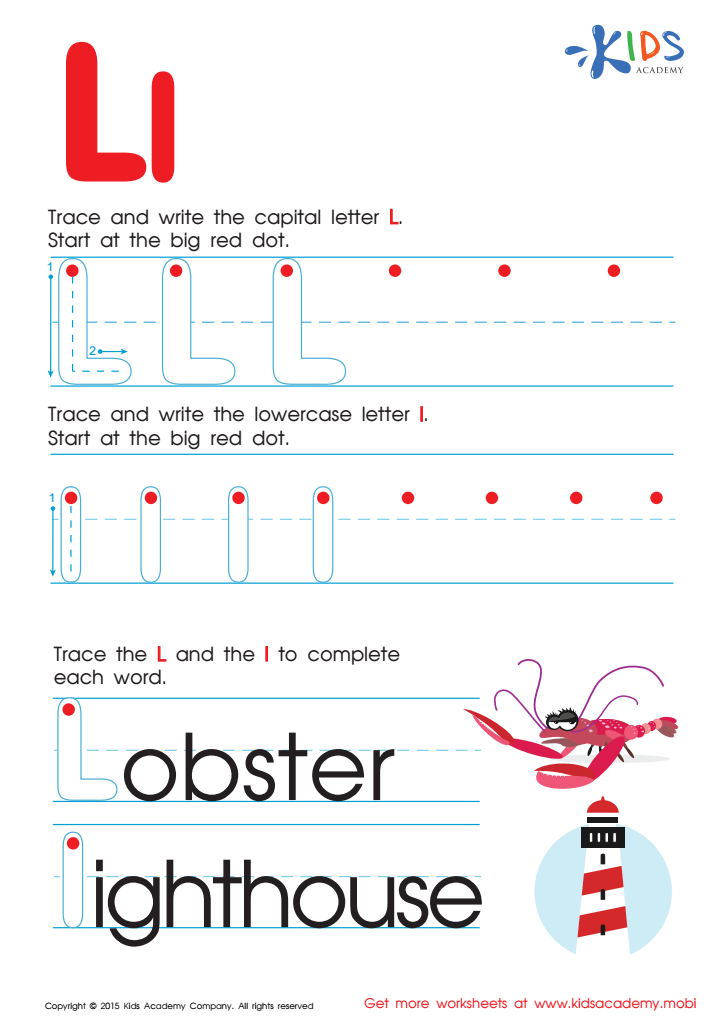
Letter L Tracing Page
Trace uppercase and lowercase letters to practice writing. Pay attention to the lowercase letters, like the "L", that are not as tall as an uppercase "I" or as short as a lowercase "i". Words like "lobster" and "lighthouse" are waiting to be completed. Enjoy!
 Assign to My Students
Letter L Tracing Page
Worksheet
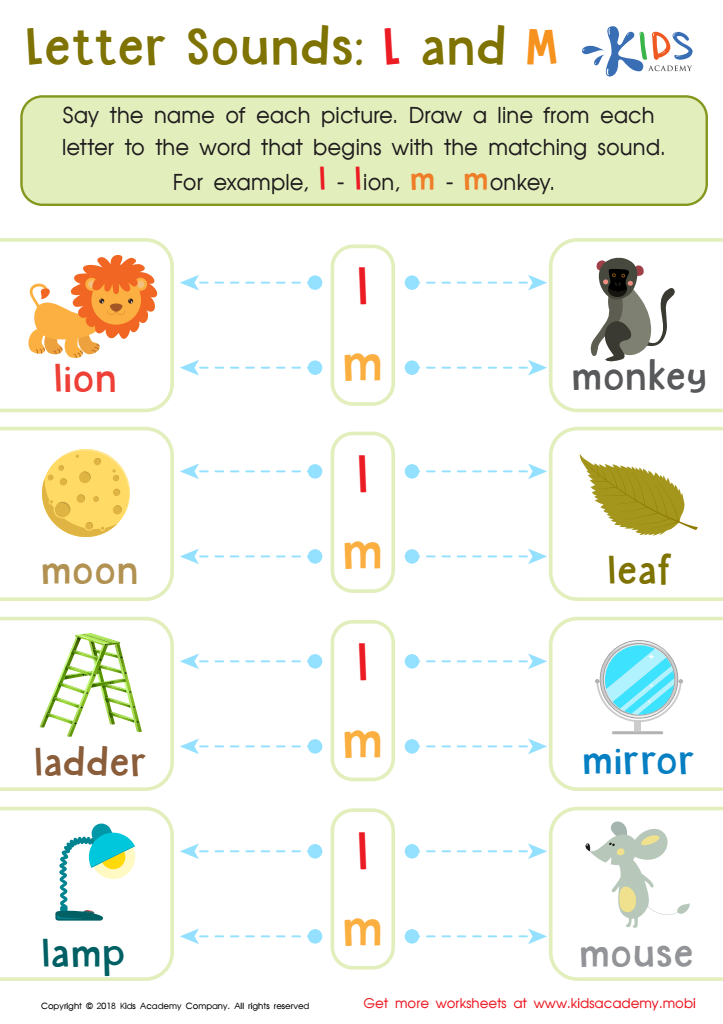
Letter l and M Sounds Worksheet
Our Kids Academy phonics practice pages give clear instructions and captivating pictures to pique children's interest. This fun worksheet helps kids identify a picture, then match its beginning sound. Listen and say each word - does it start with "L" or "M"? Trace the dotted line from the letter to the correct match and listen closely to the sound it makes.
Letter l and M Sounds Worksheet
Worksheet

Letter F Tracing Page
Trace "F" with your pencil! Start at the red dot and draw lines — it's fun! Check it out — it looks great! Keep practicing to make it even better. Then, try completing words. Help out the broken fan and funny frog! Get free alphabet worksheets and activities for your kids. Come see our new tracing pages!
Letter F Tracing Page
Worksheet
Join Kids Academy for Free
Who is primarily going to use this learning content?






Parents and teachers should care about Alphabet Learning Normal Alphabet for 3-Year-Olds because it lays the foundation for literacy and communication skills. At this age, children are developmentally primed to recognize letters and sounds, which are essential building blocks for reading and writing. Introducing the alphabet early helps foster language development, enriching vocabulary and enhancing cognitive skills.
Engaging in alphabet learning activities cultivates curiosity and a love for learning, making it a joyful experience rather than a chore. This builds confidence and offers children a sense of accomplishment as they master their letters. Moreover, recognizing that different children have unique learning paces encourages tailored instruction, allowing educators and parents to support children effectively.
Additionally, an understanding of the alphabet facilitates positive parent-child interactions through reading and storytelling, which enhances bonding and stimulates imagination. By emphasizing Alphabet Learning, adults can also instill the importance of education from a young age, guiding children towards a lifelong journey of discovery.
Ultimately, fostering early literacy skills can have long-lasting effects, making it imperative for parents and teachers to actively participate in this critical aspect of child development.







