Alphabetical order understanding Normal Letter Recognition Worksheets for 3-Year-Olds
3 filtered results
-
From - To
Enhance your 3-year-old’s letter recognition skills with our engaging Alphabetical Order Understanding Worksheets! Designed for early learners, these interactive activities introduce the alphabet in a fun and accessible way. Each worksheet focuses on normal letter recognition, helping children identify and arrange letters in alphabetical order. This foundational skill is essential for reading and language development. Our worksheets feature vibrant illustrations and age-appropriate exercises tailored to keep young minds captivated. As your child dives into these exercises, they'll build confidence and a strong grasp of the letter sequence, setting the stage for future educational success. Start your learning journey with us today!

Letter G Tracing Page
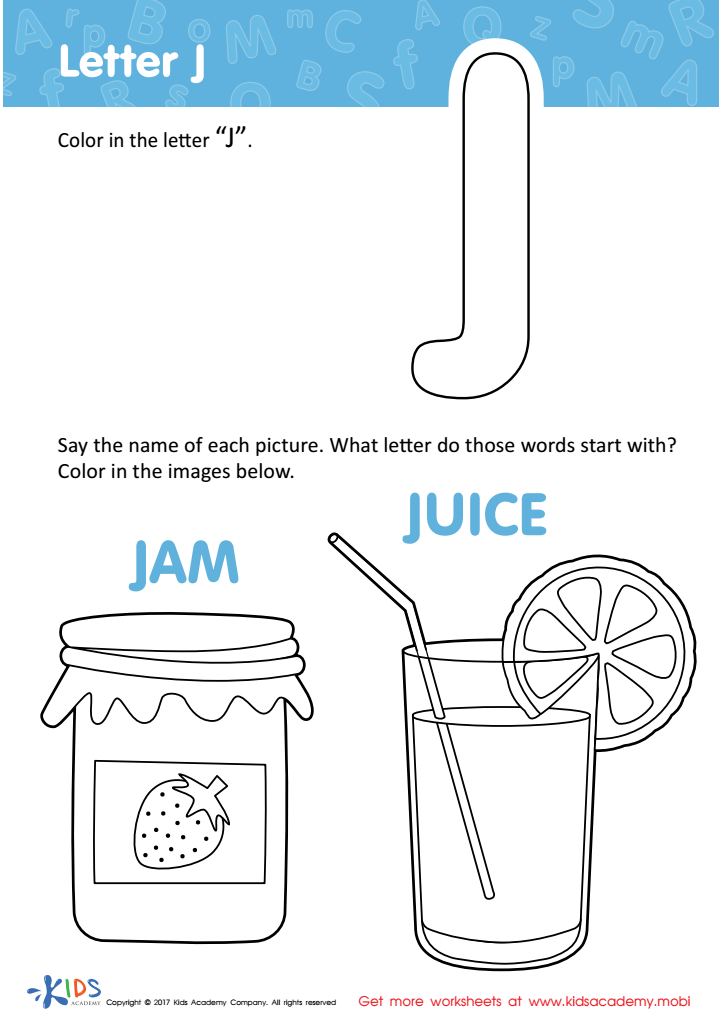
Letter J Coloring Sheet
 Assign to My Students
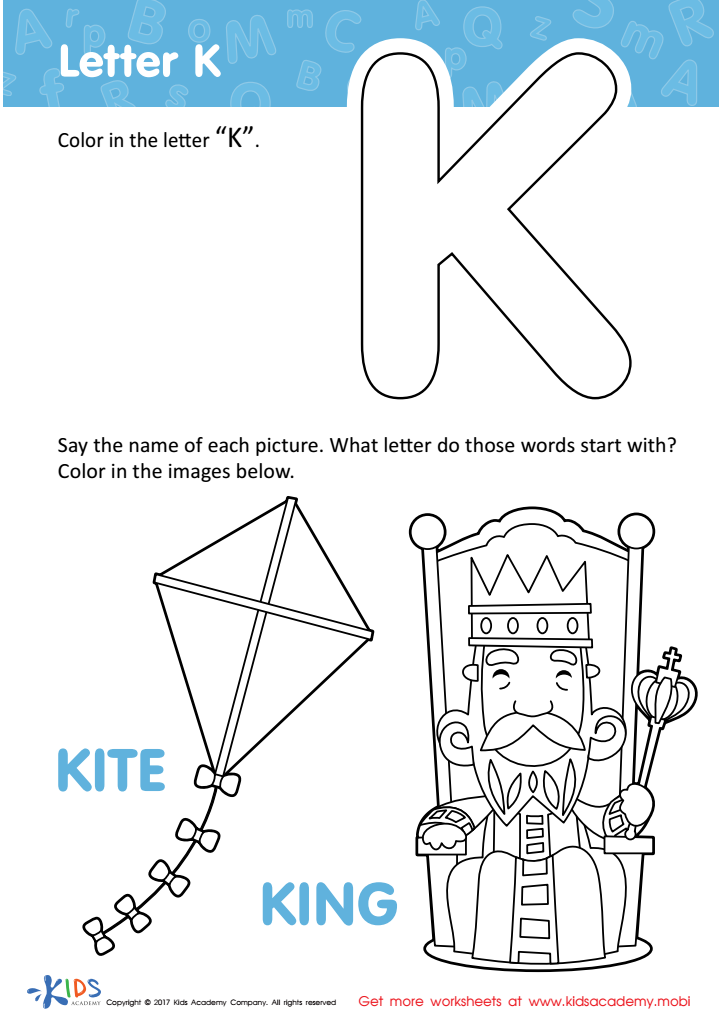
Letter K Coloring Sheet
Assign to My Students








Understanding alphabetical order and letter recognition is foundational for 3-year-olds and plays a crucial role in their literacy development. Parents and teachers should prioritize these skills for several reasons.
Firstly, recognizing letters is the building block for reading. Familiarity with the alphabet helps children decode words, making it easier for them to grasp phonics later on. Alphabetical order is equally important; it teaches kids how to organize information, a skill they will use throughout their lives in various contexts, such as libraries or digital settings.
Moreover, early development of letter recognition fosters a love for learning. When children engage with letters through songs, games, and stories, they become enthusiastic about reading and writing. This enthusiasm builds a positive association with literacy, motivating them to explore language more deeply.
Furthermore, understanding alphabetical order supports cognitive development. It enhances memory, improves sequential thinking, and encourages problem-solving skills.
Lastly, early literacy skills can lead to long-term academic success. Children equipped with strong letter recognition and alphabetical skills may find transitions to later grades smoother, ultimately promoting lifelong learning. For these reasons, both parents and teachers should actively engage children in fun and educational activities that promote alphabetical order and letter recognition.








