Phonics recognition Normal Phonics Worksheets for 3-Year-Olds
3 filtered results
-
From - To
Discover our engaging Phonics Recognition worksheets tailored for 3-year-olds! These fun and colorful printables incorporate essential phonics skills, helping young learners recognize letters and their corresponding sounds. Designed to make learning enjoyable, our worksheets include playful activities that enhance phonetic awareness through interactive exercises. Ideal for preschoolers, they promote early literacy development in a captivating way. Whether at home or in the classroom, these resources encourage children to explore the world of sounds and letters, laying the foundation for future reading success. Explore our collection today and empower your child’s phonics journey with our normal phonics worksheets!
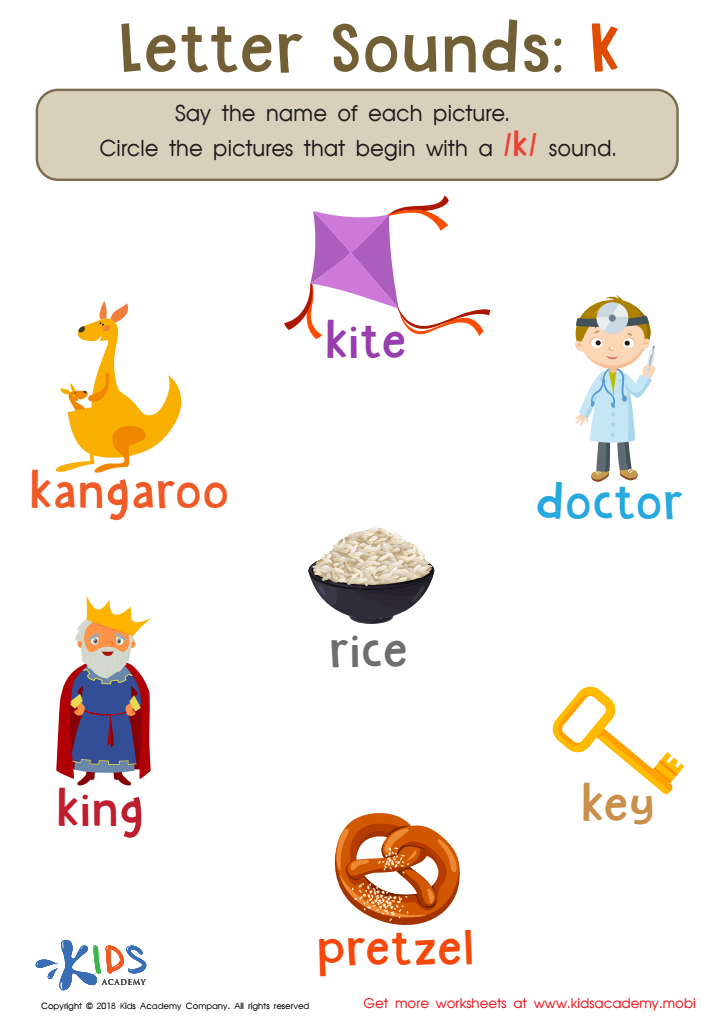
Letter K Sounds Worksheet
 Assign to My Students
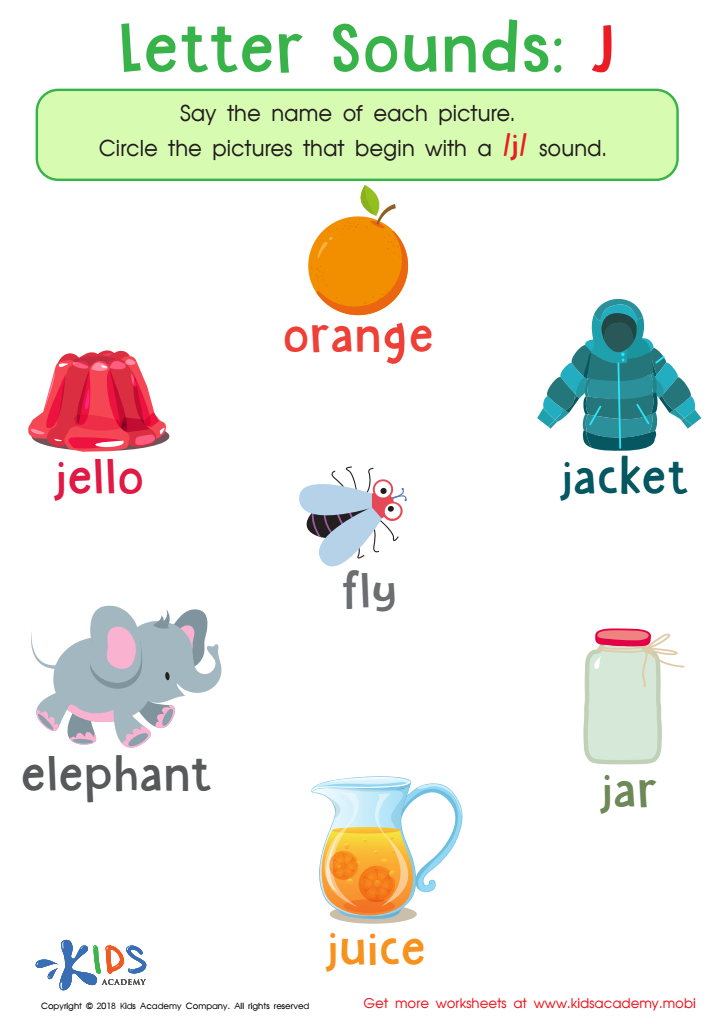
Letter Sounds: J Printable Worksheet
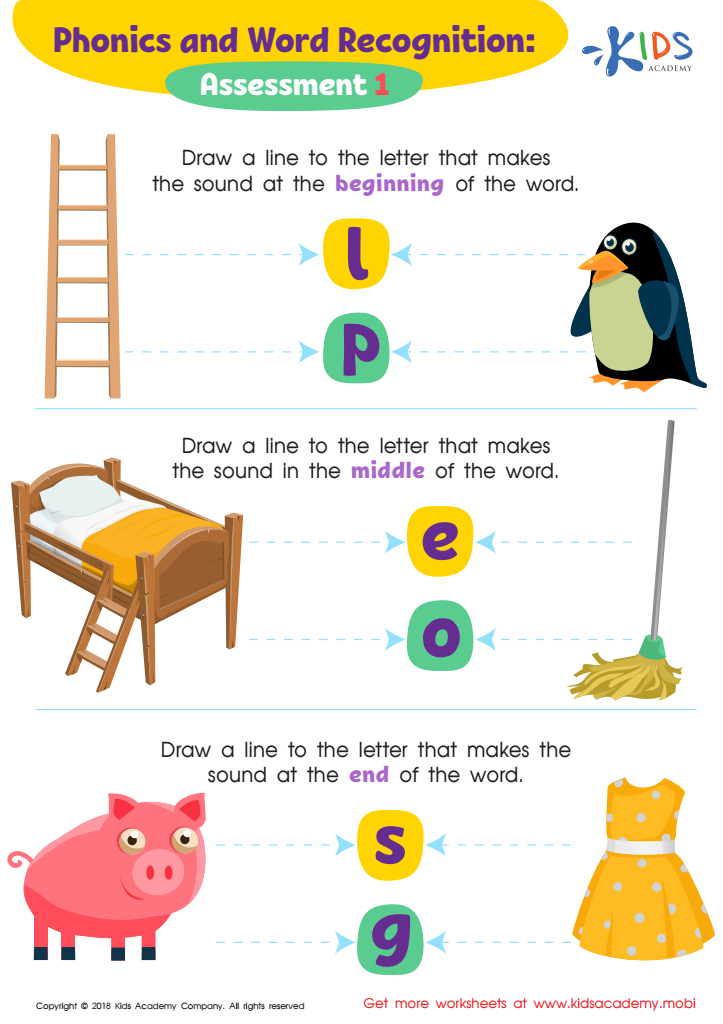
Phonics and Word Recognition: Assessment 1 ELA Worksheet








Phonics recognition is a crucial foundational skill for three-year-olds, as it forms the basis for later reading and writing abilities. It involves understanding the relationship between sounds and letters, enabling children to decode words. Parents and teachers should prioritize phonics recognition because it fosters early literacy, enhances vocabulary development, and builds confidence in children’s abilities to communicate.
At this age, children are naturally curious and eager to learn. Introducing phonics through playful activities—like songs, rhymes, and interactive games—makes learning enjoyable and effectively instills vital language skills. Mastery of phonics helps children recognize letters and their corresponding sounds, which aids in developing spelling and pronunciation skills.
Additionally, early phonics training can significantly reduce reading difficulties later on. A strong foundation in phonics allows children to understand and manipulate sounds, setting the stage for proficient reading in the future. Engaging in phonics recognition also supports cognitive development, contributing to critical thinking and problem-solving abilities.
Ultimately, by emphasizing phonics recognition, parents and teachers empower three-year-olds with essential tools for their educational journey. This early interest in literacy not only enhances academic success but also nurtures a lifelong love for reading and learning.







