Sound recognition Normal Phonics Worksheets for 3-Year-Olds
3 filtered results
-
From - To
Explore our "Sound Recognition Normal Phonics Worksheets for 3-Year-Olds," designed to enhance early literacy skills through engaging activities. Tailored for young learners, these worksheets focus on helping children identify sounds and associate them with letters and words. By combining fun illustrations and interactive exercises, children develop their phonemic awareness in an enjoyable way. These resources strengthen foundational skills necessary for reading and comprehension, setting the stage for future learning. Perfect for homeschooling or classroom use, our worksheets make learning phonics fun and effective for children aged three. Give your kids a head start in their literacy journey today!

Rhyming Words Rhyming Worksheet
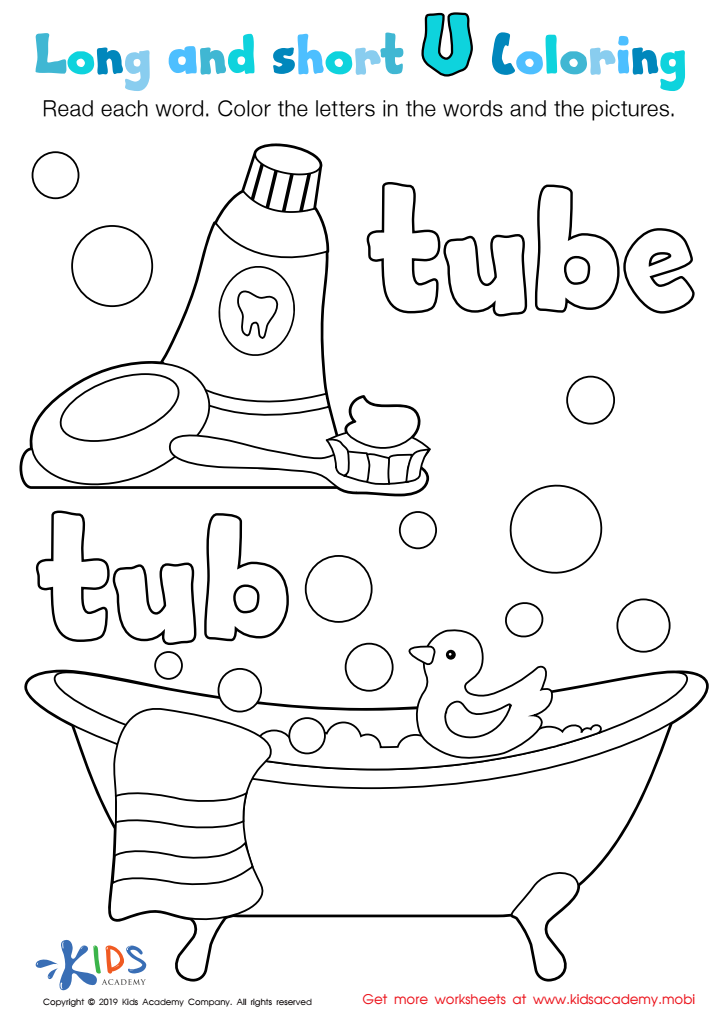
Long and Short U Worksheet
 Assign to My Students
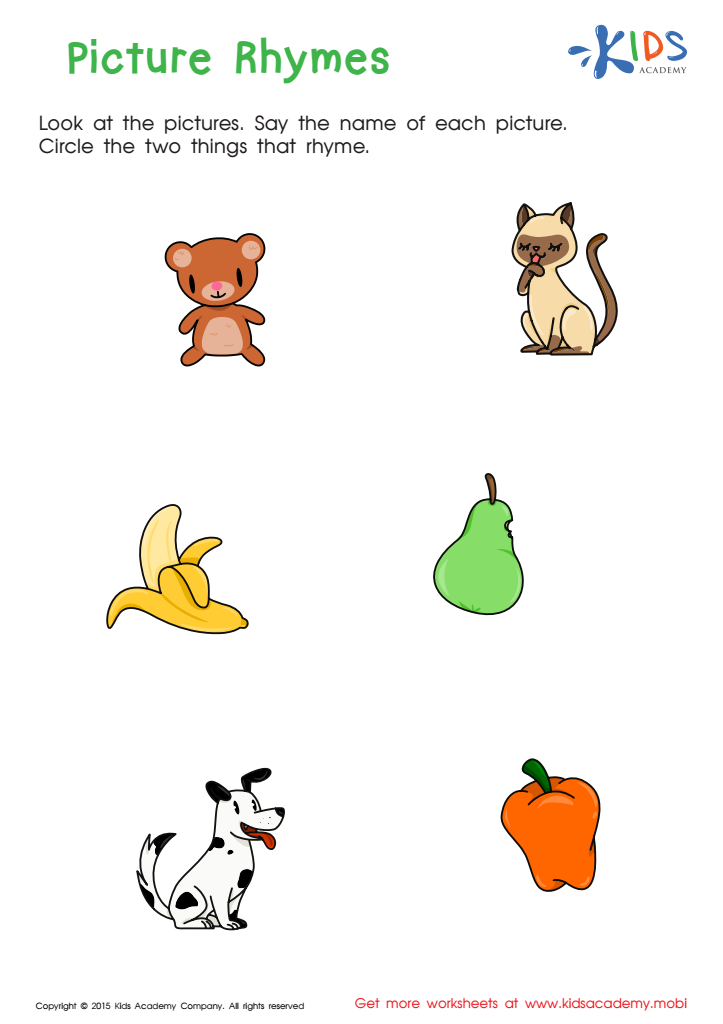
First Words: Picture Rhymes Worksheet








Sound recognition and normal phonics are crucial components of early literacy development, particularly for 3-year-olds. At this age, children's brains are incredibly receptive to learning, making it the perfect time to introduce basic phonetic skills. Sound recognition helps children identify and differentiate sounds, which lays the foundation for their ability to read and write in the future.
When parents and teachers prioritize sound recognition and phonics, they help enhance children’s language skills, enriching their vocabulary and promoting effective communication. By familiarizing children with the sounds of letters and how those sounds combine to form words, adults can boost their confidence in early reading skills.
Moreover, early introduction to phonetics also aids in the development of listening skills and memory, fostering cognitive growth. Engaging activities such as songs, games, and stories can make the learning process enjoyable, ensuring that children are both learning and having fun.
Ultimately, educators and parents who actively support sound recognition and normal phonics empower children for academic success. This foundational skill set not only prepares them for future literacy challenges but also fosters a love for learning and reading that can last a lifetime.







