Rhyming skills development Normal Rhyming Worksheets for 3-Year-Olds
3 filtered results
-
From - To
Boost your child's early literacy with our "Rhyming Skills Development" worksheets! Perfectly designed for 3-year-olds, these engaging printable activities help young learners recognize and produce rhyming words, a critical early reading skill. Each worksheet features fun, colorful illustrations and easy-to-follow exercises that make learning enjoyable. By practicing with these materials, preschoolers enhance their phonemic awareness, vocabulary, and listening abilities. Support your child's foundational language skills with our expertly crafted rhyming worksheets. Visit Kids Academy to download and start building your child's rhyming abilities today!
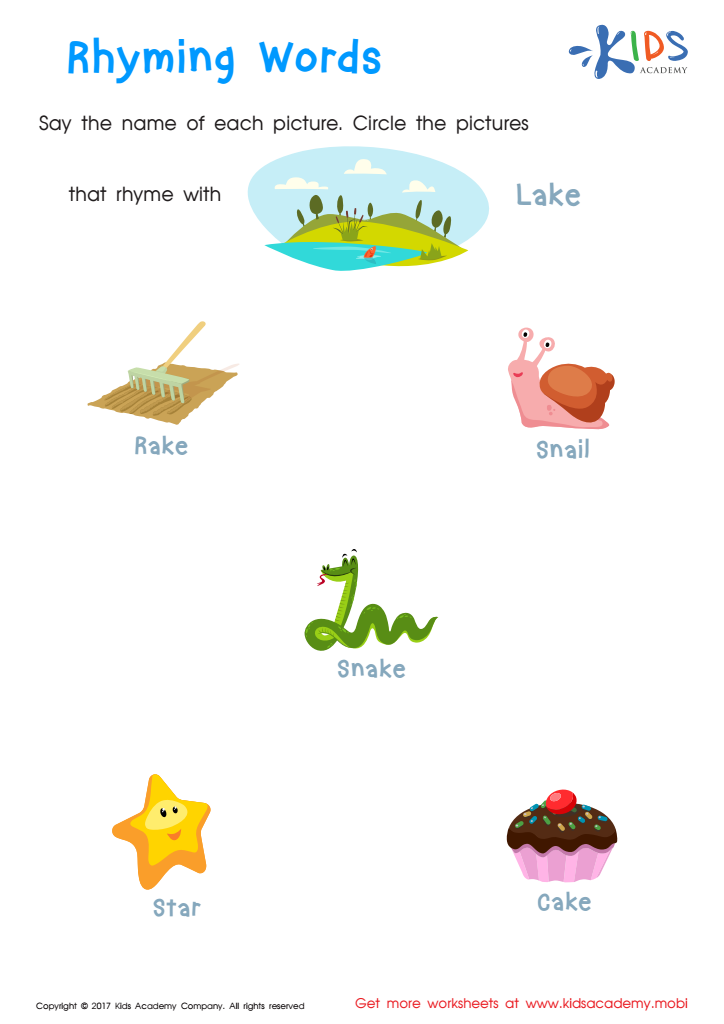
Rhyming Words Rhyming Worksheet
 Assign to My Students
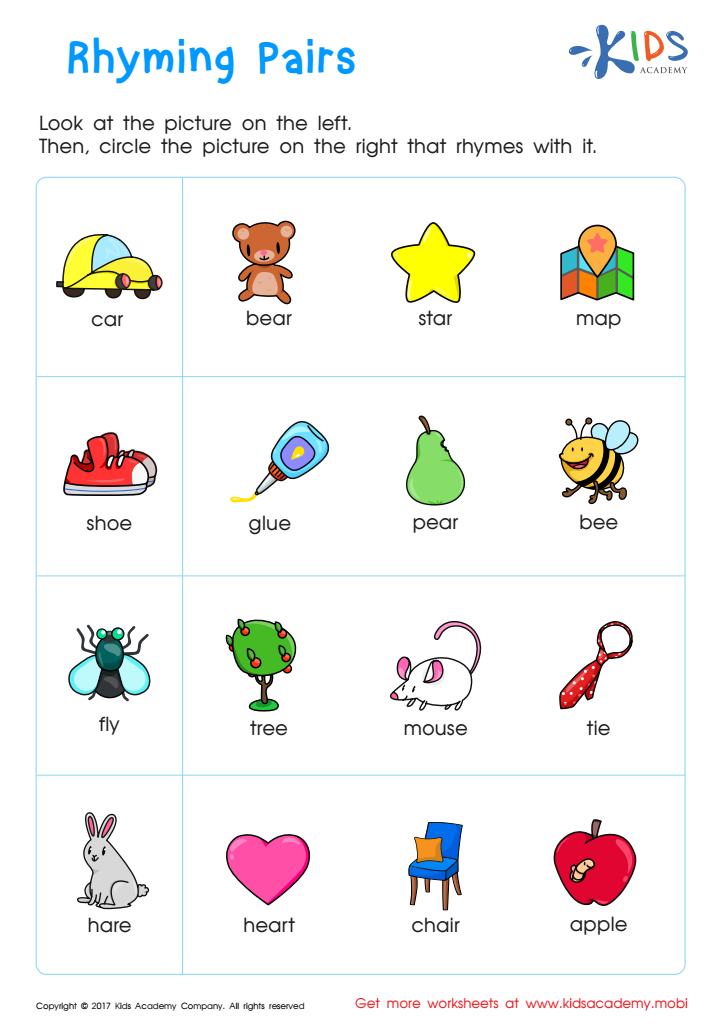
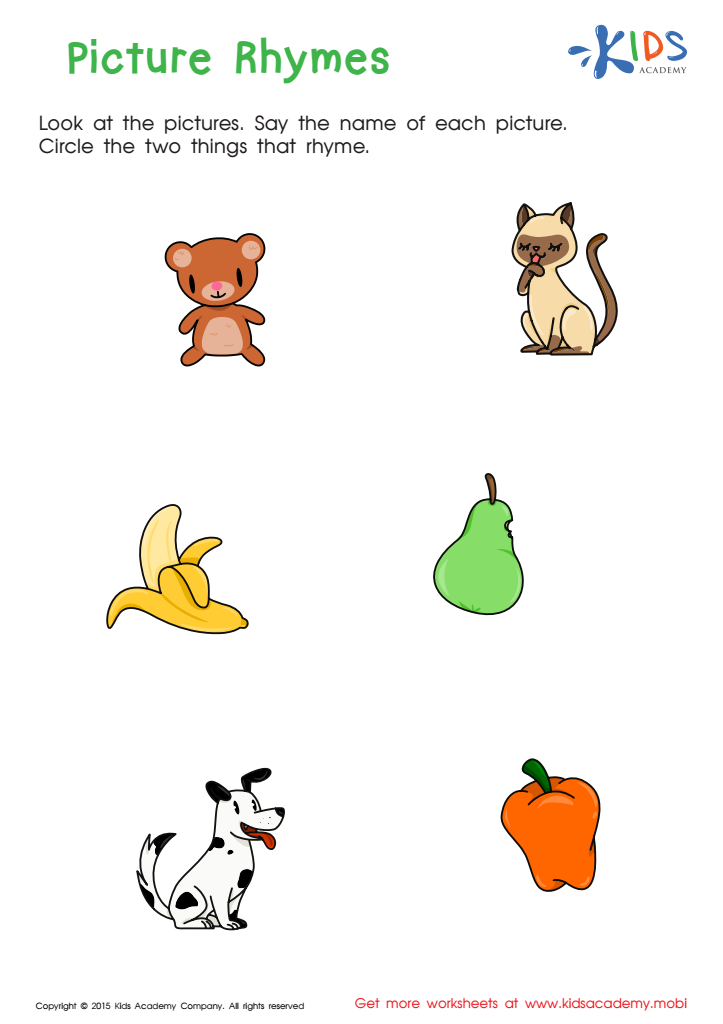
First Words: Picture Rhymes Worksheet







Rhyming skills are essential for early literacy development in 3-year-olds, and parents and teachers should actively foster these skills. Rhyming not only enhances phonemic awareness but also lays a strong foundation for reading and writing. When young children engage with rhymes, they become adept at recognizing sound patterns in words, which is a crucial step toward understanding the alphabetic principle – the concept that letters represent sounds in words.
Additionally, rhyming helps improve a child's auditory discrimination. By identifying and predicting rhyme patterns, children can better distinguish between similar sounds, aiding their ability to decode new words. This skill is pivotal for developing fluent reading.
Engaging in rhyming activities also enriches a child's vocabulary and love for language. Nursery rhymes, songs, and poems expose them to a broader range of words, concepts, and sentence structures. Furthermore, rhyming activities enhance memory and recall abilities, as children often remember sequences and stories more easily if they rhyme.
From a social and emotional perspective, shared rhyming experiences can be joyful and bonding. They provide a fun and interactive way for parents and teachers to connect with children while facilitating learning. Given these extensive benefits, it is clear that rhyming skills are not merely entertaining but fundamentally important for a child's early development.






