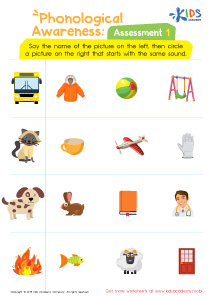
Vocabulary enhancement Normal Rhyming Worksheets for 3-Year-Olds
3 filtered results
Difficulty Level
Grade
Age
-
From - To
Subject
Activity
Standards
Boost your child's language development with our "Vocabulary Enhancement Normal Rhyming Worksheets for 3-Year-Olds." Designed to engage and educate, these charming worksheets introduce young learners to rhyming words through fun and interactive activities. By encouraging recognition of common sounds and patterns, our worksheets aid in expanding your child's vocabulary and phonemic awareness. Ideal for early preschool education, each worksheet is crafted to be both visually appealing and intellectually stimulating, ensuring that your 3-year-old enjoys a learning adventure while mastering essential language skills. Start enriching your child's vocabulary today with our rhyming worksheets!
Favorites
With answer key
Interactive
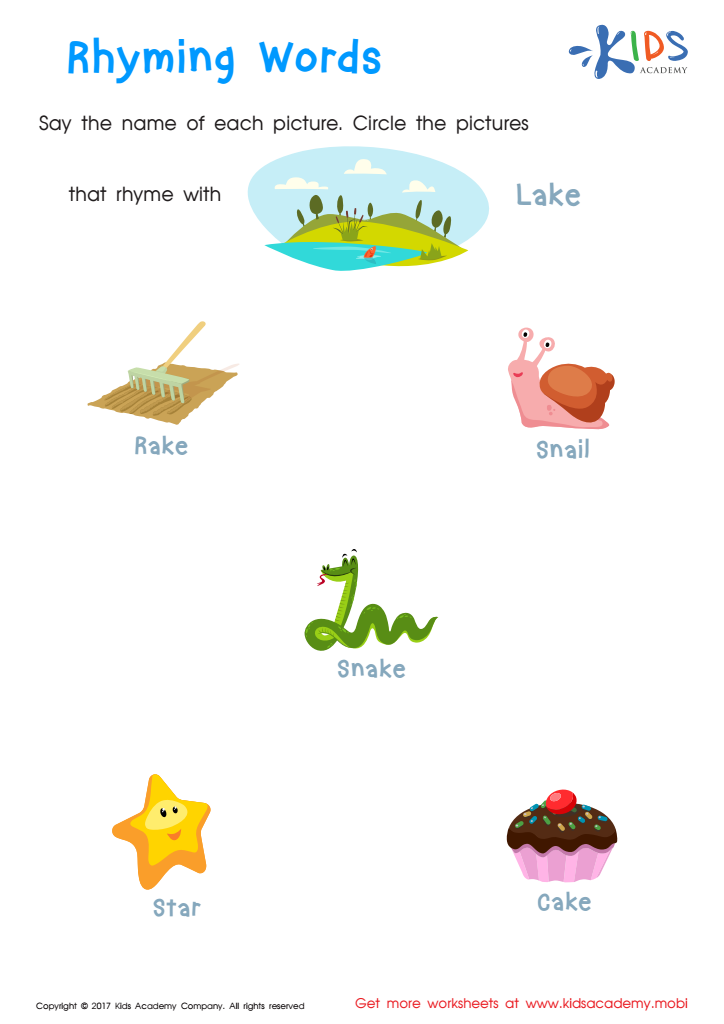
Rhyming Words Rhyming Worksheet
This worksheet is great for honing pre-reading skills. It helps kids make connections between pictures and written words, use problem-solving, and recognize sounds and words that rhyme. Have fun exploring rhyming words with your child, and they'll be rhyming in no time!
 Assign to My Students
Rhyming Words Rhyming Worksheet
Worksheet
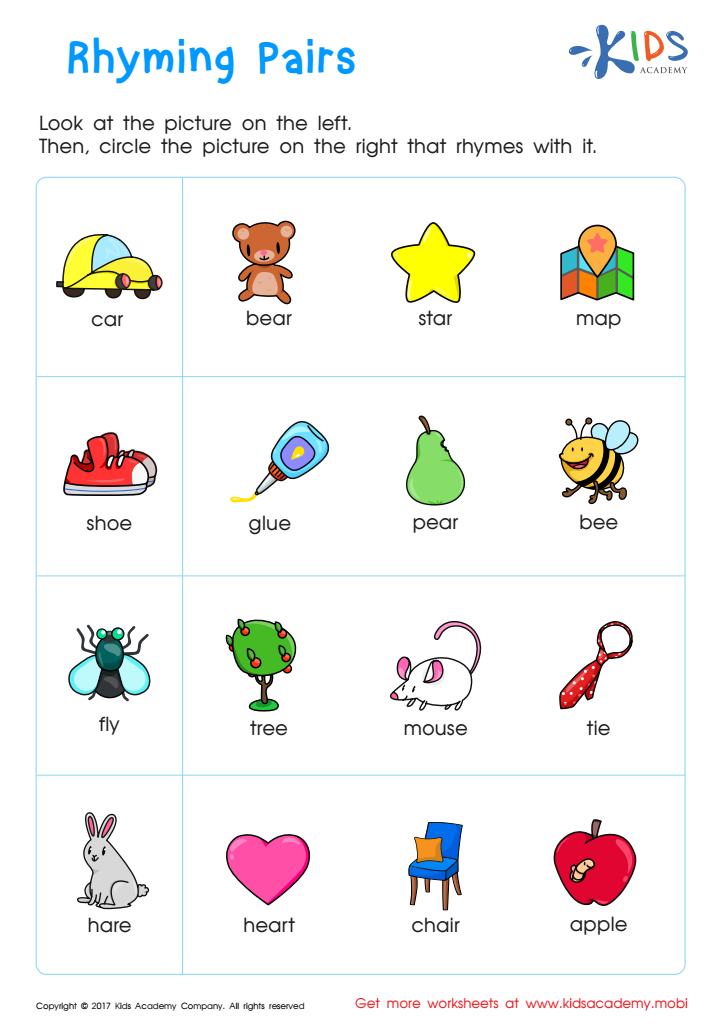
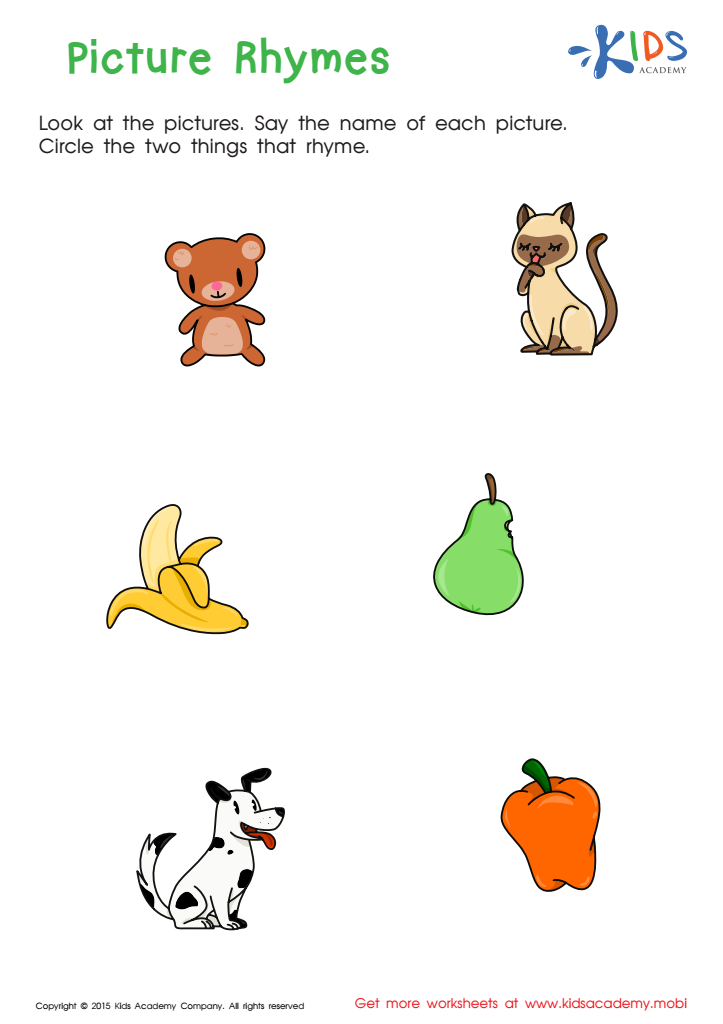
First Words: Picture Rhymes Worksheet
Rhyming helps kids understand language, read and write better. This printable worksheet boosts problem-solving and cognitive skills with vibrant pictures. It teaches kids to identify words, recognize rhymes, complete mental tasks and write words. An extra activity: show them how rhyming words share some of the same letters.
First Words: Picture Rhymes Worksheet
Worksheet
Join Kids Academy for Free
Who is primarily going to use this learning content?







Vocabulary enhancement through normal rhyming is vital for the cognitive and linguistic development of 3-year-olds. At this tender age, children's brains are like sponges, absorbing new information rapidly. Introducing rhyming words helps them recognize phonetic patterns, which is a fundamental step in understanding language structure and developing literacy skills. Rhymes are inherently engaging and enjoyable, making learning feel like a playful activity rather than a chore, which can foster a positive attitude toward education from an early age.
Rhyming also improves auditory discrimination, enabling children to distinguish between similar sounds, a skill crucial for both speaking and reading. When children identify rhyming words, they start understanding word families and morphological rules, which accelerates their vocabulary growth. This, in turn, feeds into their overall language proficiency.
Furthermore, a richer vocabulary equips children to express themselves more clearly and effectively, enhancing their social interactions and emotional outlets. The emotional bonding that happens when parents and teachers engage children with rhymes also cannot be overlooked. It's a comforting and enjoyable way to spend quality time, thereby strengthening familial and educational bonds.
In summary, emphasizing vocabulary enhancement through rhyming for 3-year-olds is essential for building foundational linguistic skills, fostering cognitive development, and supporting emotional and social growth.