
Basic Arithmetic Normal Math Worksheets for 3-Year-Olds
5 filtered results
Difficulty Level
Grade
Age
-
From - To
Subject
Activity
Standards
Discover our collection of Basic Arithmetic Normal Math Worksheets designed specifically for 3-year-olds. These engaging worksheets are perfect for early learners, introducing fundamental math concepts in a fun and interactive way. Your little ones will practice counting, number recognition, simple addition, and subtraction through colorful activities that capture their imagination. Each worksheet enhances fine motor skills while fostering a love for math from a young age. Ideal for parents and teachers, these worksheets can be easily printed and used at home or in the classroom. Start your child's math journey today and watch their confidence grow with every completed task!
Favorites
With answer key
Interactive
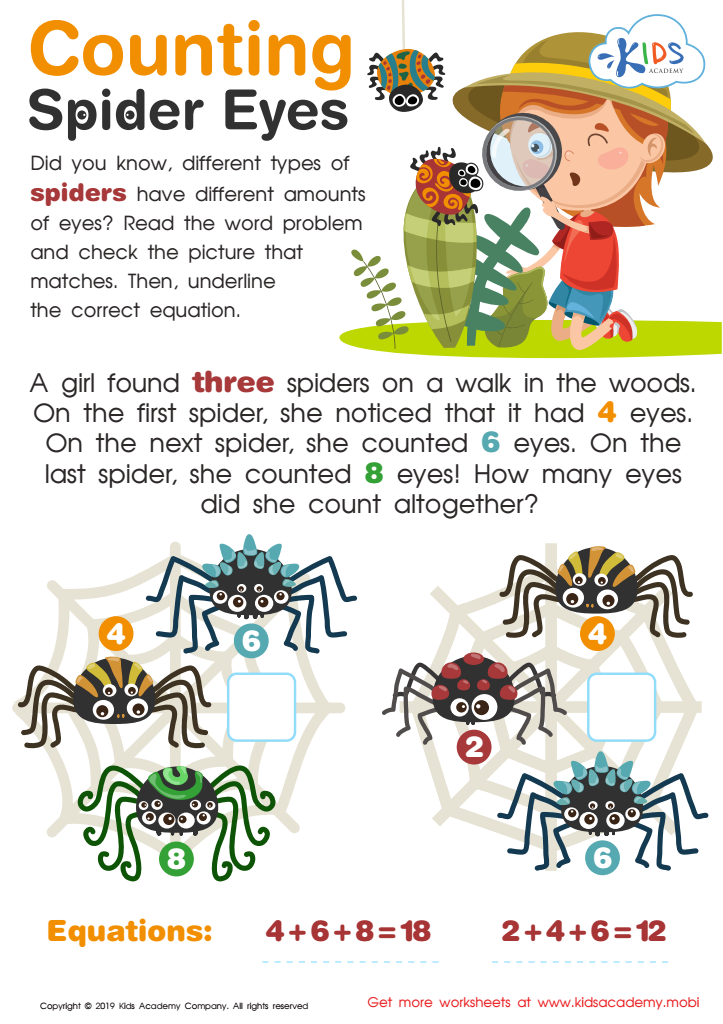
Counting Spider Eyes Worksheet
Did you know different spiders have different eye numbers? Kids will love learning this fact and solving the spider word problems on this free worksheet! Word problems promote a deeper understanding of the concept, plus they get to add up the spiders’ eyes while solving addition problems with more than one addend. Fun and math all in one!
 Assign to My Students
Counting Spider Eyes Worksheet
Worksheet
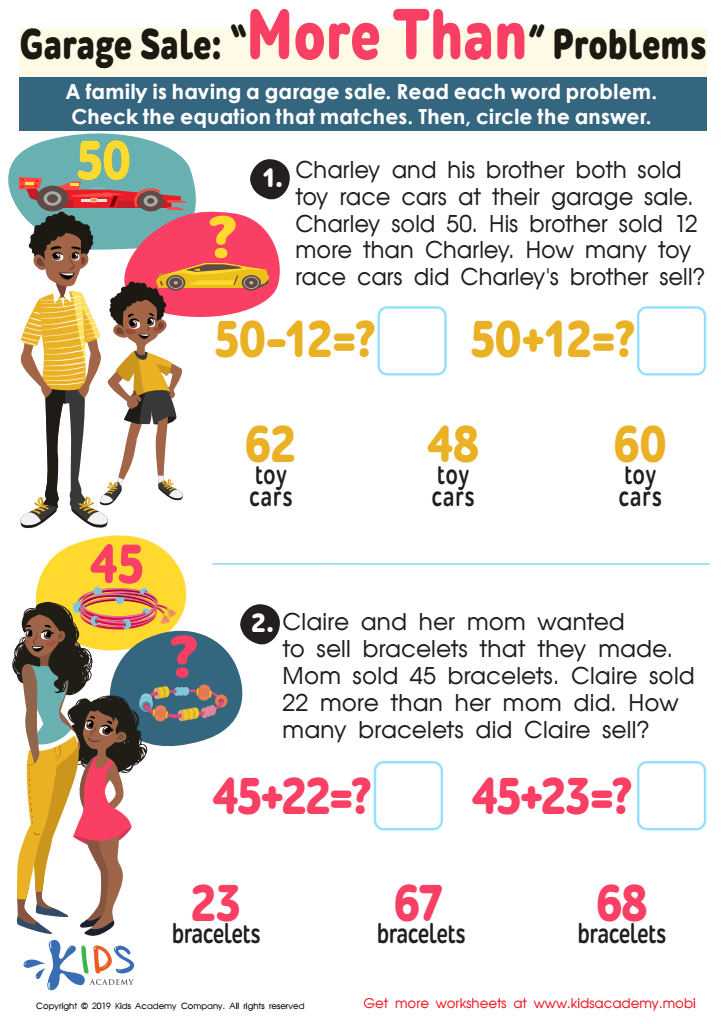
Garage Sale - More yhan Worksheet
The whole family can join in on the fun with this free worksheet! It helps kids practice math word problems while assisting their friends with a garage sale. Kids learn to identify "More Than" key words and pick the right equation, improving their order of operations skills. Download the PDF and get started!
Garage Sale - More yhan Worksheet
Worksheet
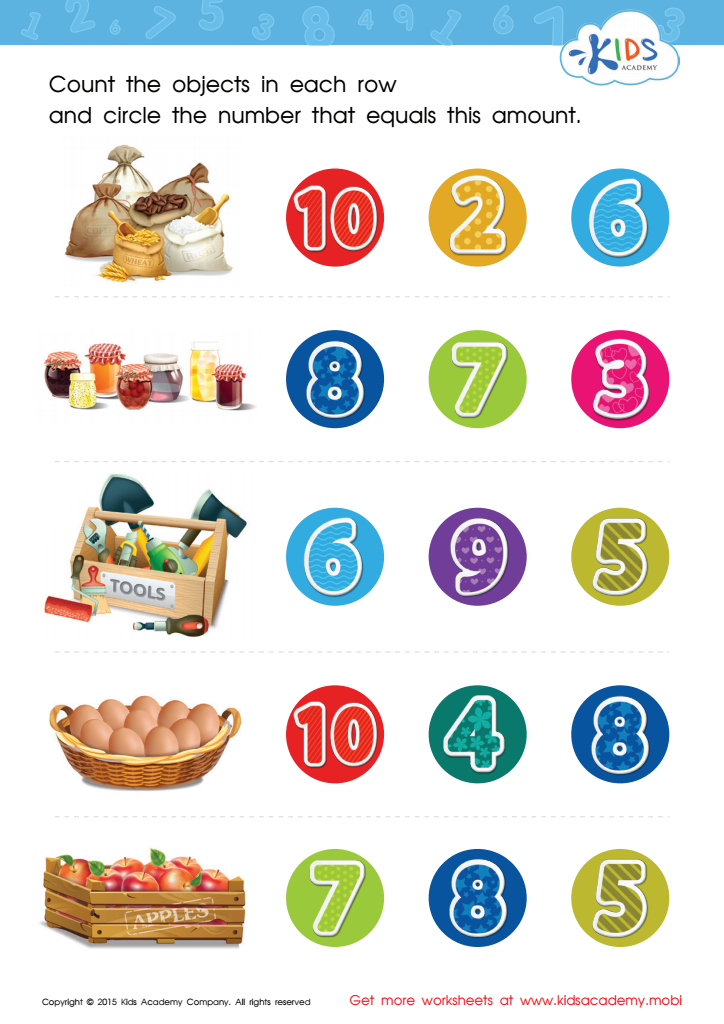
Count and Match 6 – 10 Math Worksheet
Print this fun math worksheet for your kindergartener and help them practice counting up to ten! They'll draw a line from the objects to the correct numbers, visualizing the problem and having fun at the same time. Kids Academy offers more free printable worksheets. Get them now!
Count and Match 6 – 10 Math Worksheet
Worksheet
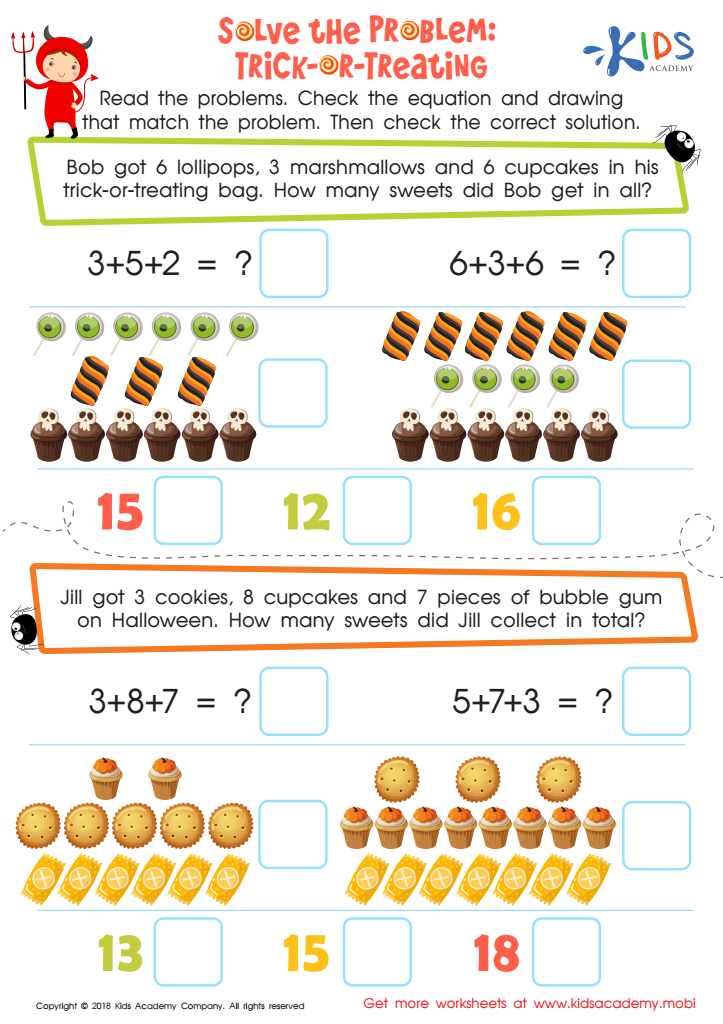
Solve the Problem: Trick–or–treating Worksheet
Kids will love this fun PDF worksheet for trick-or-treating! It's packed with yummy images and math practice. They can read the word problems, count and add numbers, check their answers, and match the addition equations with the pictures. Math made delicious!
Solve the Problem: Trick–or–treating Worksheet
Worksheet
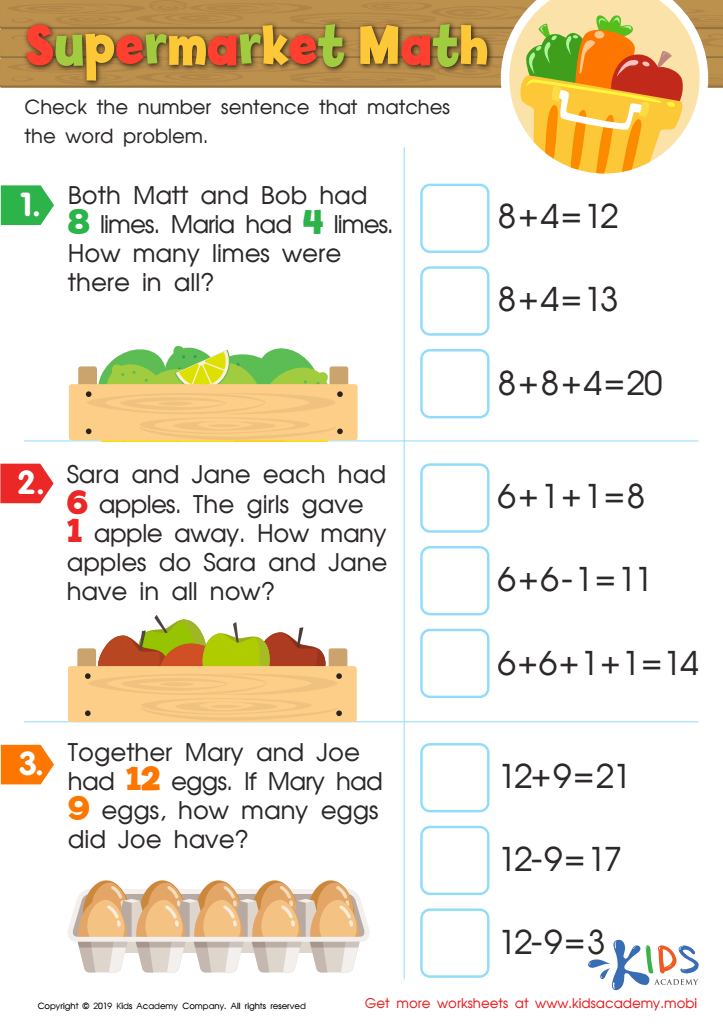
Supermarket Math Worksheet
Take your kids to the supermarket and ask what they're looking forward to buying. Help them solve the three questions in the worksheet by interpreting each one into an equation, then choose the right answer.
Supermarket Math Worksheet
Worksheet
Join Kids Academy for Free
Who is primarily going to use this learning content?





.jpg)


Teaching basic arithmetic and normal math to 3-year-olds lays a foundational understanding of numbers and problem-solving. During this critical developmental stage, children are naturally curious and ready to explore concepts related to quantities and relationships. Introducing basic math concepts such as counting, sorting, and simple addition through engaging activities can significantly enhance their cognitive skills.
Parents and teachers should recognize that early math skills not only prepare children for future academic success but also foster essential life skills. Furthermore, math learning at this age promotes language development as children learn to express numerical concepts verbally. Engaging children in activities like counting objects, sorting toys, or singing number songs helps build a positive attitude towards math, setting the stage for lifelong learning.
Additionally, these early experiences with arithmetic can help children develop critical thinking, creativity, and reasoning skills. Math plays a fundamental role in everyday life, from shopping to cooking, understanding time, and managing finances. By fostering a solid mathematical foundation early on, parents and teachers contribute to a child’s confidence and capacity to tackle more complex mathematical challenges later in their academic journey, ultimately leading to better overall performance in school.








