Sorting skills Normal Math Worksheets for 3-Year-Olds
4 filtered results
-
From - To
Enhance your 3-year-old's learning with our Sorting Skills Normal Math Worksheets! These engaging and fun worksheets are designed to introduce young learners to essential sorting concepts. By categorizing objects based on attributes like color, shape, and size, children will develop crucial cognitive and analytical skills. Our thoughtfully crafted activities cater to their developmental stage, making learning enjoyable and interactive. Perfect for homeschool settings or supplementary practice, these worksheets promote critical thinking, fine motor skills, and early math foundational skills. Download now to support your child's educational journey while sparking curiosity and creativity in their fun and playful world!
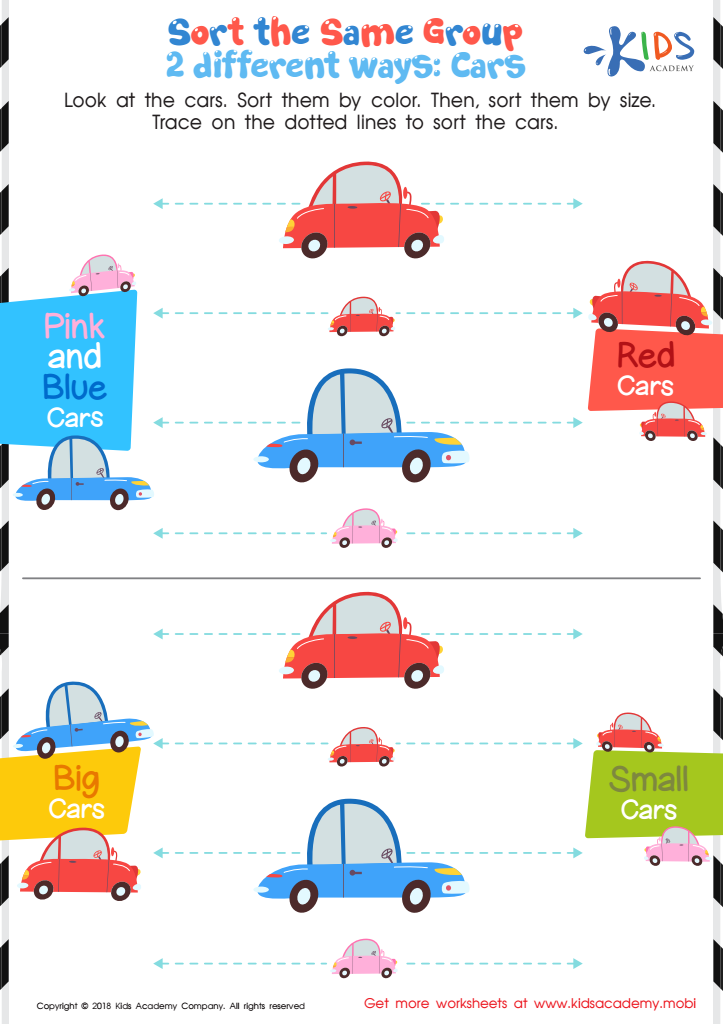
Sort the Same Group 2 Different Ways: Cars Worksheet
 Assign to My Students
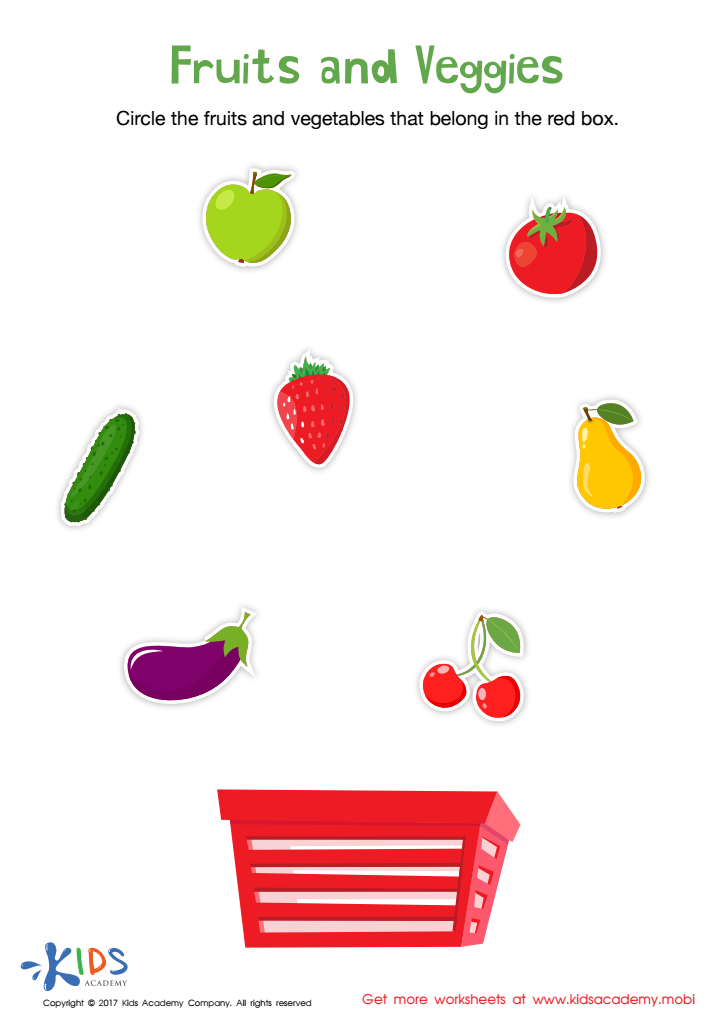
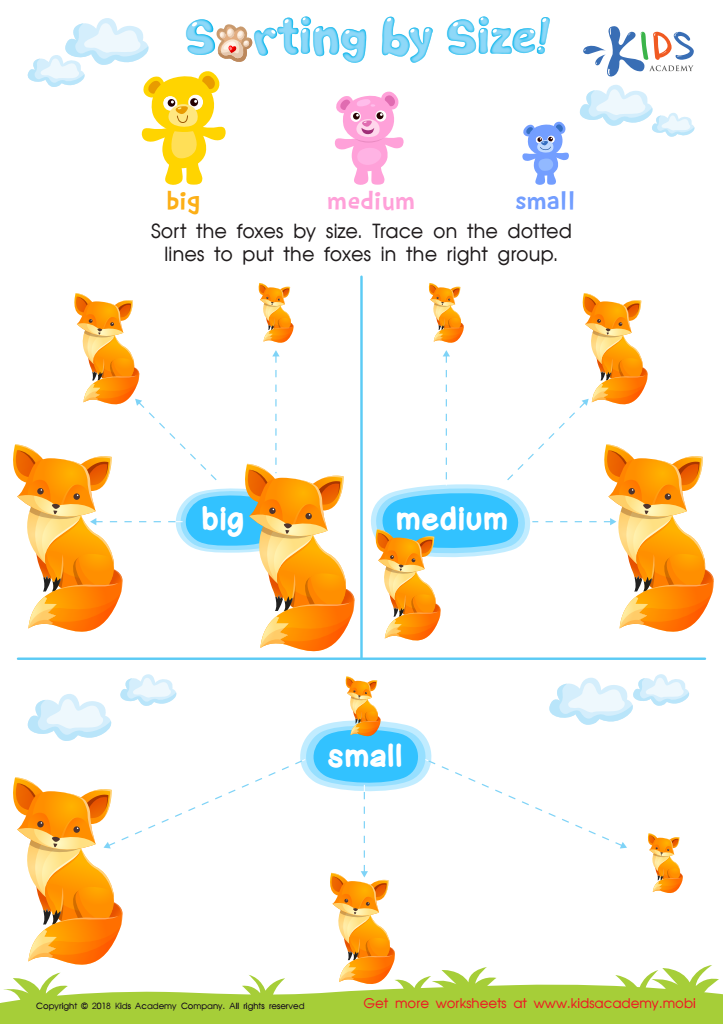
Sorting by Size Worksheet
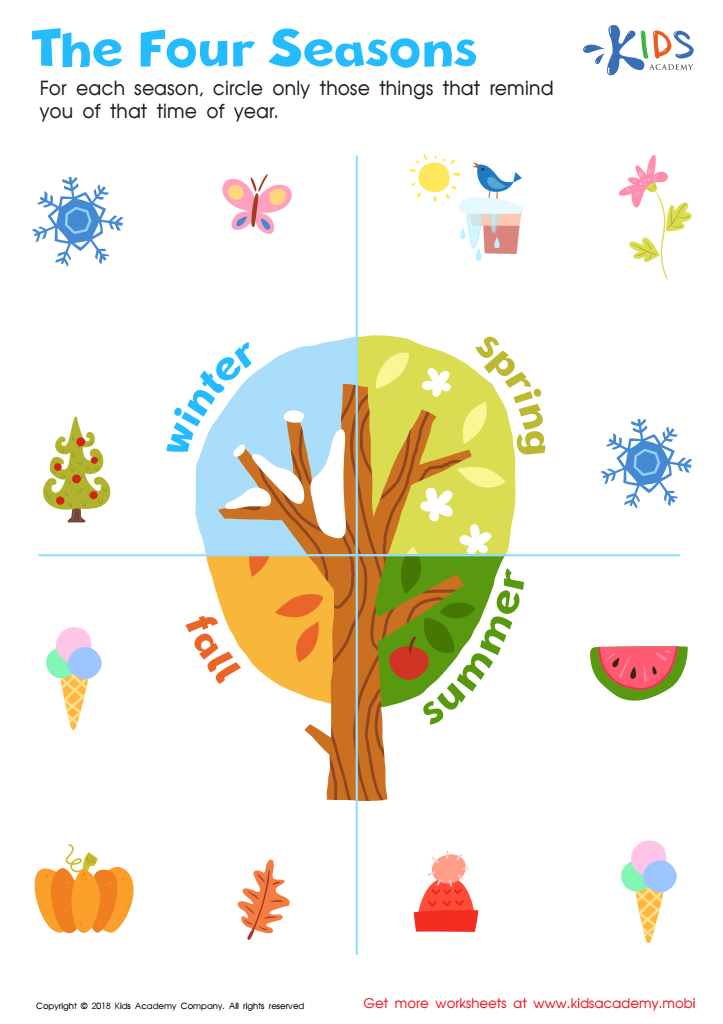
The Four Seasons Worksheet








Sorting skills are foundational for early math development and critical for three-year-olds. Parents and teachers should prioritize these skills as they signal a child's emerging understanding of categories and logical reasoning. Sorting activities, whether done with toys, shapes, or colors, help children learn to recognize similarities and differences, laying the groundwork for more complex mathematical concepts such as counting, addition, and subtraction.
Engaging in sorting tasks also enhances cognitive development by promoting problem-solving skills and critical thinking. When children sort items, they decide criteria and rules, fostering their ability to make connections and draw conclusions. Additionally, these activities support language development; as children categorize, they learn new vocabulary related to colors, shapes, and measurements.
Furthermore, practicing sorting can improve a child's attention span and fine motor skills, which are beneficial across all learning areas. By encouraging sorting at a young age, parents and teachers prepare children for future academic success while making learning fun and interactive. Ultimately, sorting skills provide a seamless transition into deeper mathematical concepts and encourage a love for exploration and discovery, equipping children with essential skills for lifelong learning.








