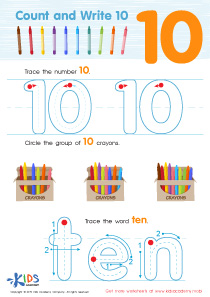
Animal recognition Normal Numbers 0–10 Worksheets for 3-Year-Olds
3 filtered results
-
From - To
Introduce your 3-year-old to the exciting world of numbers and animals with our engaging "Animal Recognition Normal Numbers 0-10 Worksheets"! These worksheets are designed to enhance early math skills while fostering a love for animals. Each worksheet invites little learners to match animals with their corresponding numbers, helping to develop both counting proficiency and recognition of various animals. Bright and colorful visuals make learning enjoyable and interactive. Perfect for parents and educators looking to incorporate playful learning, these worksheets provide a fun way to reinforce essential math concepts and animal knowledge. Download now for a delightful educational experience!
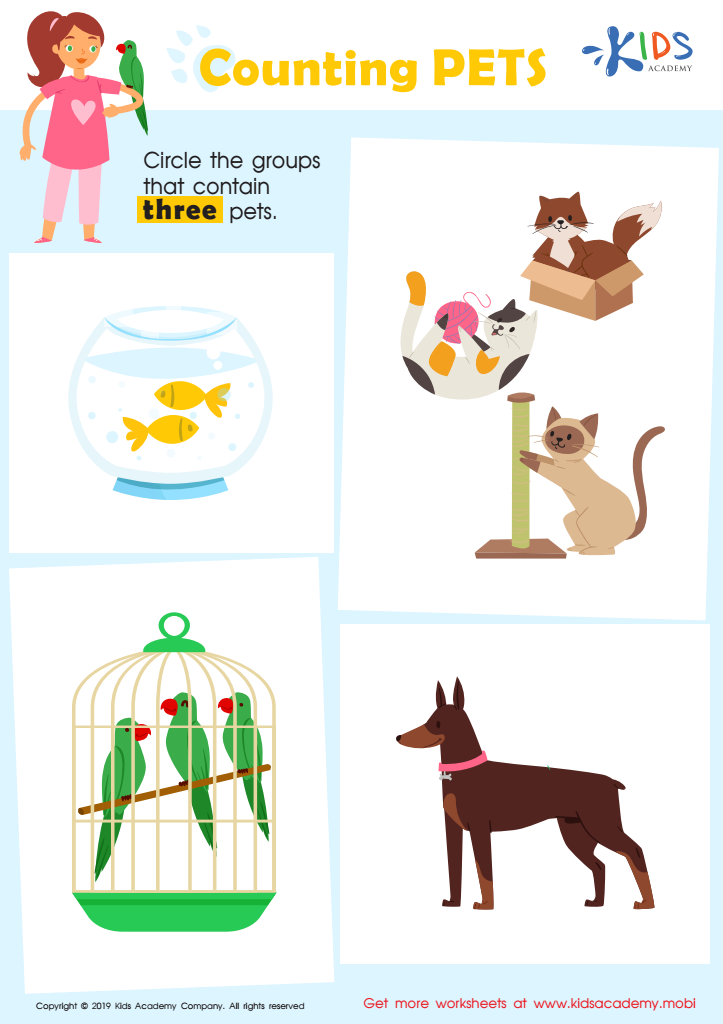
Counting Pets Worksheet
 Assign to My Students
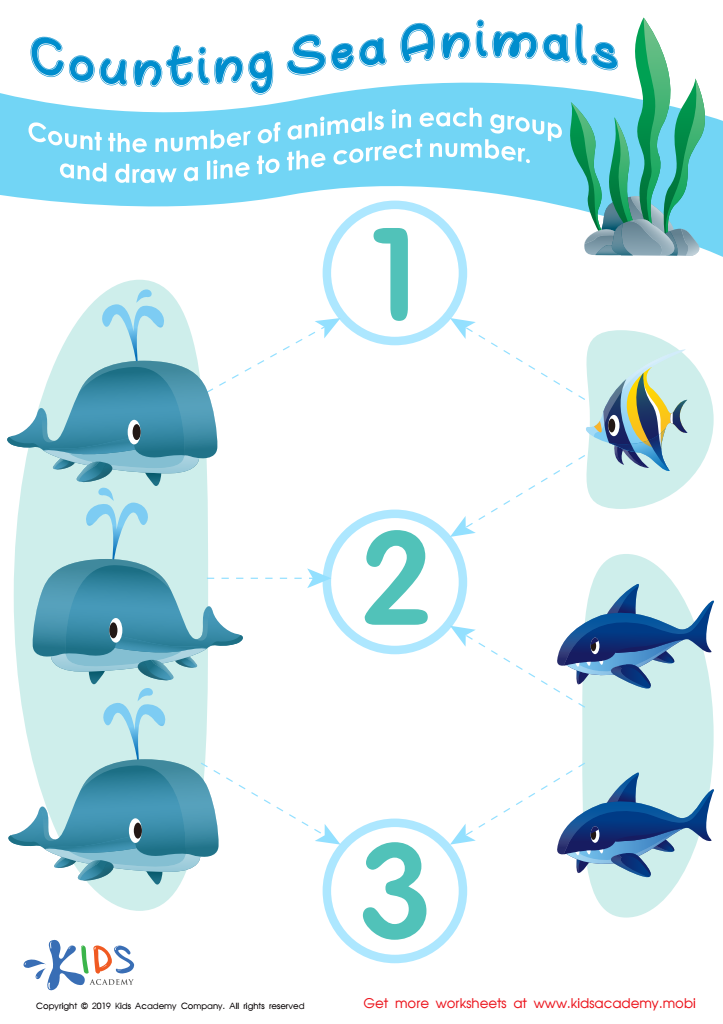
Counting Sea Animals Worksheet
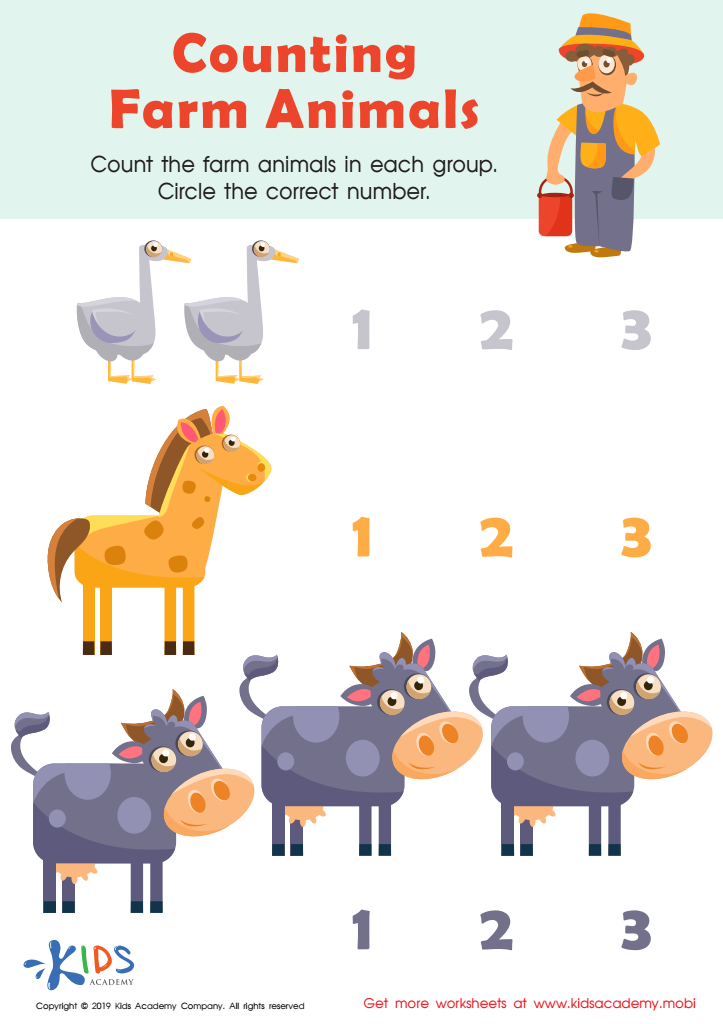
Counting Farm Animals Worksheet








Caring about animal recognition and normal numbers 0-10 for three-year-olds is vital for several reasons. First, these foundational skills greatly contribute to cognitive development. Recognizing animals enhances a child's ability to classify and differentiate between various species, promoting curiosity and learning about the world around them.
Understanding numbers 0-10 introduces basic math concepts, laying the groundwork for future mathematical skills. At this age, children begin to grasp numerical value and one-to-one correspondence, which are essential for counting, addition, and subtraction later on. Incorporating animal recognition into number activities can make learning more engaging; for instance, counting different animals in storybooks or through educational games.
Additionally, practicing these skills fosters language development. Describing animals and their characteristics encourages vocabulary expansion, while number recognition supports mathematical language skills.
Moreover, children learn social skills through group activities focused on animal and number recognition. Sharing their knowledge about animals or participating in counting games fosters cooperation and communication.
Overall, nurturing these foundational abilities helps create confident learners, supporting their emotional and intellectual growth as they transition into more complex concepts in school and life. Investing time in this learning stage can benefit children’s educational journey in profound ways.