Handwriting practice Normal Numbers 0–10 Worksheets for 3-Year-Olds
3 filtered results
-
From - To
Introducing our "Handwriting Practice Normal Numbers 0–10 Worksheets" specially designed for 3-year-olds! These engaging worksheets help young learners develop essential fine motor skills while mastering numerals from 0 to 10. Each sheet features fun, colorful graphics that capture children's attention, promoting a love for learning. Through tracing and writing exercises, kids will enhance their handwriting, number recognition, and concentration. Our easy-to-follow worksheets encourage independent practice and build confidence as children progress. Perfect for home or classroom use, these resources are an excellent way to support early math readiness and handwriting development. Get started today and watch your child flourish!
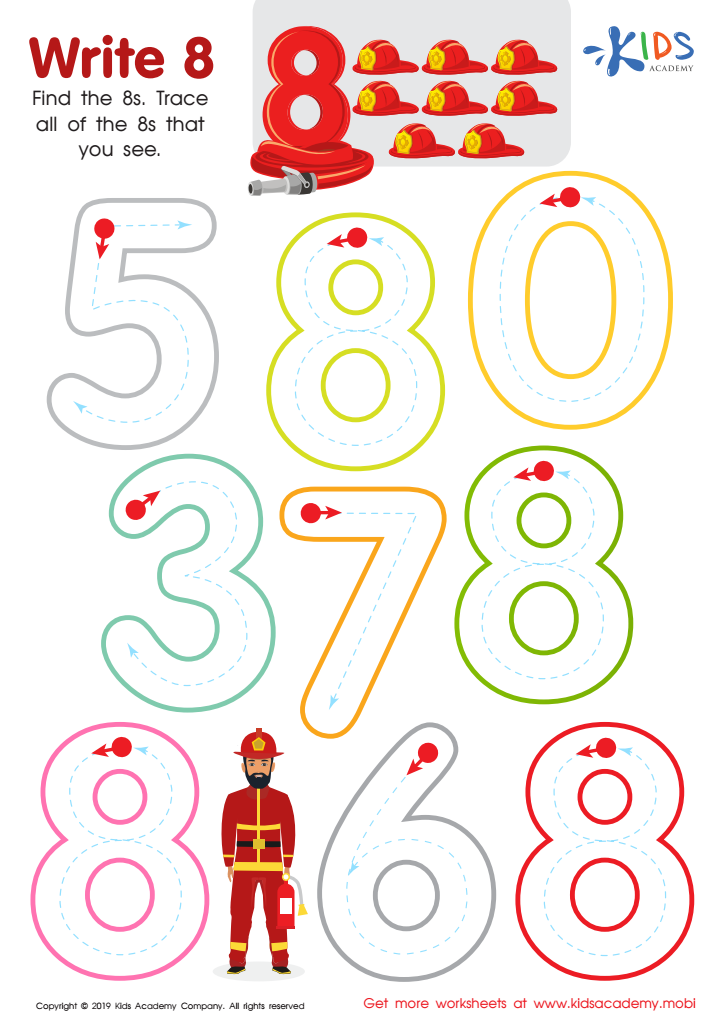
Write 8 Worksheet
 Assign to My Students
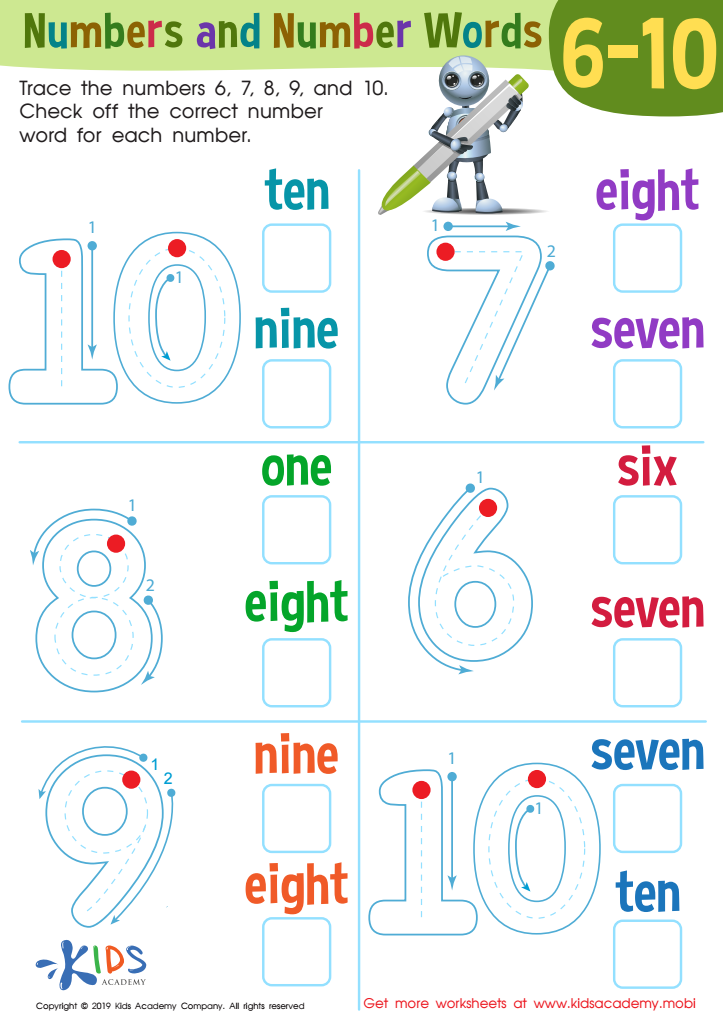
Numbers and Number Words 6–1 Worksheet
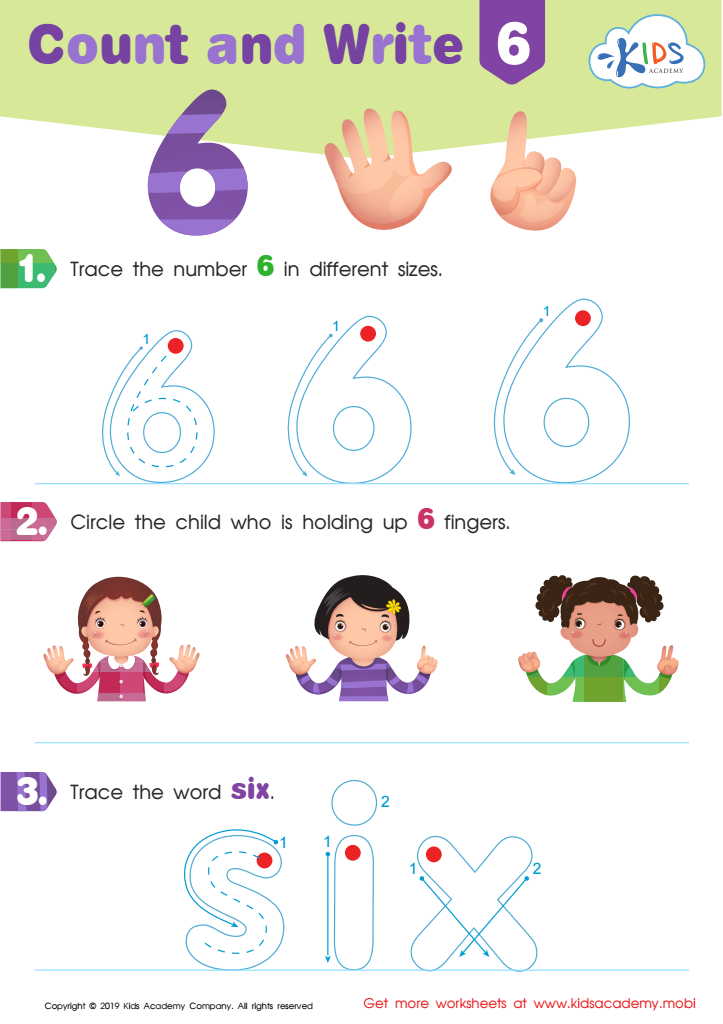
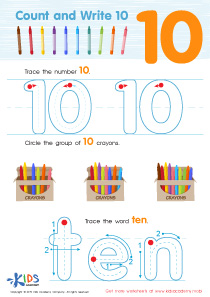
Count and Write 6 Worksheet








Handwriting practice for normal numbers 0–10 is crucial for 3-year-olds as it lays the foundation for essential skills in writing, math, and overall cognitive development. First, practicing these numbers enhances fine motor skills, as young learners must coordinate their hand and finger movements to build control and precision. This ability is fundamental not just for writing, but also for tasks like drawing and self-care activities.
Additionally, number recognition aids in early math understanding. When children familiarize themselves with the shapes of numbers, they are more prepared to recognize patterns, perform counting, and eventually tackle basic math operations. Engaging in handwriting practice allows children to connect visual representations of numbers with their meanings, promoting a deeper understanding of quantitative concepts.
Furthermore, early handwriting practice fosters discipline and concentration, encouraging children to focus and complete tasks. This engagement also offers an opportunity for interaction and bonding between parents or teachers and the child, reinforcing the importance of learning in a supportive environment.
In summary, handwriting practice for numbers 0–10 is a multifaceted tool that cultivates fine motor skills, mathematical understanding, focus, and positive relationships in early childhood education. Making it a priority can significantly benefit a child's development.