Reading comprehension Normal Rhyming Words Worksheets for 3-Year-Olds
5 filtered results
-
From - To
Enhance your child's reading skills with our engaging Rhyming Words Worksheets designed specifically for 3-year-olds! These fun, age-appropriate activities focus on reading comprehension, helping young learners identify and connect familiar rhyming words to improve their language development. Fun illustrations and interactive tasks make learning enjoyable, ensuring that your little one stays motivated while mastering essential early literacy skills. Perfect for parents and educators, these worksheets support alignment with early childhood learning standards. Give your child a head start in reading with our comprehensive collection of normal rhyming words worksheets, encouraging creativity while building confidence in their reading abilities!
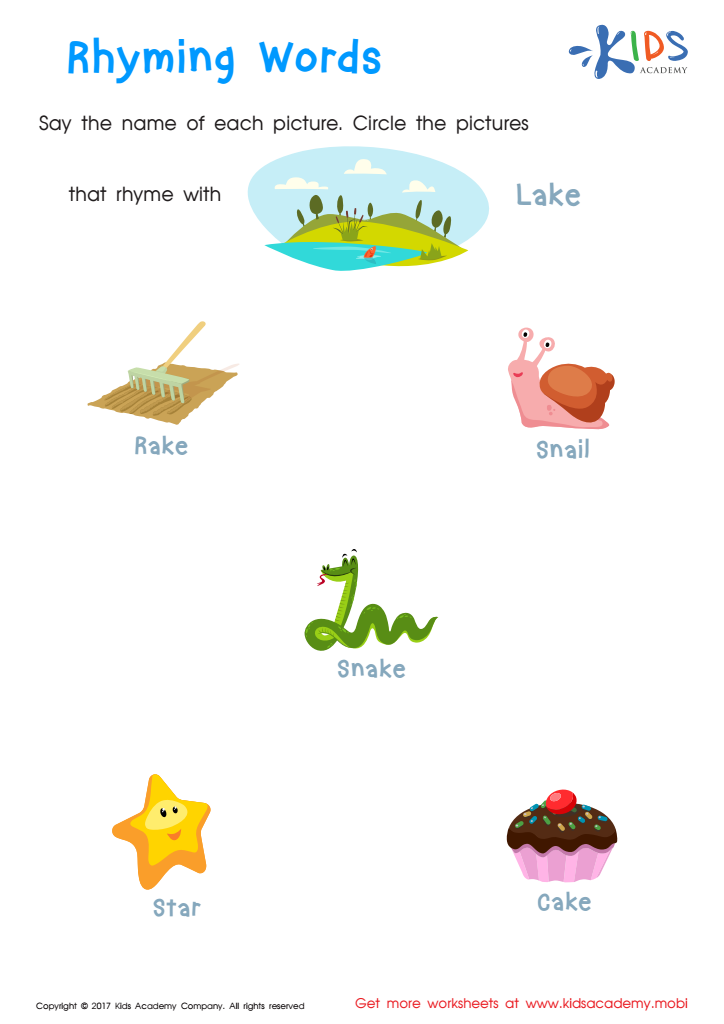
Rhyming Words Rhyming Worksheet
 Assign to My Students
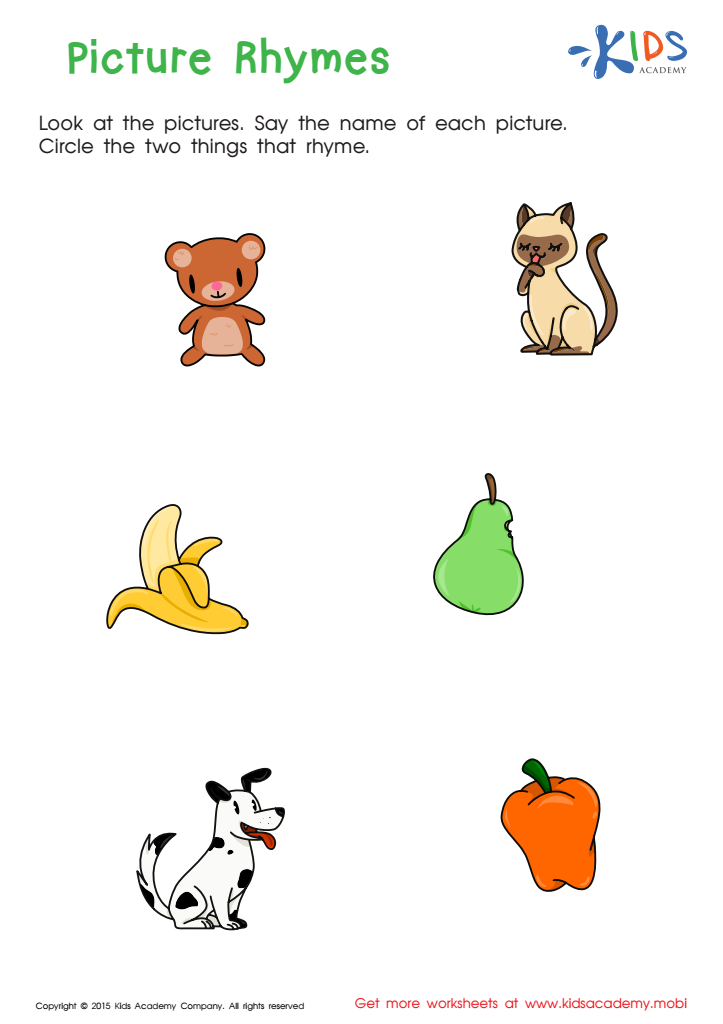
First Words: Picture Rhymes Worksheet
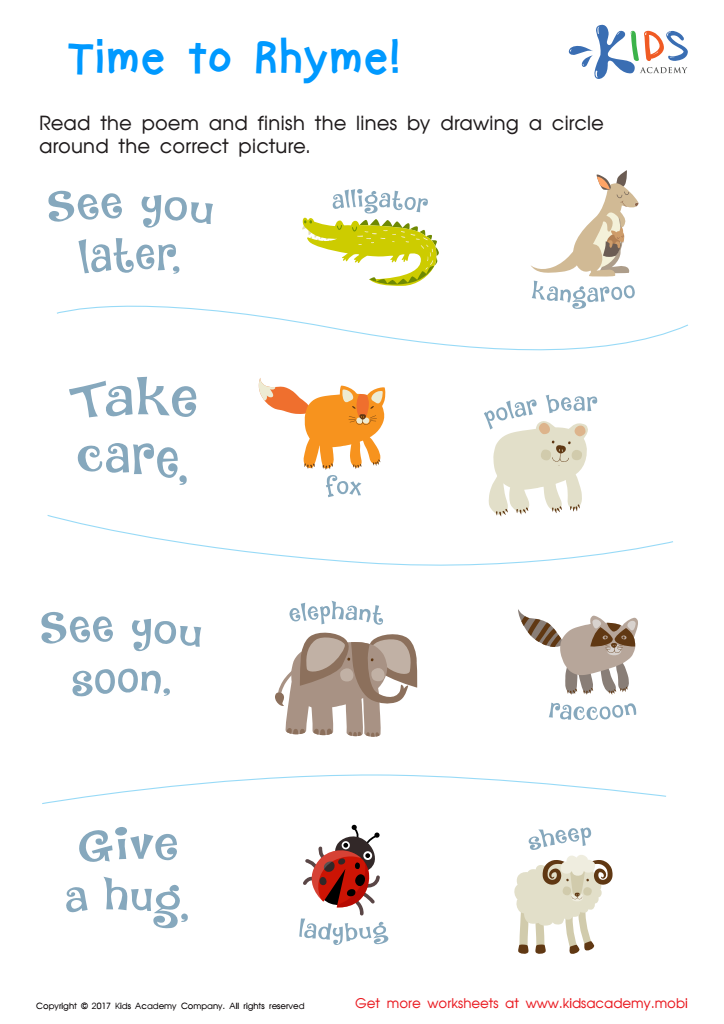
Time to Rhyme Rhyming Worksheet
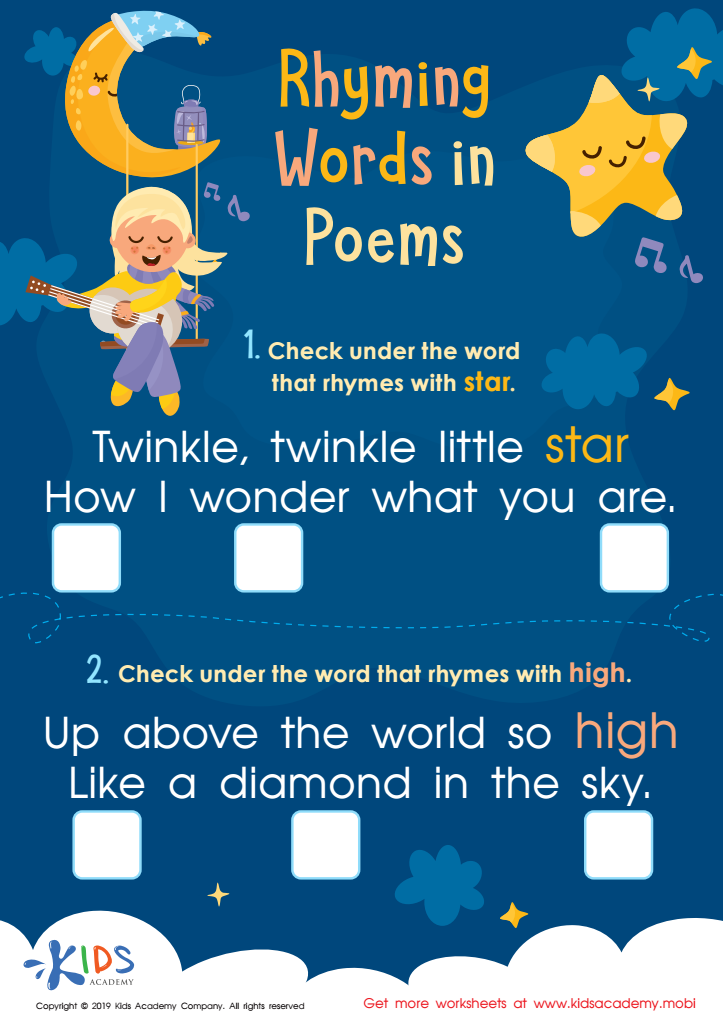
Rhyming Words in Poems Worksheet
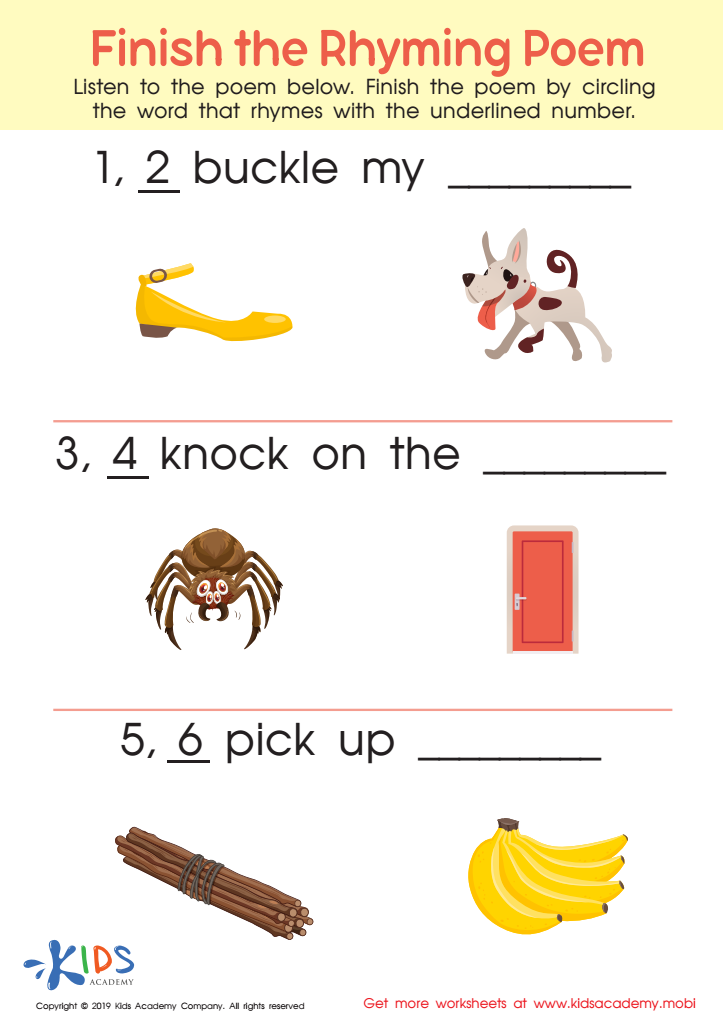
Finish Rhyming Poem Worksheet








Reading comprehension and the ability to recognize normal rhyming words at the age of three are foundational skills in early childhood education. These skills foster language development, literacy, and cognitive growth. When parents and teachers focus on rhyming words, they create an enjoyable learning environment that enhances phonemic awareness, a critical precursor to reading success.
Understanding rhymes helps children identify similarities in sounds, promoting their ability to decode words and recognize patterns in language. This knowledge builds confidence in reading as they engage with stories and songs, paving the way for more complex language concepts. Additionally, rhyming can support vocabulary expansion, as children learn new words in context, improving their overall language comprehension.
Moreover, rhyming activities encourage social skills through interactive play and singing, facilitating bonding between children and caregivers. Integrating rhymes into daily interactions, such as reading books and singing songs, allows adults to model effective communication. Ultimately, emphasizing rhyming words helps children develop essential literacy skills that will serve them throughout their academic journey, laying the groundwork for reading fluency and comprehension long into their future. By investing time in these skills, parents and teachers significantly enhance children's educational experiences and overall readiness for learning.








