
Letter tracing skills Normal ABC Letters Worksheets for Ages 4-5
3 filtered results
Difficulty Level
Grade
Age
-
From - To
Subject
Activity
Standards
Enhance your child's fine motor skills and early literacy with our "Normal ABC Letter Tracing Worksheets" designed for ages 4-5. These engaging worksheets provide a fun way for children to practice letter formation and recognition while developing essential handwriting skills. Each worksheet features a variety of letter tracing activities that support visual tracking and improve coordination, making learning exciting! With vibrant colors and interactive design, kids will enjoy tracing uppercase and lowercase letters, fostering a strong foundation for future reading and writing. Perfect for home or classroom use, our worksheets nurture creativity and enhance the joy of learning the alphabet!
Favorites
With answer key
Interactive
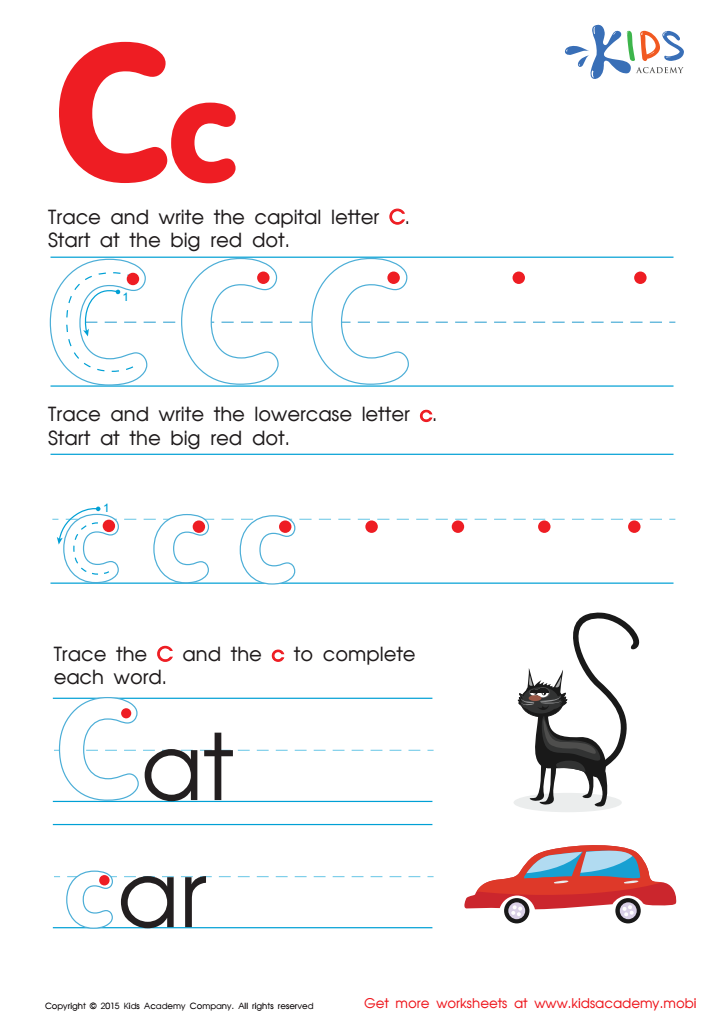
Letter C Tracing Page
Trace and write the letter 'C'! Put the pencil at the red dot then follow the lines – the capital letter first then the lowercase one. Cats love it and so will you! Get more free printables to practice tracing and writing.
Letter C Tracing Page
Worksheet






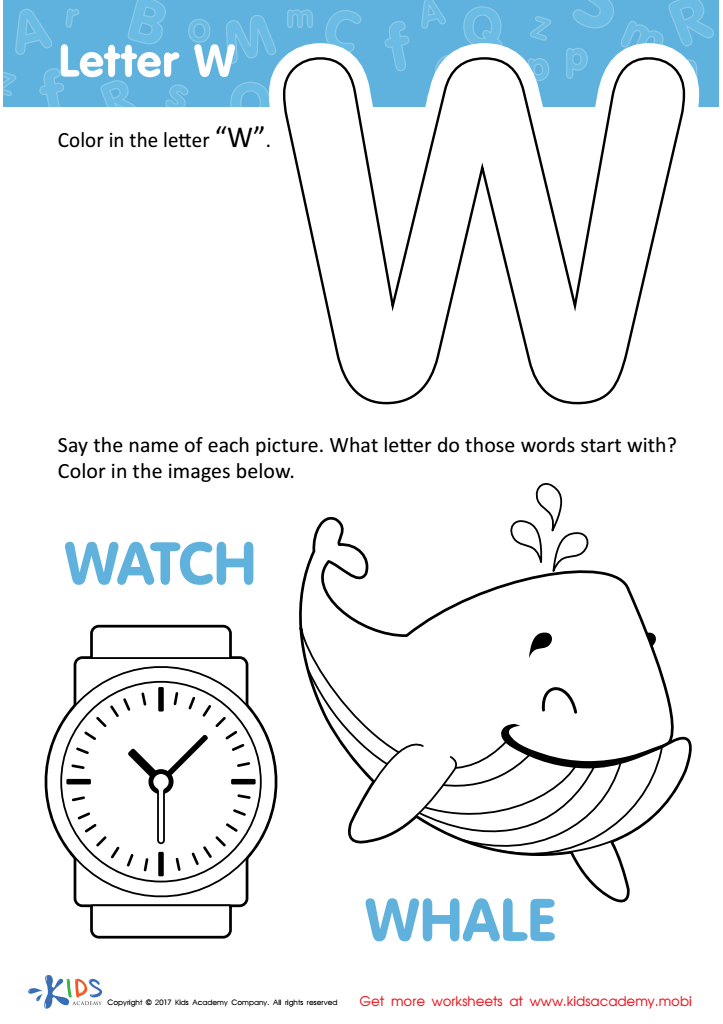
Letter W Coloring Sheet
Let your child have fun with this letter "W" coloring page! They can use their imagination to color the whale and discover the letter and its sound. Give them a helping hand to make it a whale of a time!
Download (PDF)
 Assign to My Students
Assign to My Students
Letter W Coloring Sheet
Worksheet
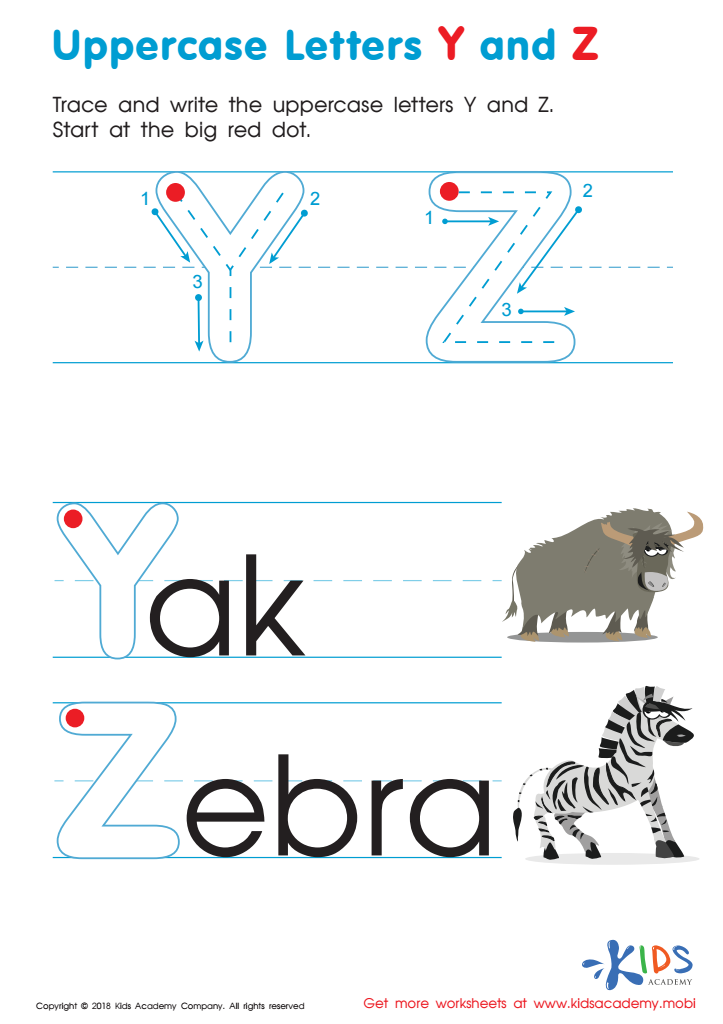
Uppercase Letters Y Z Worksheet
Help your child learn their ABCs with this fun tracing activity! They must trace and write Y and Z in uppercase form, starting from the red dot. Kids will love the fun images for extra engagement. Guiding their hand carefully will help them practice and perfect their writing skills.
Uppercase Letters Y Z Worksheet
Worksheet
Join Kids Academy for Free
Who is primarily going to use this learning content?







Letter tracing skills for children aged 4-5 are crucial for several reasons. First, early literacy development plays a significant role in shaping a child's future academic success. Learning to trace letters helps children develop fine motor skills and hand-eye coordination, foundational skills necessary for writing. This early practice encourages proper pencil grip and controlled movements, which are vital as they progress in their writing abilities.
Moreover, letter tracing aids in letter recognition, which is essential for developing phonics skills and understanding the relationship between letters and sounds. When children trace letters, they engage multiple senses—visual, auditory, and kinesthetic—which enhances memory retention and learning.
Additionally, fostering these skills provides an early sense of accomplishment, boosting self-confidence and enthusiasm for learning. With a solid grounding in letter tracing, children build a strong foundation for future literacy skills, such as reading and spelling.
For parents and teachers, supporting letter tracing not only promotes academic readiness but also enhances children’s ability to express themselves through writing as they grow. The early years are pivotal, making it vital for caregivers to recognize the lasting benefits of developing these fundamental skills.







