
Letter formation Normal Alphabet Worksheets for Ages 4-5
4 filtered results
Difficulty Level
Grade
Age
-
From - To
Subject
Activity
Standards
Introduce young learners to the world of writing with our "Letter Formation Normal Alphabet Worksheets for Ages 4-5." Tailored specifically for early grade students, these worksheets provide engaging and easy-to-follow exercises that help children develop essential handwriting skills. Each worksheet combines fun activities with structured practice to ensure kids master the formation of both uppercase and lowercase letters. Kids will delight in connecting dots, tracing patterns, and practicing on their own, building a strong foundation for future literacy success. Perfect for home or classroom use, these worksheets make learning the alphabet an enjoyable journey for young minds.
Favorites
With answer key
Interactive
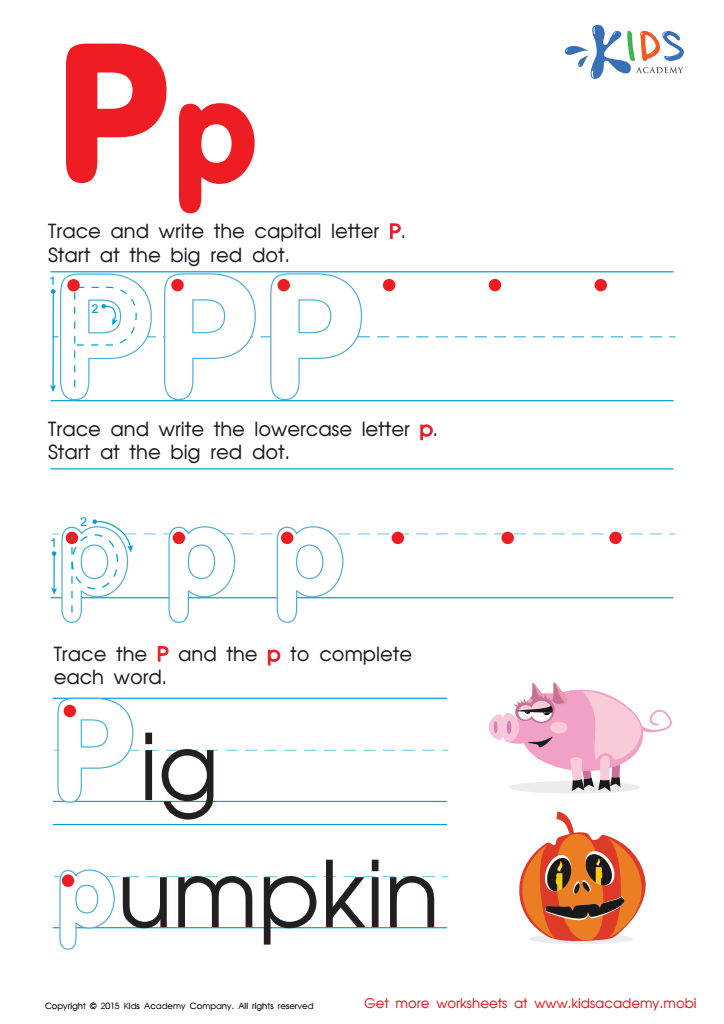
Letter P Tracing Page
Trace the lines from the red dot to learn to write "P"! Then practice this letter with the fun activities: complete the word "Pig" and "Pumpkin". Check out Kids Academy to get more free ABC worksheets.
 Assign to My Students
Letter P Tracing Page
Worksheet
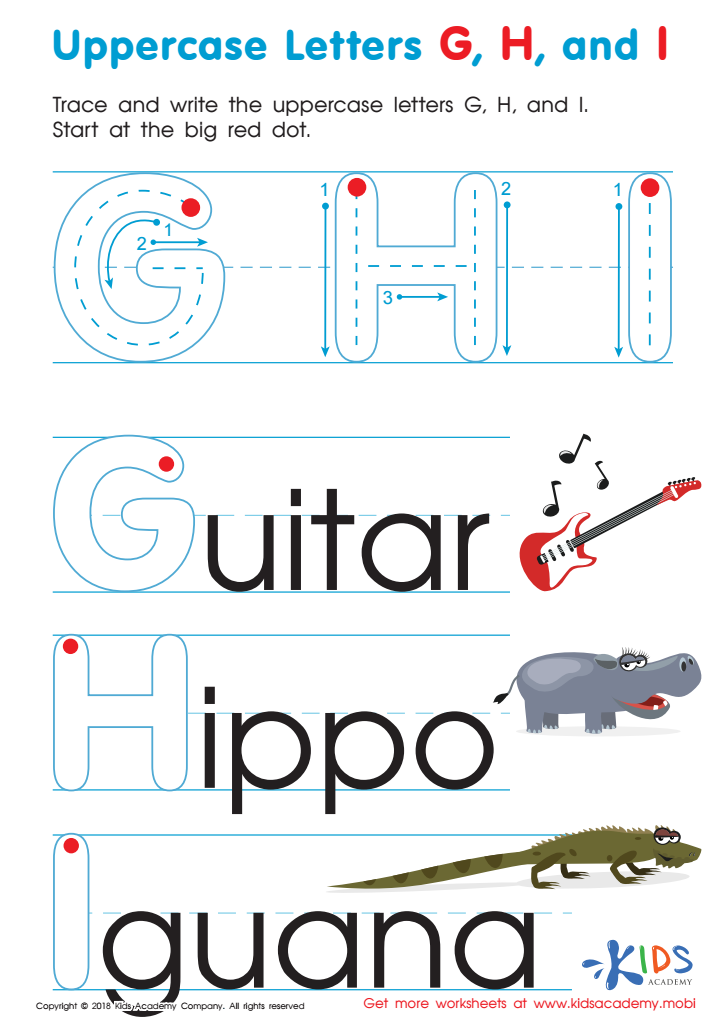
Uppercase Letters G, H, and I Worksheet
Trace each letter with the big red dot, connecting them to sounds as you go. Then write G to I. Congrats on a job well done! Rock on with a cute hippo and iguana while working on this delightful kindergarten worksheet!
Uppercase Letters G, H, and I Worksheet
Worksheet

Letter G Tracing Page
Get ready to trace the letter "G" – with a big red spot as the starting point, trace the lines and watch the letter appear. Uppercase and lowercase letters are both easy and fun to write. Give it a go and finish the word "go". Play the guitar and say "hello" to a funny ghost!
Letter G Tracing Page
Worksheet
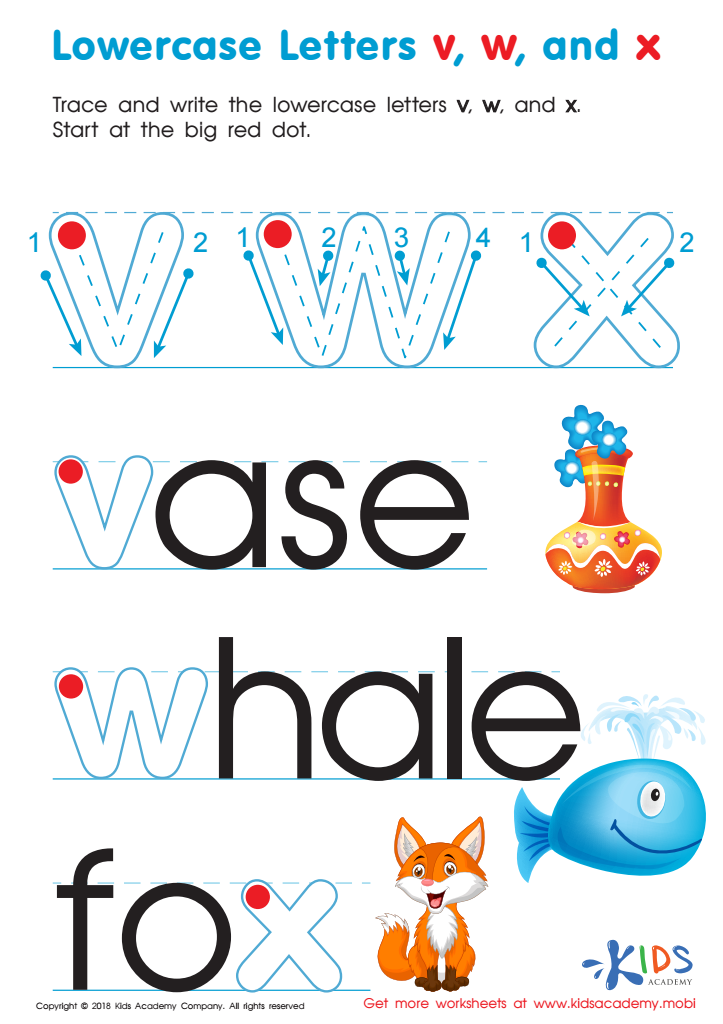
Lowercase Letters v w x Worksheet
Help your child learn to write lowercase letters v, w, and x, starting at the big red dot. This activity will help them develop writing skills and correctly identify the letters. Guide them as they trace the letters and enjoy watching them improve!
Lowercase Letters v w x Worksheet
Worksheet
Join Kids Academy for Free
Who is primarily going to use this learning content?








Letter formation is a crucial skill for children aged 4-5 as it lays the foundation for their future writing abilities and overall literacy development. At this stage, young learners are in the early stages of fine motor skill development, which is essential for precise control and coordination when writing. Proper letter formation enhances their ability to write legibly and efficiently, reducing frustration and building confidence.
Parents and teachers should care about letter formation because it directly affects a child's academic progress. Correctly formed letters lead to more readable handwriting, which is essential for effective communication and the completion of written tasks, both of which they will encounter as they progress in their education. Early intervention in teaching the standard alphabet can help prevent the development of poor handwriting habits that can be hard to correct later on.
Moreover, learning proper letter formation also aids in spelling and reading skills. It fosters a visual and kinesthetic connection to the letters, helping children better recognize and remember letter shapes, which is fundamental in developing strong reading skills. By focusing on accurate and consistent letter formation, parents and teachers support children in their journey towards becoming proficient writers and avid readers, setting them up for long-term academic success.







