Uppercase identification Normal Alphabet Worksheets for Ages 4-5
5 filtered results
-
From - To
Enhance your child's early literacy skills with our Uppercase Identification Normal Alphabet Worksheets for Ages 4-5. These engaging and educational worksheets are designed to help preschoolers and kindergarteners recognize and identify uppercase letters effortlessly. Through fun and interactive activities, young learners can practice letter identification, boosting their confidence and preparing them for reading and writing. Our expertly crafted worksheets are perfect for parents and educators seeking effective resources to support children's alphabet learning journey. Download, print, and watch your child's alphabet knowledge soar with these dynamic and colorful worksheets!
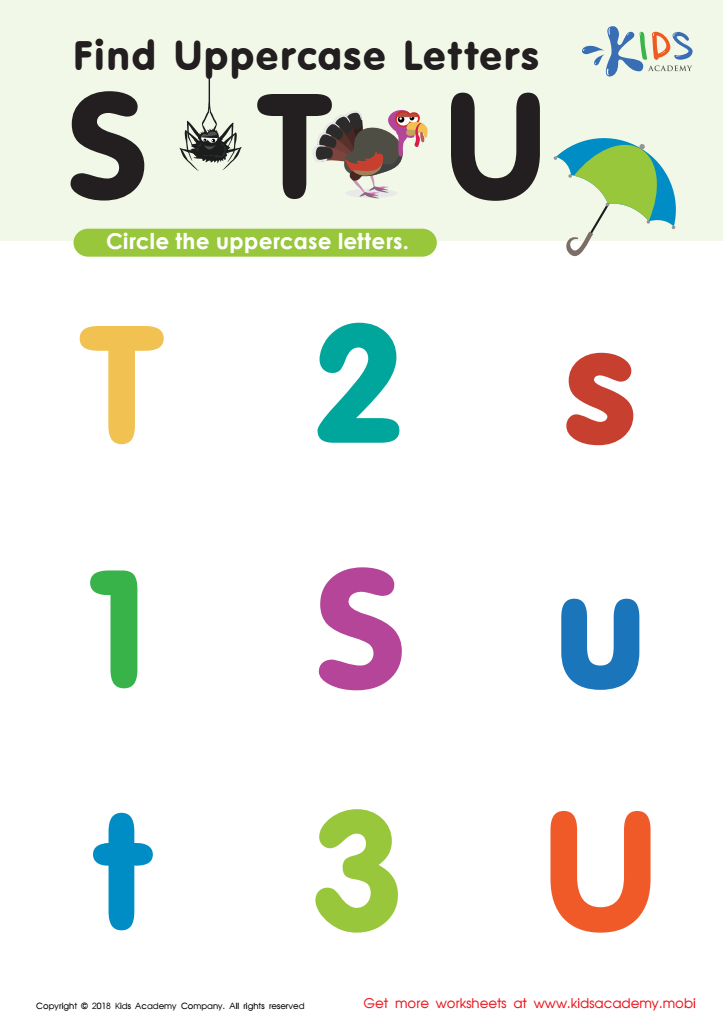
Find Uppercase Letters Worksheet
 Assign to My Students
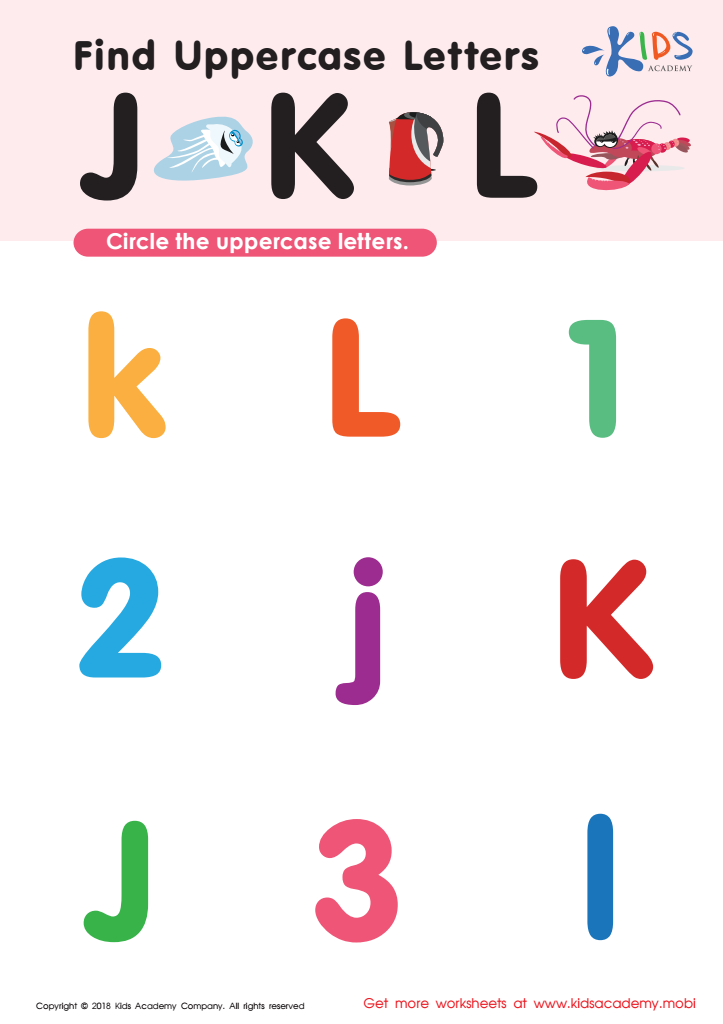
Find Uppercase Letters J, K, and L Worksheet
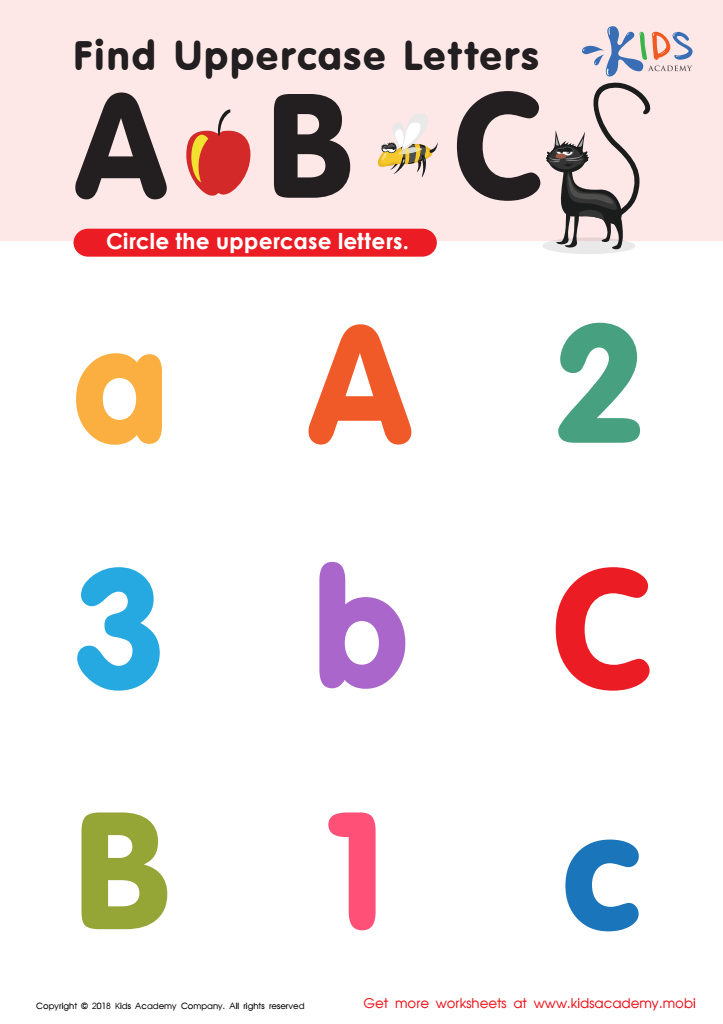
Find Uppercase Letters A, B, and C Worksheet
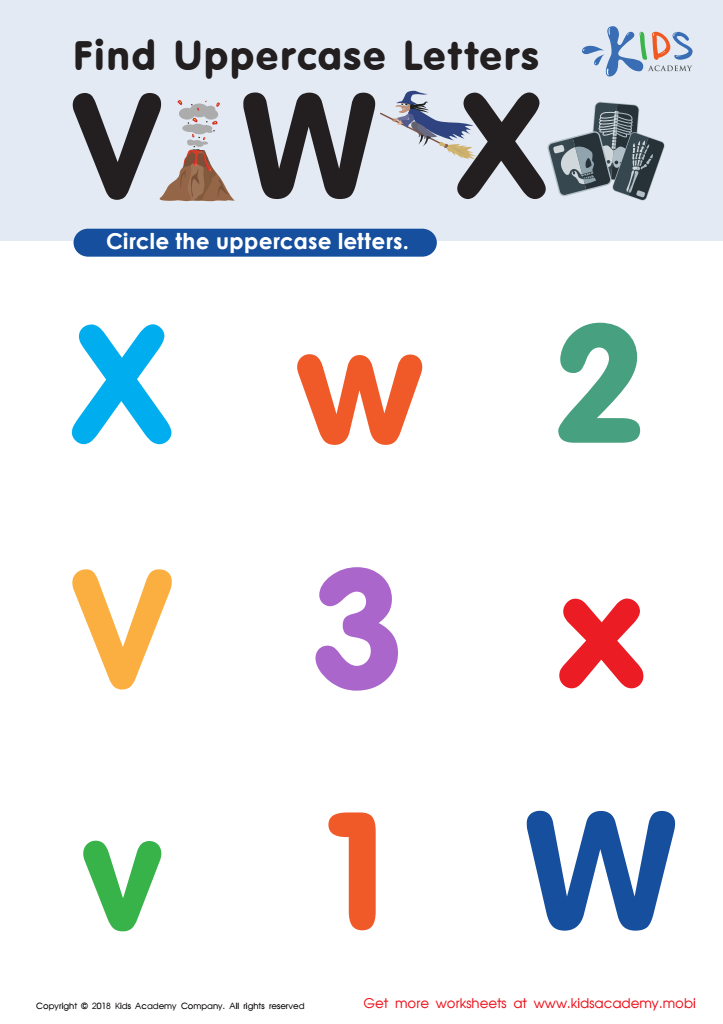
Find Uppercase Letters V, W, X Worksheet
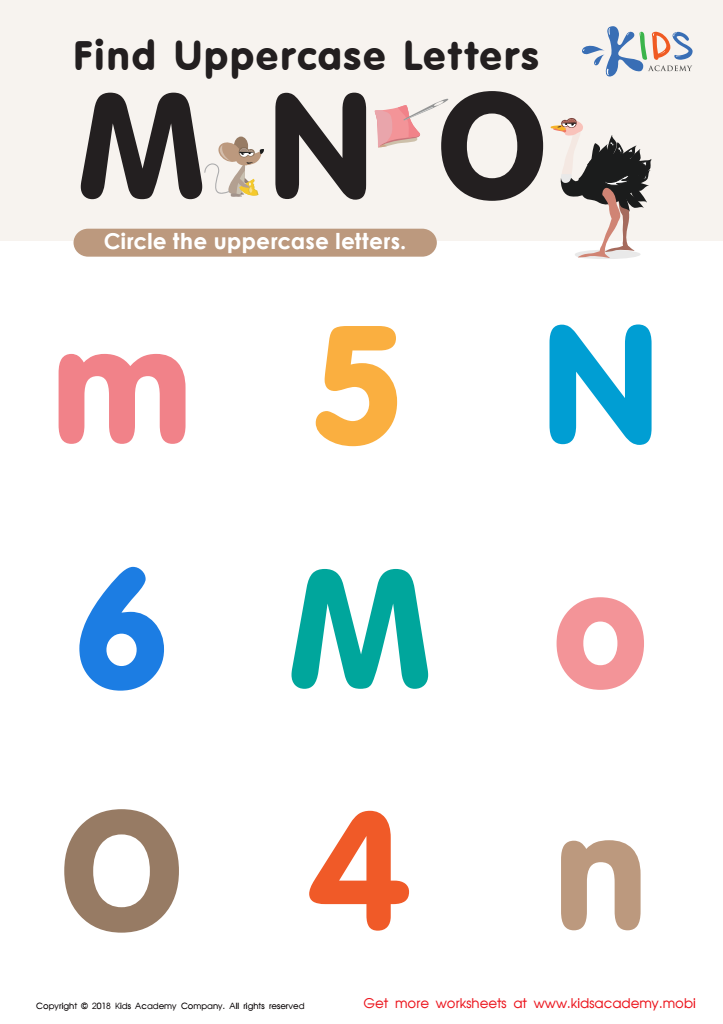
Find Uppercase Letters M, N, and O Worksheet








Understanding and recognizing uppercase letters is a foundational step in a child's early literacy development, making it an essential focus for parents and teachers of 4-5-year-olds. At this critical age, children are developing the cognitive abilities needed for reading and writing, and becoming familiar with uppercase letters lays the groundwork for these skills.
Uppercase letters are often easier for young children to recognize and replicate due to their simplified and uniform shapes, which distinguish them more clearly than lowercase letters. This early recognition can boost a child's confidence in their ability to learn and understand written language. Additionally, uppercase letters are predominantly used in many early reading materials, such as signs, billboards, and children's books, providing a context in which children can apply their knowledge in a real-world setting.
Moreover, consistent exposure to and practice with uppercase letters contribute to a child's overall literacy, including phonemic awareness, vocabulary development, and eventually, reading fluency. Teachers and parents who emphasize the importance of uppercase letter identification are not merely teaching the alphabet; they are promoting essential skills that will support academic success and a lifelong love of reading. By nurturing uppercase letter knowledge, caregivers lay a strong educational foundation that paves the way for future learning milestones.







