Filters

11 filtered results

Clear all filters
Favorites
With answer key
Interactive

11 filtered results

Difficulty Level

Grade


Our "Letter Recognition Normal Uppercase Letters Worksheets for Ages 4-5" are expertly designed to help young learners master the alphabet. Through engaging activities and colorful illustrations, children will confidently identify and write uppercase letters. Ideal for early grade students, these worksheets boost motor skills, letter recognition, and foundational reading abilities. Suitable for both classroom and home learning, they offer a delightful and effective way to build essential literacy skills. Provide your child with a strong start in their educational journey with our fun, practical, and thoughtfully crafted worksheets. Download today and watch them thrive!

Check out this FREE Trial Lesson on Uppercase Letters for age 4-5!

Naming Uppercase Letters A-I

Favorites
With answer key
Interactive
  • 4-5
  • Letter recognition
  • Uppercase Letters
  • Normal
Uppercase Letters S, T, and U Worksheet

Uppercase Letters S, T, and U Worksheet

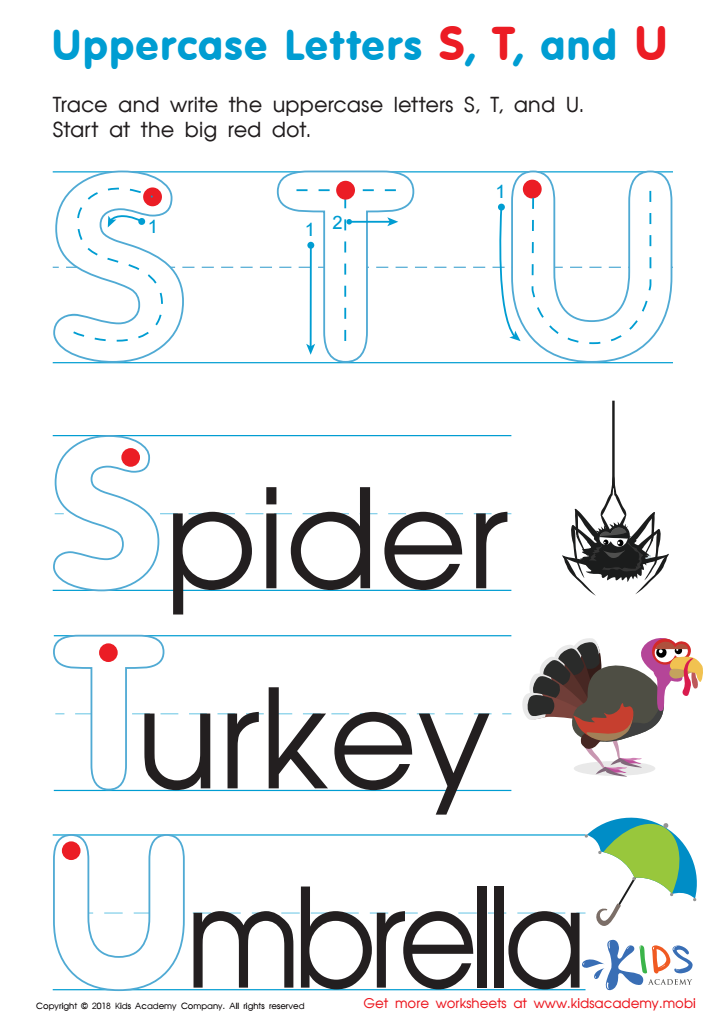
Help your kids learn to write upper-case letters with this fun tracing sheet. Start at the big red dot for each letter: S, T, and U. Show them the pictures and ask what letter each word starts with. Guide their hand and watch them learn!
Uppercase Letters S, T, and U Worksheet
Worksheet
Find Uppercase Letters G, H, and I Worksheet Preview

Find Uppercase Letters G, H, and I Worksheet

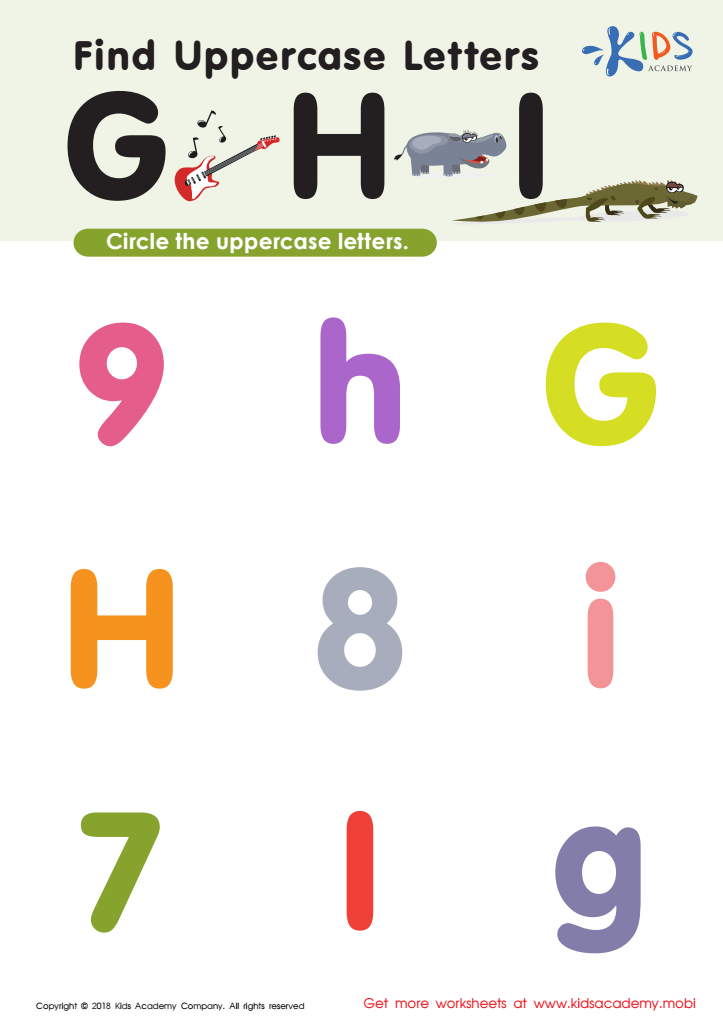
Find G, H, and I in uppercase with this downloadable worksheet! Numbers are included to challenge your kindergartener's letter recognition skills. Plus, practice G, H, and I sounds using the cute graphics. Perfect for learning letter case recognition!
Find Uppercase Letters G, H, and I Worksheet
Worksheet
Uppercase Letters Maze Worksheet Preview

Uppercase Letters Maze Worksheet

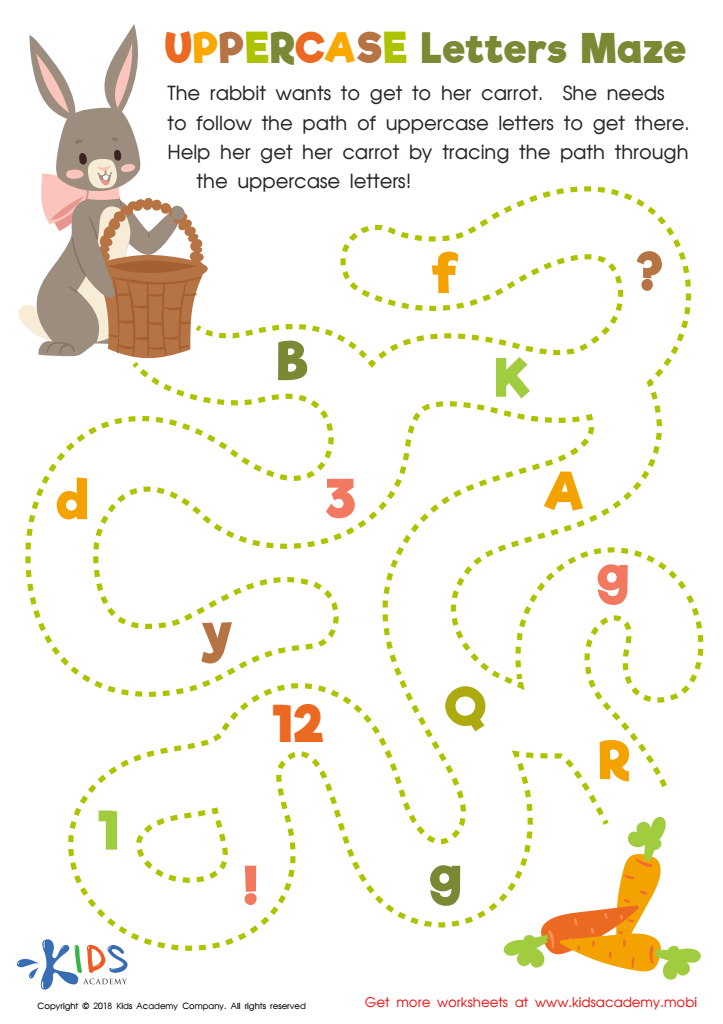
Kids can have fun helping a rabbit find her carrot by picking the path with uppercase letters. This worksheet teaches letter differentiation while building confidence. Kids will have a great time while getting an essential skill!
Uppercase Letters Maze Worksheet
Worksheet
Find Uppercase Letters Worksheet

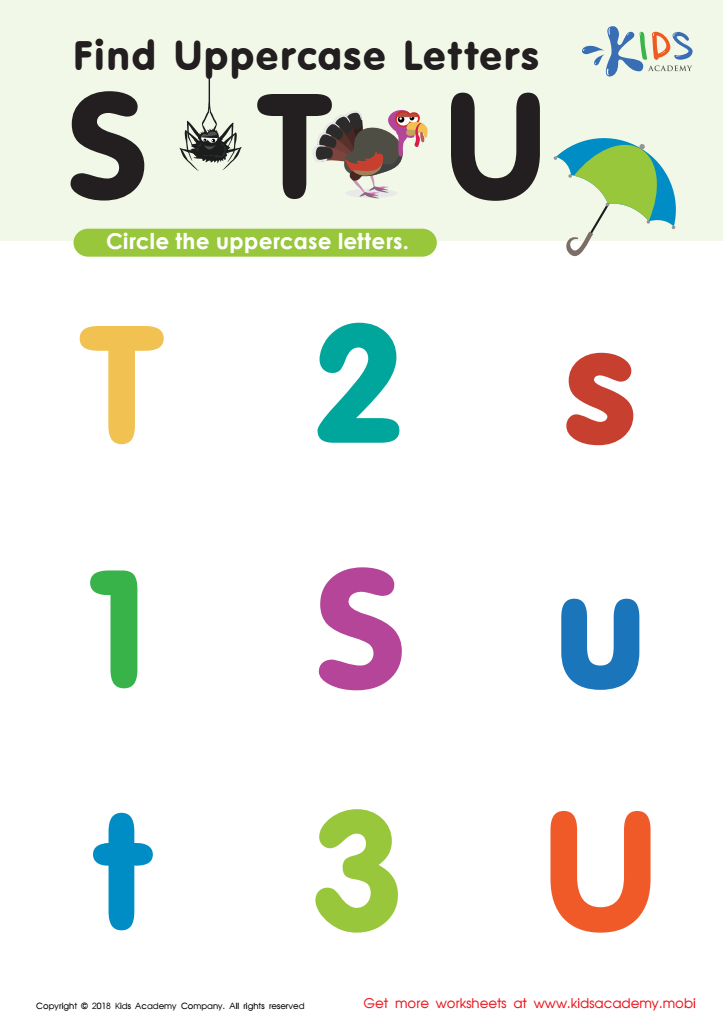
Find Uppercase Letters Worksheet

What level is your kid at now? Can they tell the difference between small and uppercase letters? Ask them to name words beginning with S, T and U, then help them find and circle the uppercase letters S, T and U in a mix of small letters, numbers and uppercase letters.
Find Uppercase Letters Worksheet
Worksheet
Find Uppercase Letters J, K, and L Worksheet Preview

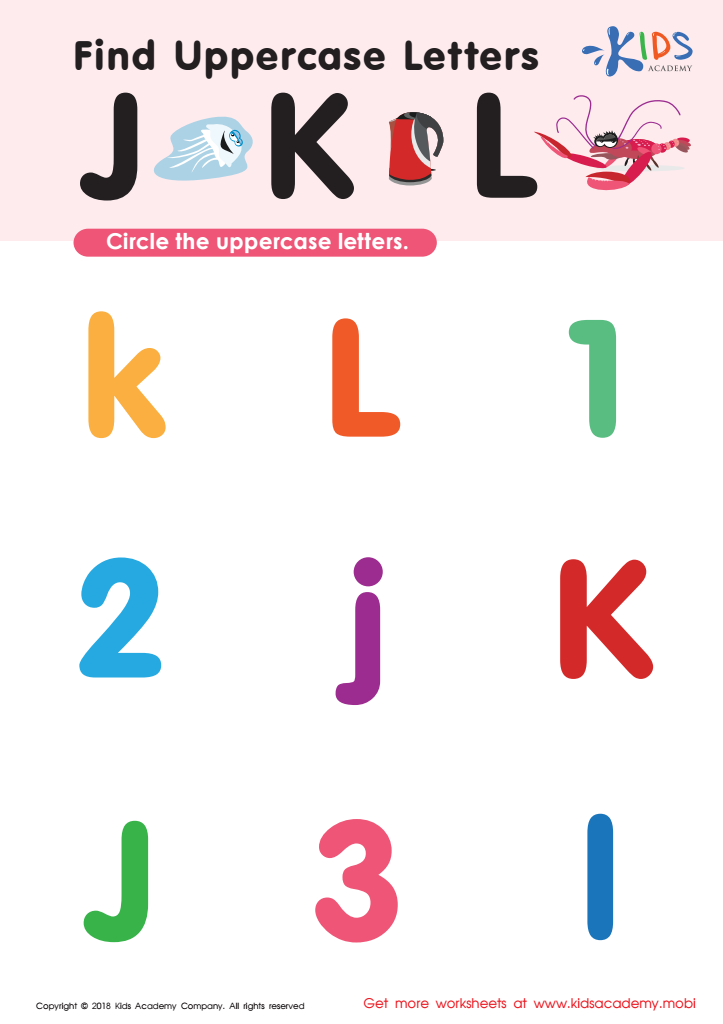
Find Uppercase Letters J, K, and L Worksheet

Search for the uppercase letters J, K, and L in this fun worksheet! Help your child identify the starting sound of each picture, then look for the letters. Keep an eye out for numbers that look like letters. Swim with the jellyfish and solve this delightful puzzle!
Find Uppercase Letters J, K, and L Worksheet
Worksheet
Find Uppercase Letters Y Z Worksheet

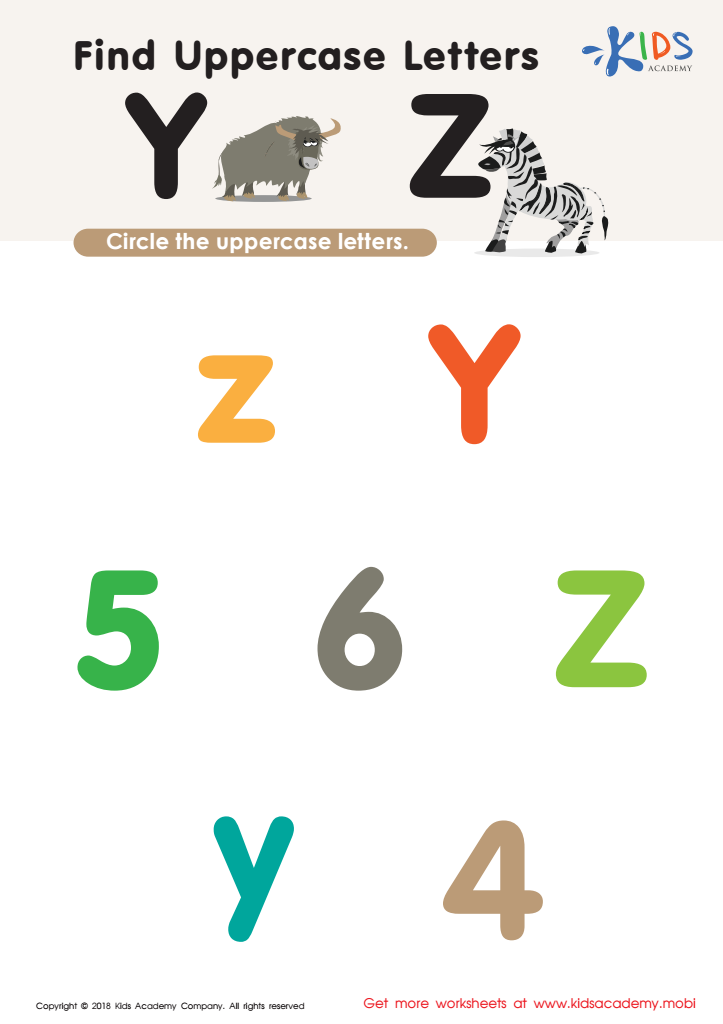
Find Uppercase Letters Y Z Worksheet

Download the worksheet! Help your youngster to learn the alphabet and distinguish uppercase from lowercase letters by having them circle the uppercase ones. It's an important first step towards reading and writing success!
Find Uppercase Letters Y Z Worksheet
Worksheet
Which Letter Should you Choose? Worksheet

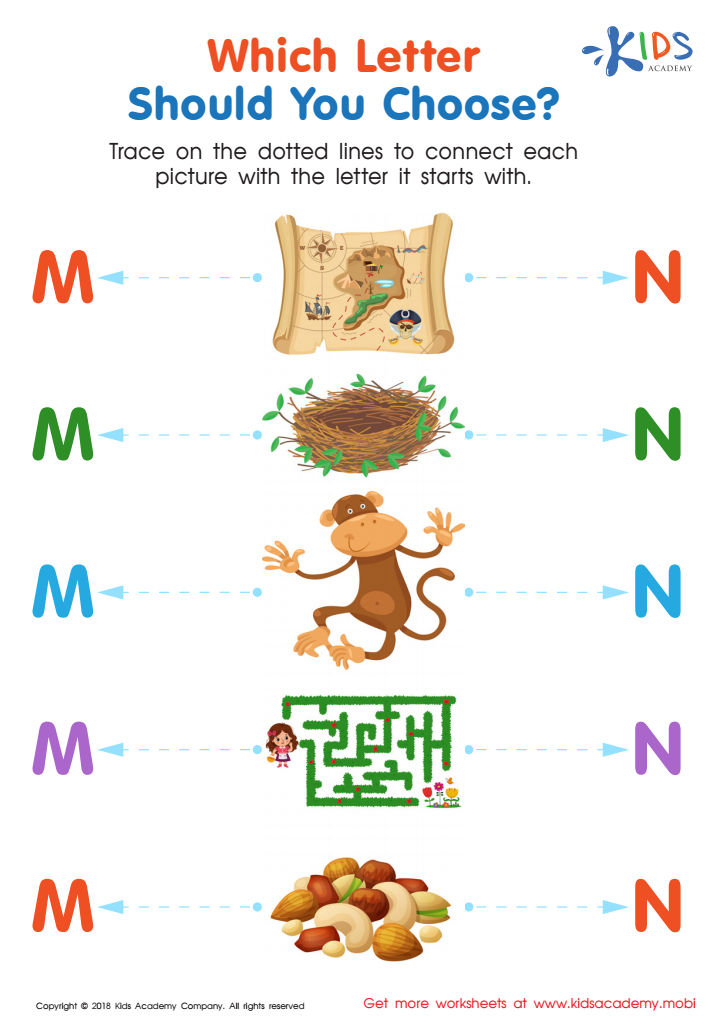
Which Letter Should you Choose? Worksheet

Trace the dotted lines to connect images with their first letter: "n" or "m." Challenge your child to name each picture, then identify the first letter and trace to the right letter! Five images in total.
Which Letter Should you Choose? Worksheet
Worksheet
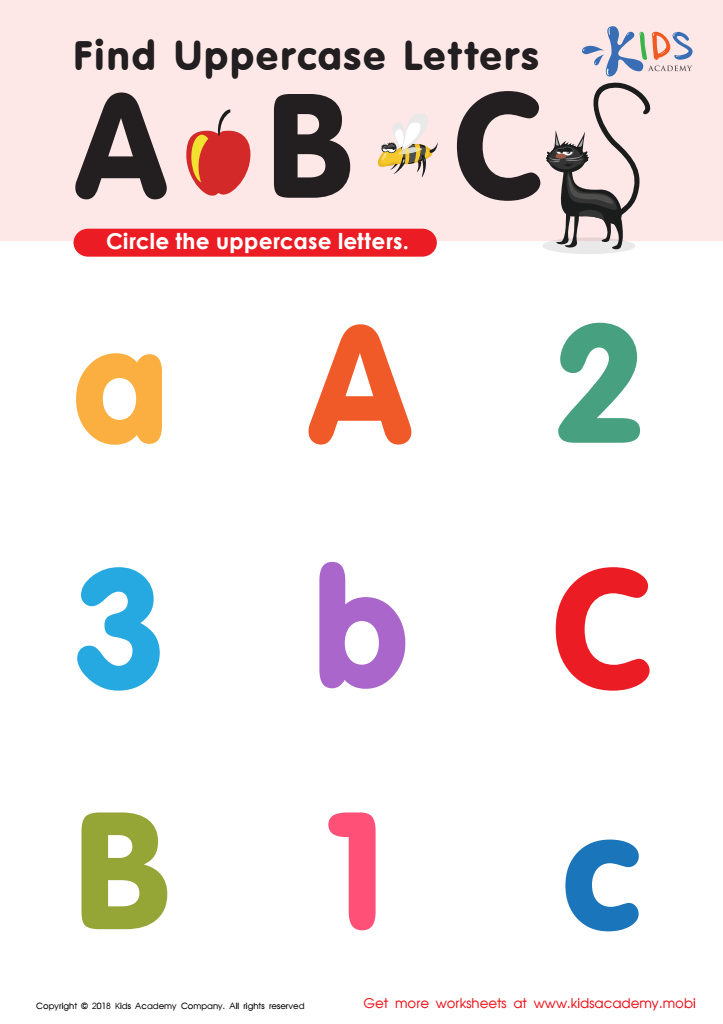
Find Uppercase Letters A, B, and C Worksheet Preview

Find Uppercase Letters A, B, and C Worksheet

Check out this PDF worksheet and spot all the capital letters! Arranged as a puzzle, this exercise will test little learners to read and recognize uppercase letters and tell the difference between letters and numbers. To help them, use the pictures on top of the page to practice the sounds A, B and C make! 80 words.
Find Uppercase Letters A, B, and C Worksheet
Worksheet
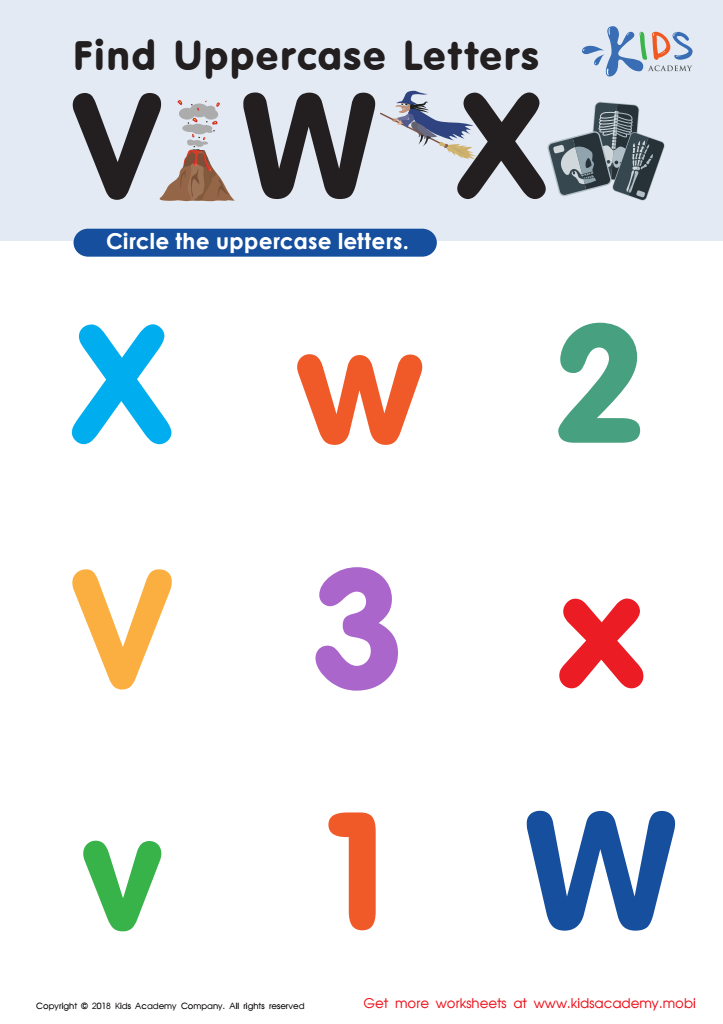
Find Uppercase Letters V, W, X Worksheet

Find Uppercase Letters V, W, X Worksheet

Ask your kids if they can spot the uppercase letters V, W and X hidden in the lowercase letters and numbers, then have them circle them. After that, ask them to give you examples of words beginning with those letters. This worksheet will help them get started.
Find Uppercase Letters V, W, X Worksheet
Worksheet
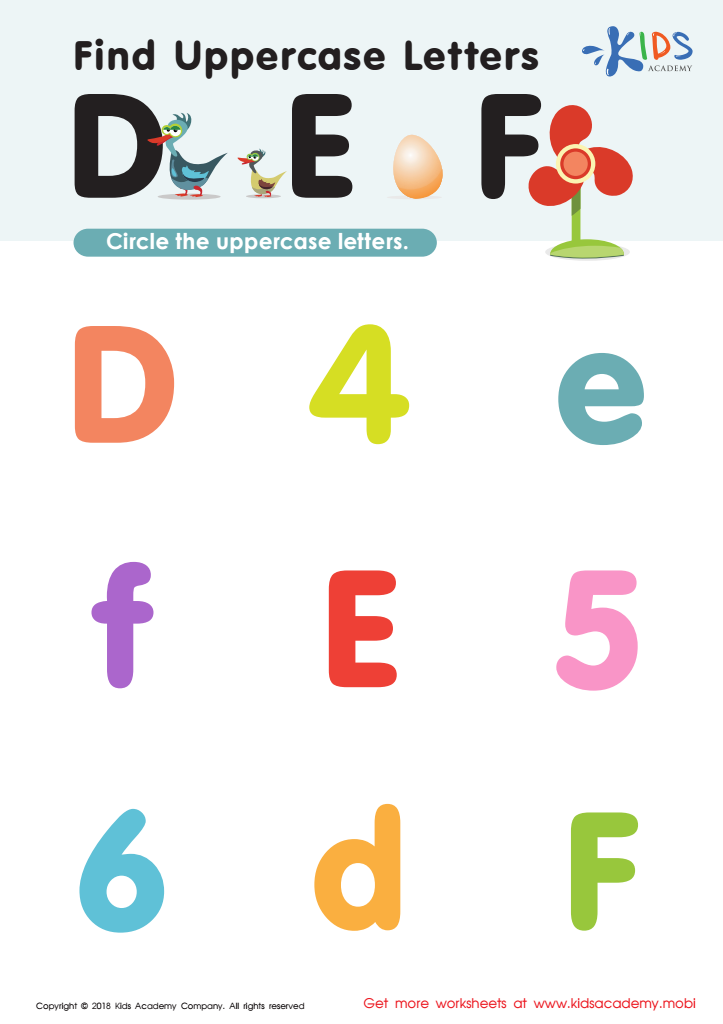
Find Uppercase Letters D, E, and F Worksheet Preview

Find Uppercase Letters D, E, and F Worksheet

Follow the duckling and mom to find the capital letters D, E and F on this fun alphabet worksheet! Kids learn to read and recognize letters, while differentiating them from numbers. For extra challenge, don't let the numbers fool them. The pictures above remind them of each letter's sound. Have fun and get letter-savvy!
Find Uppercase Letters D, E, and F Worksheet
Worksheet
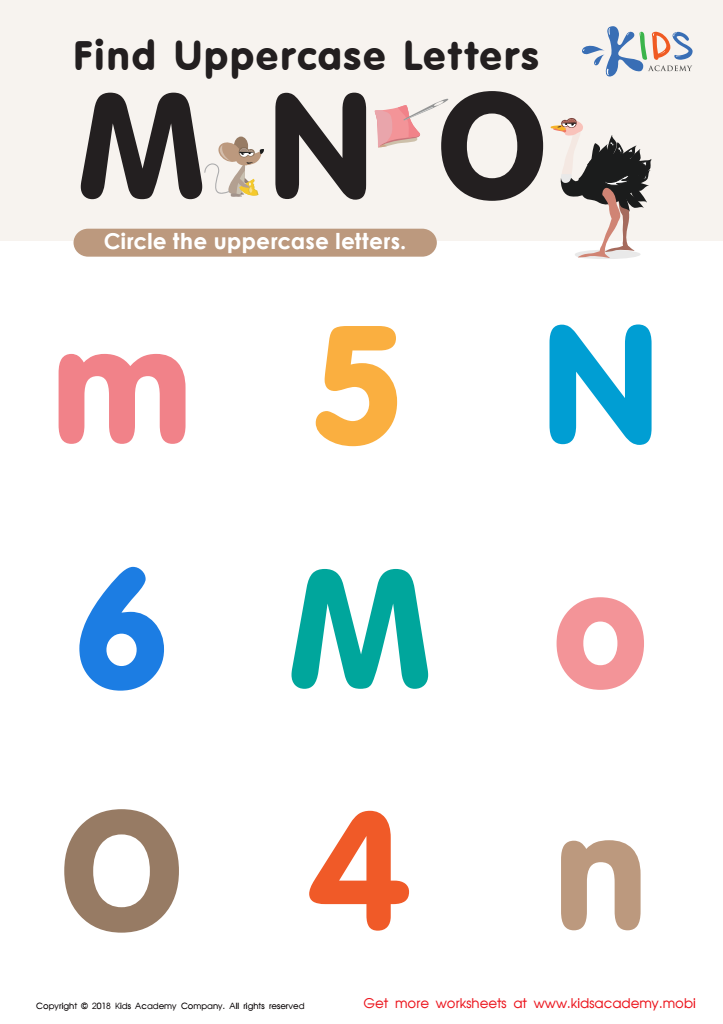
Find Uppercase Letters M, N, and O Worksheet Preview


Find Uppercase Letters M, N, and O Worksheet

Kids love puzzles! This one scrambles up letters and numbers. Help your learner spot the capital letters, then search for the uppercase M, N, and O. For an extra challenge, cover the large letters and have kids circle the capitals using only beginning letter sounds.
Find Uppercase Letters M, N, and O Worksheet

Worksheet


Letter recognition in uppercase for children aged 4-5 is fundamental for several reasons. At this developmental stage, kids are transitioning from pre-literacy to early literacy skills, and recognizing letters is a crucial first step in this process.

Firstly, knowing uppercase letters helps children make sense of the alphabet, a foundational block for reading and writing. Uppercase letters are typically easier to recognize and form due to their distinct shapes. Starting with uppercase can build confidence and create a strong base before introducing the more varied lowercase letters.

Secondly, early identification of letters links directly to understanding letter sounds (phonemic awareness). When children recognize letters, they start correlating each symbol with its corresponding sound, essential for decoding words during reading.

Educators and parents should note this development as it strengthens cognitive skills, such as memory and attention to detail. Delivering instruction in a fun, engaging manner makes learning enjoyable and encourages a love for reading. Activities like alphabet games, flashcards, and letter tracing can reinforce these skills.

Lastly, this foundational knowledge supports later academic success. Children who master letter recognition early often find it easier to acquire more complex literacy skills, such as phonics and spelling, setting the stage for continuous progress in their educational journey.