Attention to Detail Normal Worksheets for Ages 4-5
5 filtered results
-
From - To
Unlock the potential of young minds with our "Attention to Detail" worksheets designed specifically for ages 4-5. These engaging, printable activities help children develop critical learning skills by focusing on fine motor skills, pattern recognition, and observational abilities. Through fun exercises like matching, finding differences, and tracing, kids will enhance their attention span and improve their ability to concentrate. Perfect for preschool and kindergarten students, these worksheets make learning enjoyable and efficient, laying a strong foundation for future academic success. Help your child cultivate precision and carefulness with our expertly crafted resources!

Which One Is Different Worksheet
 Assign to My Students
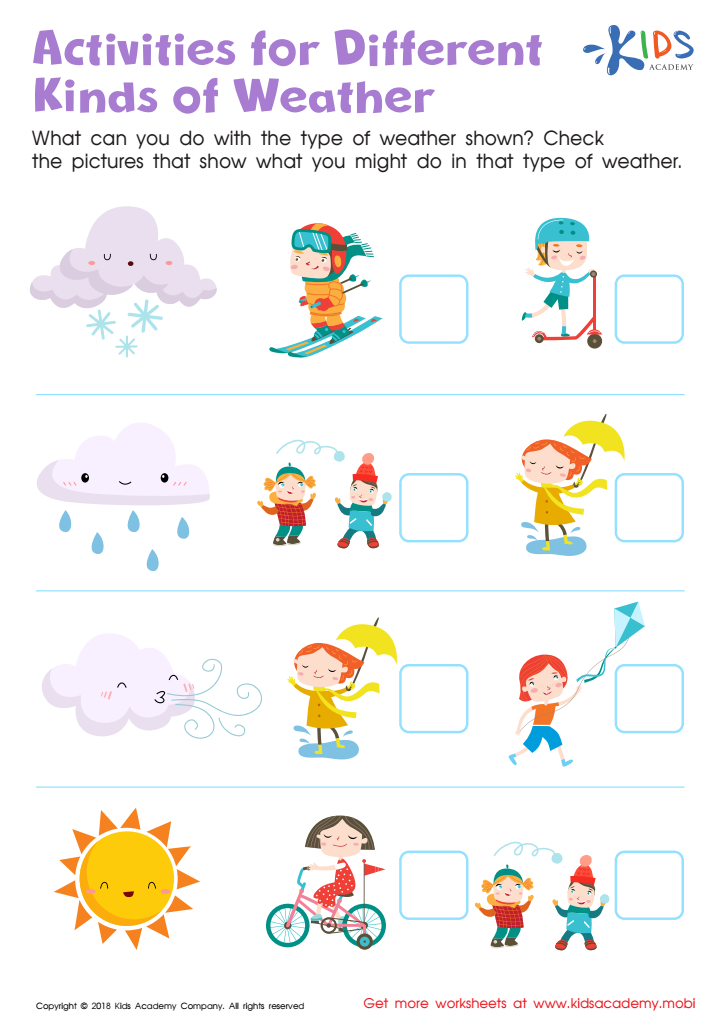
Activities for Different Kinds of Weather Worksheet

Finding 4 in the Forest Worksheet
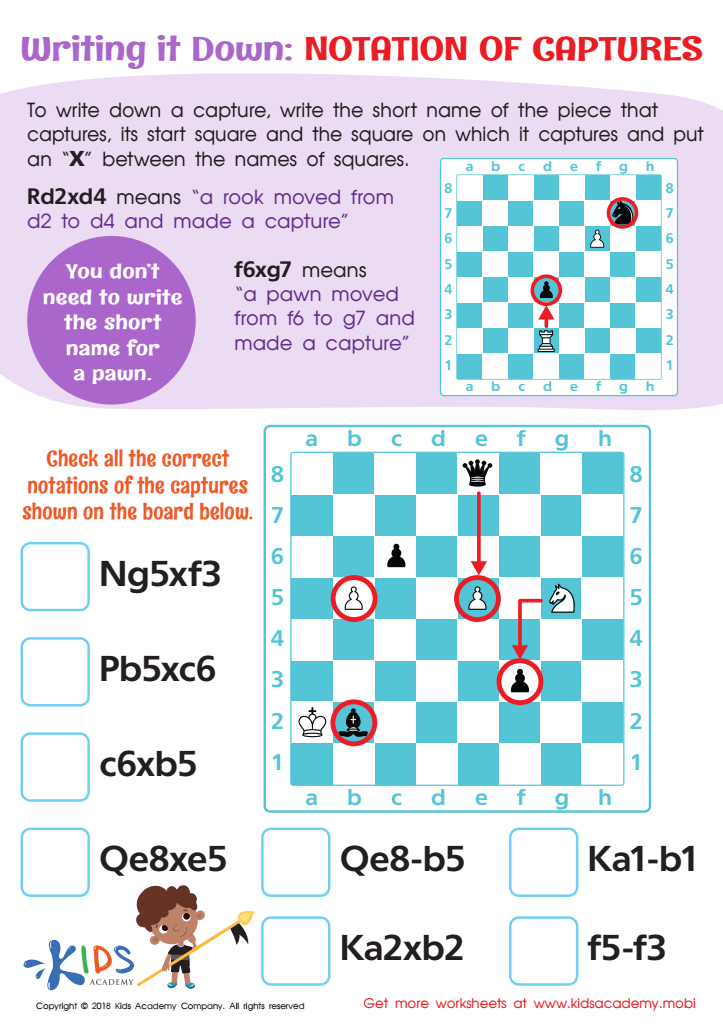
Notation of Captures Writing it Down Worksheet

Find 5 Worksheet








Attention to detail is a crucial skill for children ages 4-5 as it sets the foundation for future learning and personal development. At this age, children's brains are rapidly developing, and honing their attention to detail can significantly enhance cognitive growth. Parents and teachers play a critical role in nurturing this skill, which directly impacts a child's ability to concentrate on tasks, follow instructions, and execute activities with precision.
When children pay attention to details, they become more adept at recognizing patterns and making connections between concepts. This skill is vital for academic success, particularly in subjects like math, reading, and science. For example, noticing differences in letter shapes aids in learning to read, while observing patterns fosters early math skills.
Additionally, attention to detail enhances fine motor skills necessary for writing, drawing, and other hands-on activities. It also leads to the development of the executive functions essential for self-control, problem-solving, and long-term planning.
Moreover, cultivating attention to detail early fosters a sense of responsibility and pride in one's work. Children learn the value of doing a task well rather than merely completing it. Therefore, parents and teachers should prioritize engaging activities that encourage children to focus, observe, and appreciate the nuances of their environment, making attention to detail a lifelong habit for success in various aspects of life.








