
Multiplication practice Normal Worksheets for Ages 4-5
3 filtered results
Difficulty Level
Grade
Age
-
From - To
Subject
Activity
Standards
Welcome to our "Multiplication Practice Normal Worksheets" designed specifically for ages 4-5! These engaging and fun worksheets introduce young learners to the world of multiplication through playful activities. Each worksheet incorporates colorful illustrations and simple tasks to capture your child's interest while reinforcing essential math skills. These thoughtfully crafted resources promote early number comprehension and encourage independent learning. Support your child's educational journey by providing valuable multiplication practice that aligns with their developmental stage. Perfect for at-home learning or in-class activities, our worksheets help cultivate a strong mathematical foundation while ensuring a delightful learning experience. Start exploring today!
Favorites
With answer key
Interactive
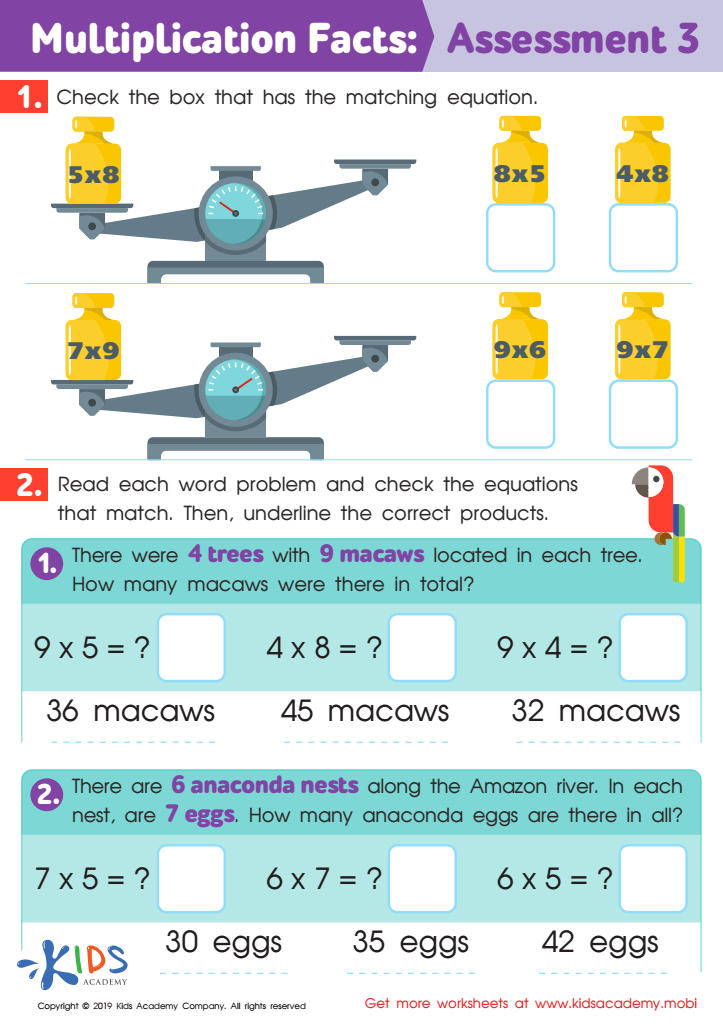
Multiplication Facts: Assessment 3 Worksheet
Test your kid's maths skills with this easy to use worksheet! Help them check the box that matches the equation in the first part, then read each word problem and underline the right answers to the second part. Assess your child's muliplication knowledge and find out where they need extra help.
 Assign to My Students
Multiplication Facts: Assessment 3 Worksheet
Worksheet
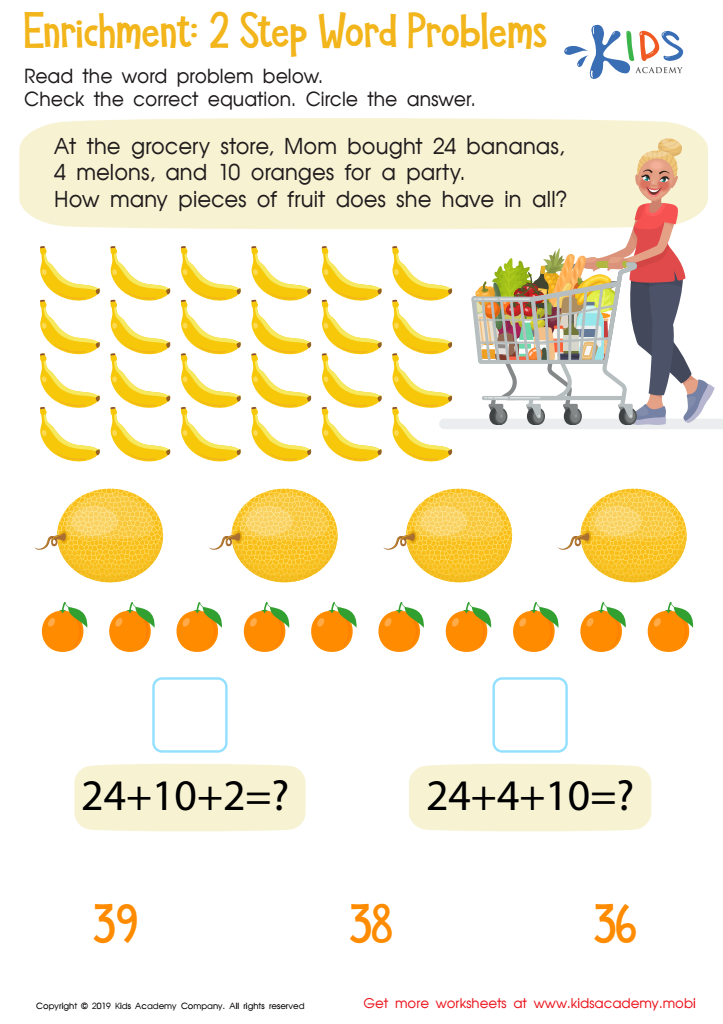
Enrichment -2 Step Word Problems Worksheet
Help your students learn math easier and faster with this colorful worksheet. Read the word problem and then guide them in checking the correct equation and finding the answer. Your students will benefit from the extra help, as they work through new concepts each day.
Enrichment -2 Step Word Problems Worksheet
Worksheet
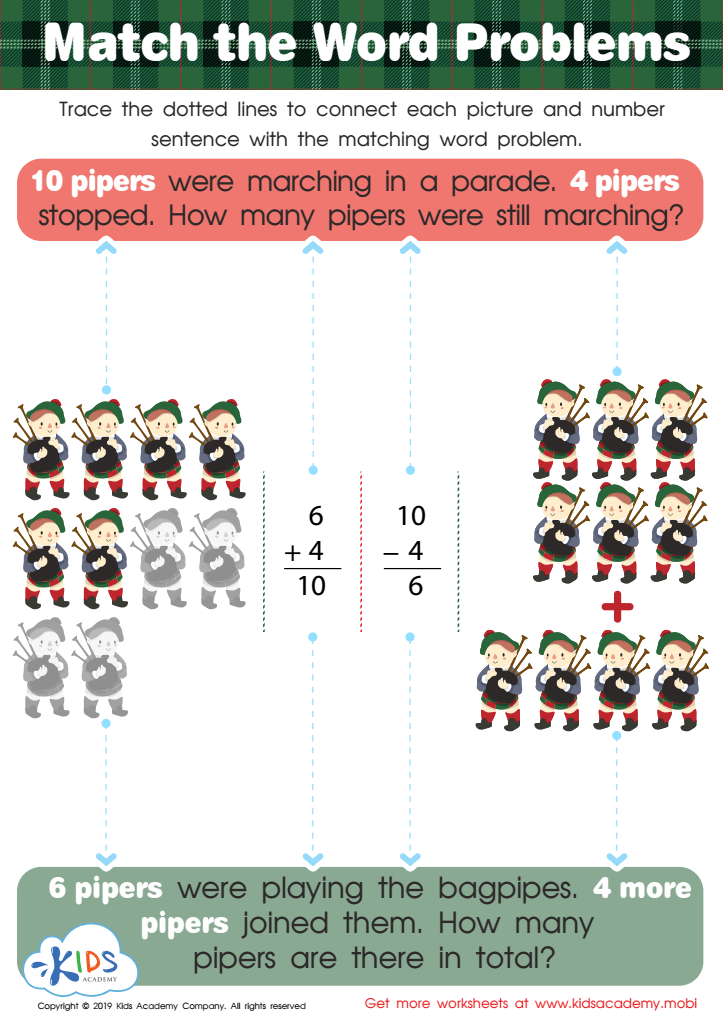
Match the Word Problems Worksheet
Read this word problem to your kids: Help them understand how it can be translated into a number problem. Trace the dotted lines to see how each picture and number sentence match the problem. With this worksheet, you can show your kids how easy it is to transform a word problem into a number problem.
Match the Word Problems Worksheet
Worksheet
Join Kids Academy for Free
Who is primarily going to use this learning content?





.jpg)

Parents and teachers should care about multiplication practice for ages 4-5 because early childhood education sets the foundation for future learning. Introducing multiplication concepts at a young age can enhance children's problem-solving skills and mathematical reasoning. At this stage, children are naturally curious and eager to learn, making it an ideal time to introduce foundational math skills in a fun and engaging manner.
Multiplication practice, even in its simplest form, helps develop cognitive skills such as sequencing, pattern recognition, and logical thinking. Early exposure to numbers and mathematical concepts can boost confidence, making children more willing to tackle challenges as they grow. Additionally, incorporating multiplication through playful activities—such as games, visual aids, and hands-on learning—can make the process enjoyable and less intimidating.
Furthermore, as society increasingly emphasizes STEM (Science, Technology, Engineering, Mathematics) education, building a strong math foundation will better prepare children for advanced concepts later in their education. Overall, multiplication practice lays the groundwork for mathematical fluency, critical thinking, and a lifelong love for learning, making it essential for both parents and teachers to take an active role in supporting children's mathematical journeys early on.








