Reading comprehension improvement Normal Worksheets for Ages 4-5
3 filtered results
-
From - To
Boost your child's reading skills with our engaging Reading Comprehension Improvement Worksheets designed specifically for ages 4-5. These carefully crafted worksheets provide age-appropriate activities that enhance understanding, critical thinking, and vocabulary development. Our interactive, fun exercises include picture matching, simple question and answer formats, and story retell prompts to foster a love for reading. Ideal for both homeschooling and classroom settings, these normal worksheets help young learners build a solid foundation in reading. Encourage your child's educational journey and watch their confidence soar as they master comprehension skills through playful learning! Visit us today to download and print these enriching resources.
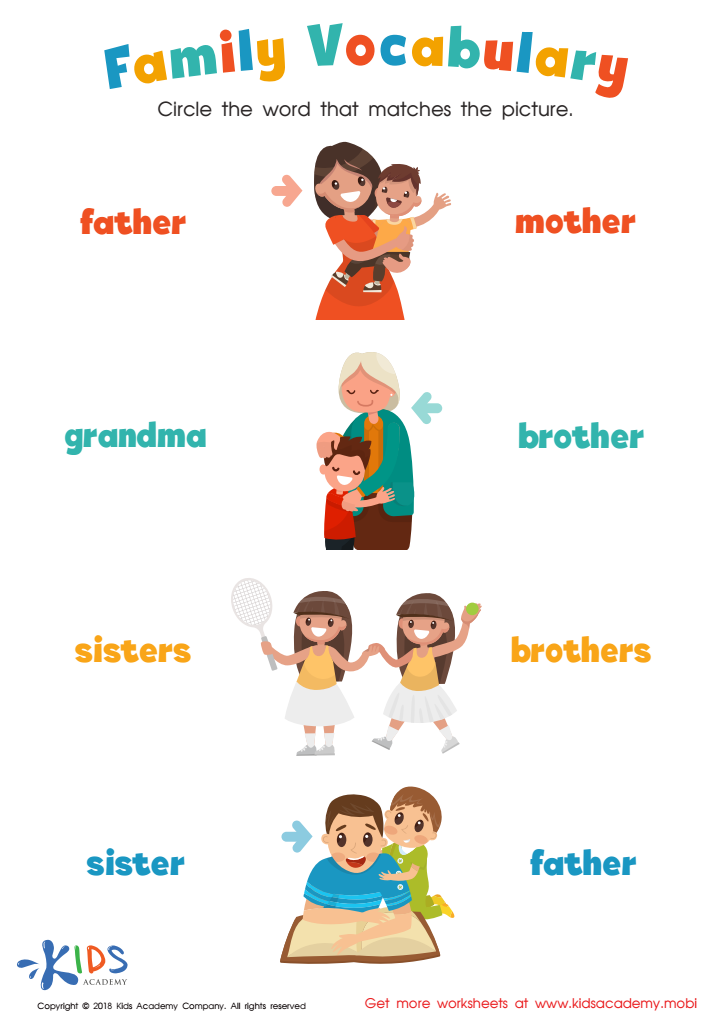
Family Vocabulary Worksheet
 Assign to My Students
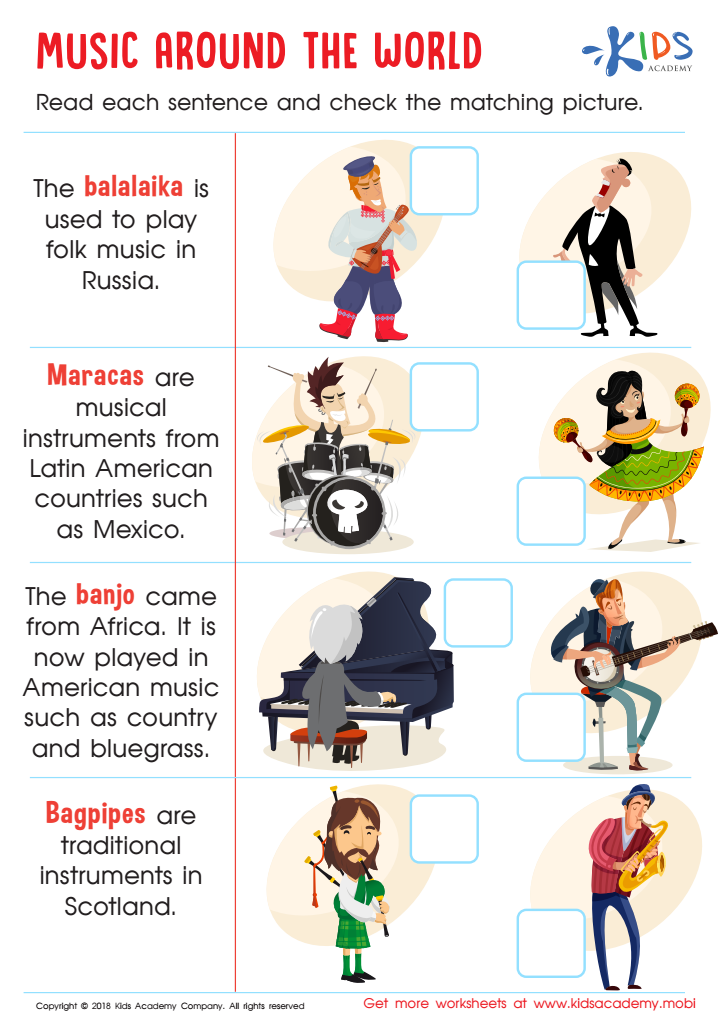
Music Around the World Worksheet
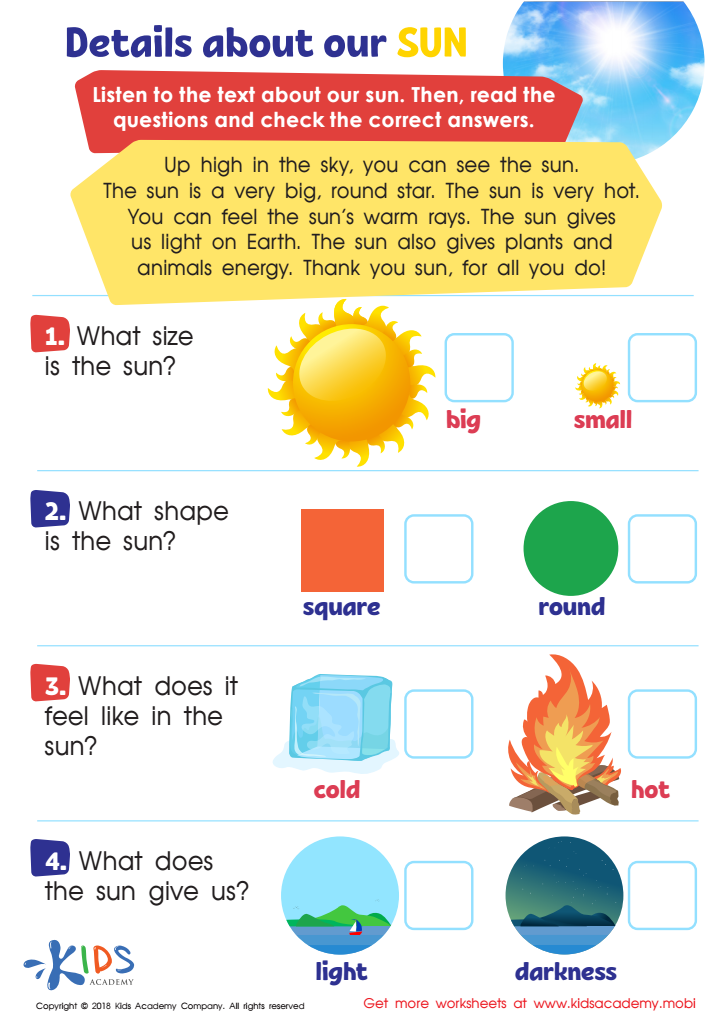
Details About Our Sun Worksheet





.jpg)


Reading comprehension improvement is crucial for children aged 4-5 as it lays the foundation for their academic success and lifelong learning. During these formative years, children are developing essential cognitive and language skills. Fostering reading comprehension at this age helps them understand not just what words mean, but also how to make connections, infer meaning, and engage with texts at a deeper level.
When parents and teachers prioritize reading comprehension, they empower children to become fluent readers. This fluency is key for future learning; as children progress in school, they will continually encounter increasingly complex texts. Strong comprehension skills help them to understand lessons across various subjects, fostering critical thinking and the ability to analyze information.
Moreover, improving reading skills from a young age can ignite a passion for reading, encouraging children to explore new ideas and cultures, thus promoting empathy. Engaging with books can also become a strong bonding activity between parents and children, enriching their relationship and providing for meaningful conversations about stories and themes.
In summary, parents and teachers should care deeply about reading comprehension improvement in early childhood, as it influences academic achievement, cognitive development, emotional growth, and the overall love for learning.








