Real-life application Normal Worksheets for Ages 4-5
3 filtered results
-
From - To
Discover our engaging Real-Life Application Normal Worksheets designed specifically for children aged 4-5. These worksheets provide practical learning experiences that connect essential skills to everyday life. With vibrant illustrations and relatable scenarios, kids will practice counting, sorting, and problem-solving while developing critical thinking. Our materials encourage exploration and understanding of the world around them, making learning fun and effective. Perfect for early educators and parents alike, these worksheets support key developmental milestones and help prepare young learners for school. Visit us today to access a variety of worksheets that foster curiosity and readiness for real-world experiences!
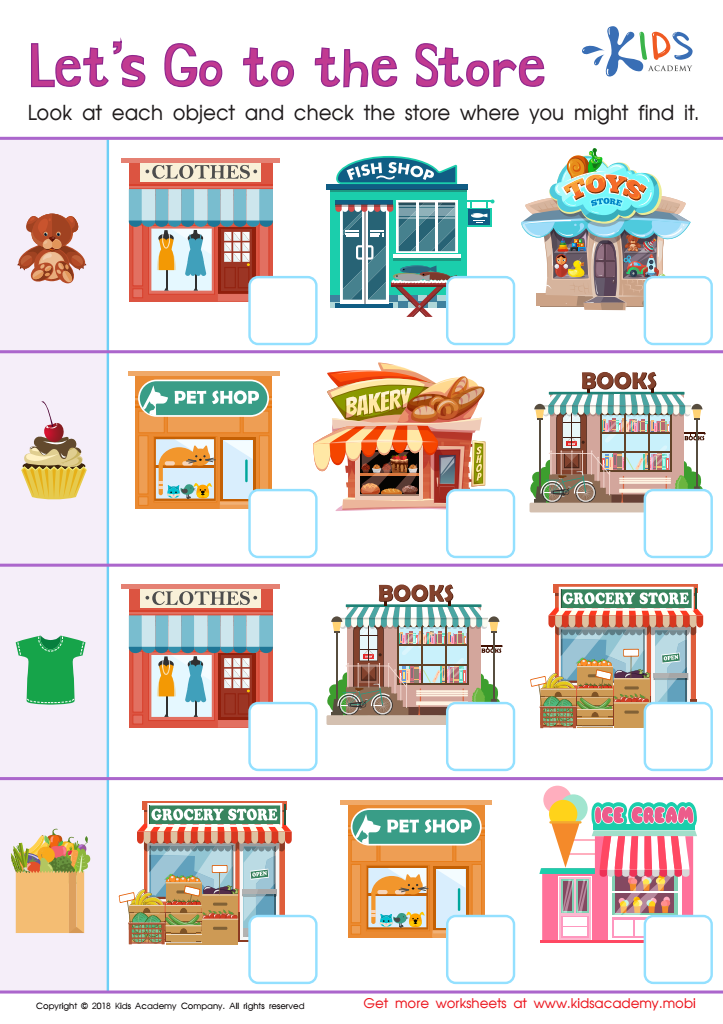
Let's Go to the Store! Worksheet
 Assign to My Students
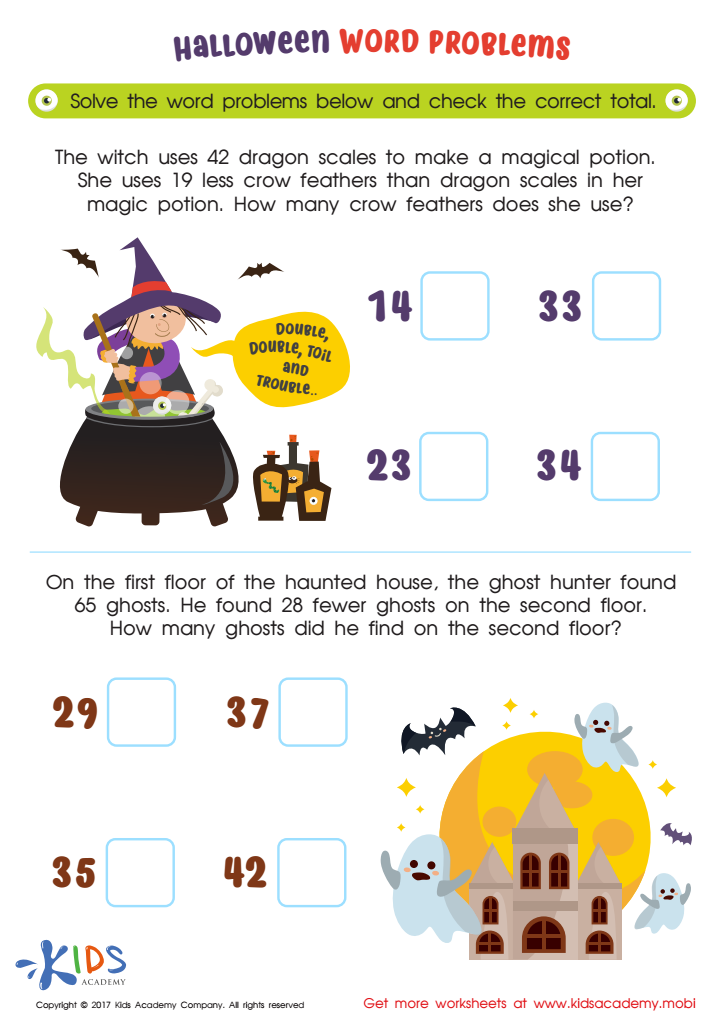
Halloween Word Problems Printable
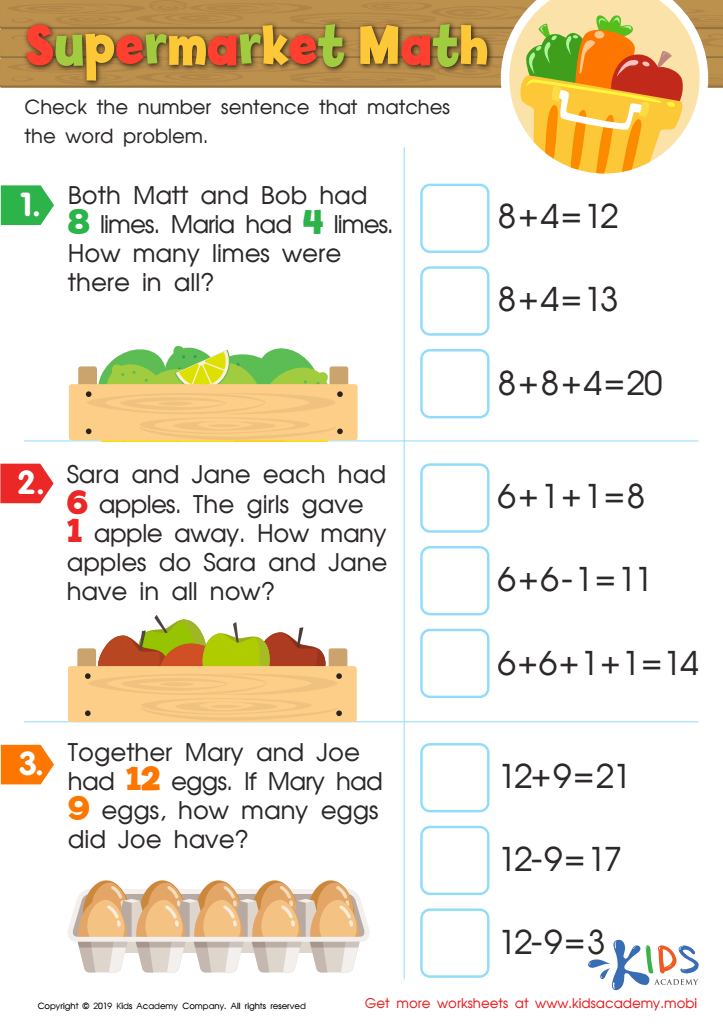
Supermarket Math Worksheet






Parents and teachers should prioritize real-life applications for children aged 4-5 because these experiences lay the foundation for lifelong learning and development. At this age, children are naturally curious and eager to explore the world around them. Incorporating real-life applications, such as cooking, gardening, or shopping, helps them connect abstract concepts to concrete experiences, enhancing their understanding and retention.
When children engage in hands-on activities, they develop critical skills, including problem-solving, teamwork, and communication. For instance, measuring ingredients while cooking teaches math and science concepts, while planning a garden introduces them to environmental stewardship. These activities also promote creativity and encourage risk-taking in learning.
Additionally, real-life applications foster independence and a sense of responsibility, as children learn to make choices and see the effects of those choices in their daily lives. Parents and teachers play a pivotal role in guiding this learning, making it essential to integrate these experiences into routines.
Ultimately, by emphasizing real-life applications, we empower young learners to become active participants in their education, build confidence, and cultivate a love for learning that will serve them throughout their lives.








