Understanding communities Normal Worksheets for Ages 4-5
3 filtered results
-
From - To
Explore our "Understanding Communities" worksheets designed specifically for ages 4-5! These engaging and interactive resources help young learners discover their neighborhoods, schools, and the various people and roles that shape their communities. With colorful visuals and relatable activities, children will enhance their social awareness, develop critical thinking, and learn about teamwork and diversity through fun, educational exercises. Our worksheets promote essential early learning skills while fostering a sense of belonging and community understanding. Perfect for use at home or in the classroom, these worksheets ensure that each child can enjoy a creative learning journey! Download now and inspire the community explorer in your child!
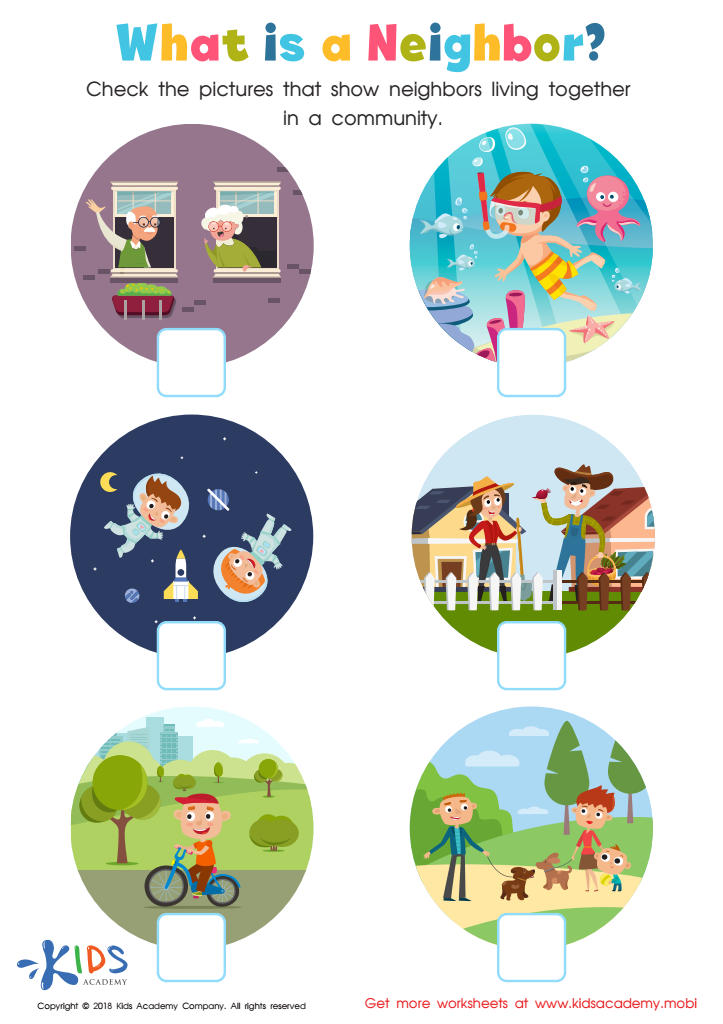
What is a neighbor Worksheet
 Assign to My Students
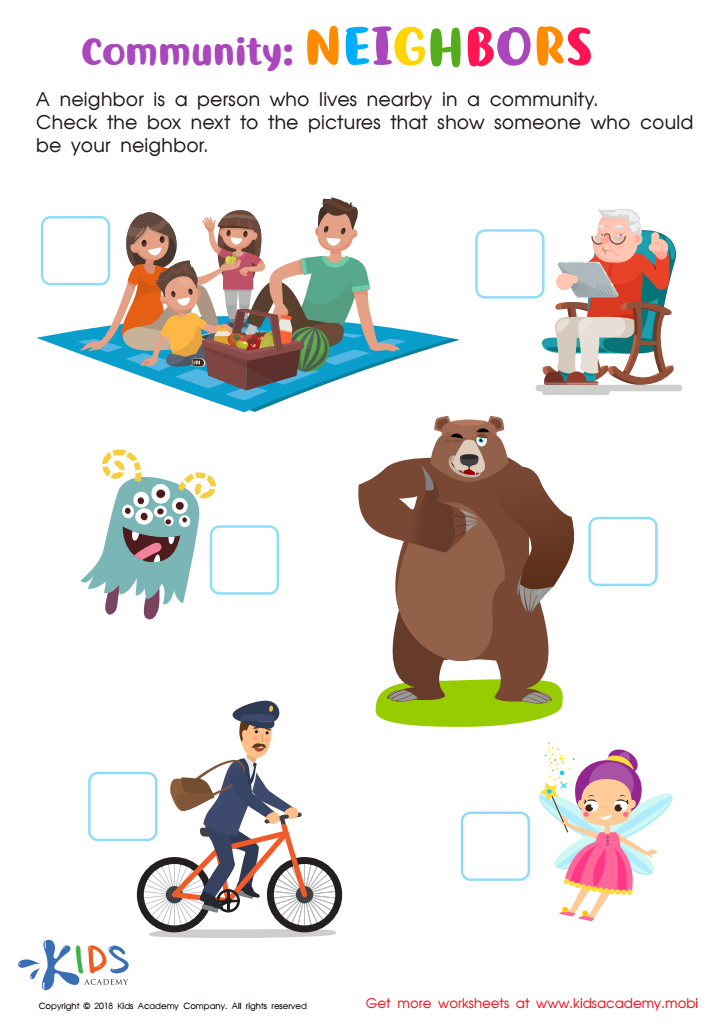
Community: Neighbors Worksheet
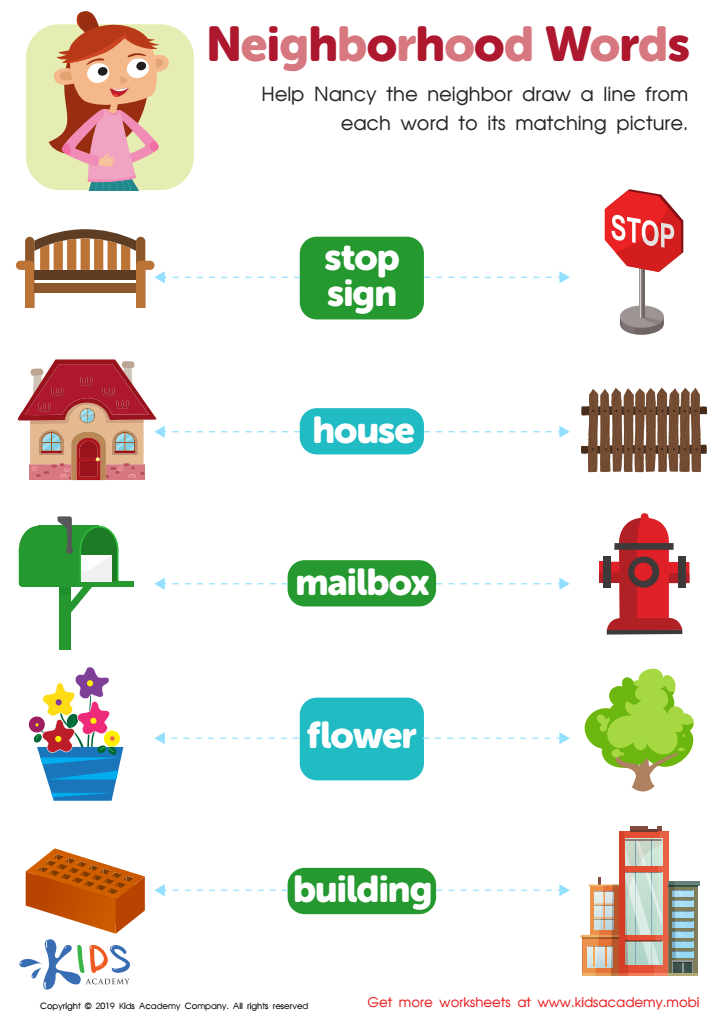
Neighborhood Words Worksheet





Understanding communities is crucial for young children aged 4-5, and it greatly benefits both parents and teachers in several ways. At this age, children are naturally curious about their surroundings, and fostering an understanding of their local community enriches their awareness and environment. This knowledge helps children recognize the diversity of people, cultures, and services that contribute to their world, promoting social-emotional development and empathy.
Parents play a vital role in modeling community engagement by discussing their neighborhood, visiting local parks, libraries, or museums, and participating in community events. This involvement teaches children about cooperation, responsibility, and respect for others. For teachers, integrating community themes into lessons boosts literacy, critical thinking, and social skills when children learn about various roles and relationships within their community.
Additionally, when children understand their community, they develop a sense of belonging and identity, which is important for their self-esteem. Supportive environments, both at home and school, encourage children to explore and ask questions about their community, laying a foundation for lifelong learning and civic responsibility. Therefore, parents and teachers should actively nurture children's understanding of their community to foster well-rounded individuals equipped for the world around them.








