Understanding patterns Normal Worksheets for Ages 4-5
3 filtered results
-
From - To
Enhance your child's early learning experience with our "Understanding Patterns Normal Worksheets" designed specifically for ages 4-5. These engaging worksheets aim to develop critical thinking and problem-solving skills by introducing young learners to the fascinating world of patterns. Through fun activities, children will learn to identify, create, and extend patterns using colors, shapes, and objects. Our user-friendly format caters to the early developmental stages, ensuring a smooth and enjoyable learning journey. Perfect for both classroom and home use, these worksheets make learning about patterns exciting and accessible, setting a strong foundation for future math skills. Start exploring today!
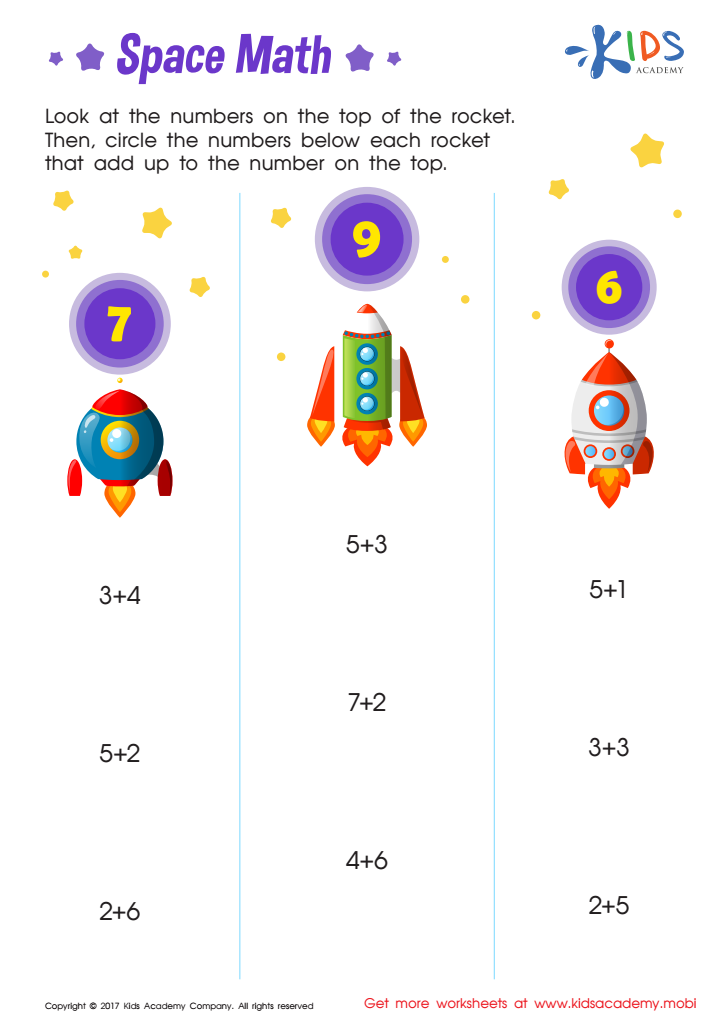
Addition: Space Math Worksheet
 Assign to My Students
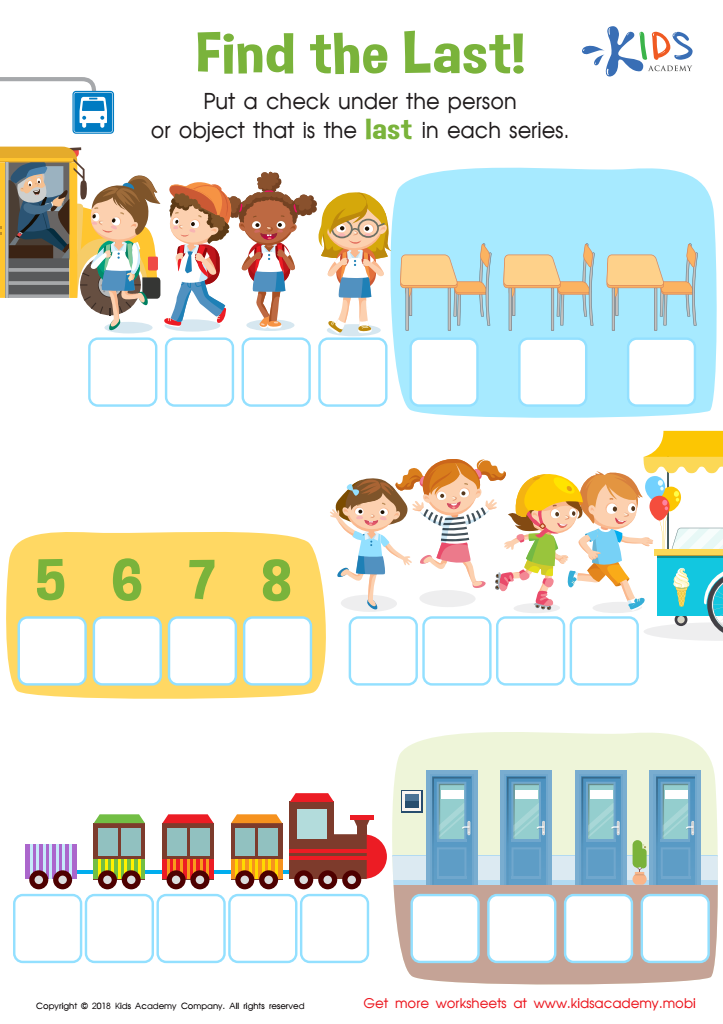
Find the Last! Worksheet
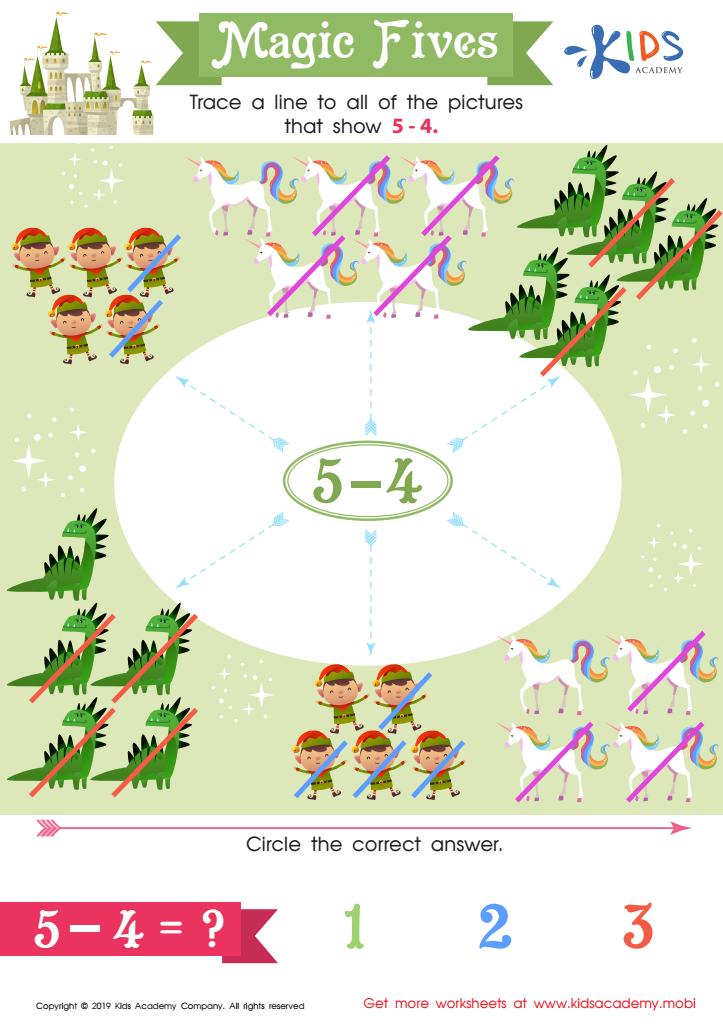
Magic Fives Worksheet








Understanding patterns is a fundamental skill that lays the groundwork for various aspects of cognitive development in children aged 4-5. At this stage, children are naturally curious and eager to explore their surroundings. Recognizing patterns helps them make sense of the world around them. Engaging with patterns—whether through colors, shapes, numbers, or sounds—enhances their reasoning skills and fosters logical thinking.
Teachers and parents should care about this early learning because it’s integral for later math skills. Patterns are foundational in understanding sequences, relationships, and classification, which are crucial in subjects like mathematics and science. For instance, children who can identify patterns are often better equipped to tackle more complex mathematical concepts such as addition and subtraction.
Additionally, pattern recognition promotes critical thinking and problem-solving abilities. It encourages children to be observant and to anticipate what comes next, strengthening their cognitive skills. Furthermore, exploring patterns can enhance their creativity and imagination, as they learn to create and predict sequences.
In short, fostering an understanding of patterns in young children enhances their cognitive, mathematical, and critical thinking skills, paving the way for future academic success and lifelong learning.








