Uppercase identification Normal Worksheets for Ages 4-5
5 filtered results
-
From - To
Discover our engaging Uppercase Identification Normal Worksheets designed specifically for children aged 4-5. These thoughtfully crafted worksheets provide an entertaining and educational way for young learners to recognize and identify uppercase letters. Featuring vibrant illustrations and interactive activities, our resources boost letter recognition skills essential for early literacy development. Ideal for preschool and kindergarten settings, these worksheets encourage independent practice while making learning fun. Download and print our worksheets to give your child the confidence they need in their reading and writing journey. Start fostering a strong foundation in letter identification today! Perfect for at-home or classroom use.
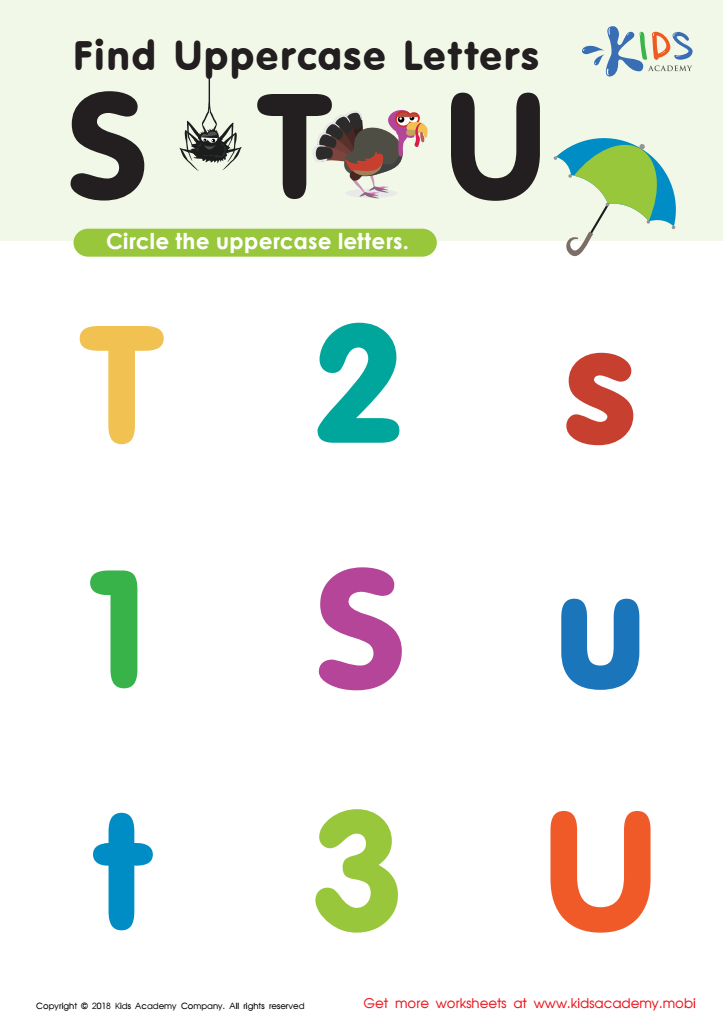
Find Uppercase Letters Worksheet
 Assign to My Students
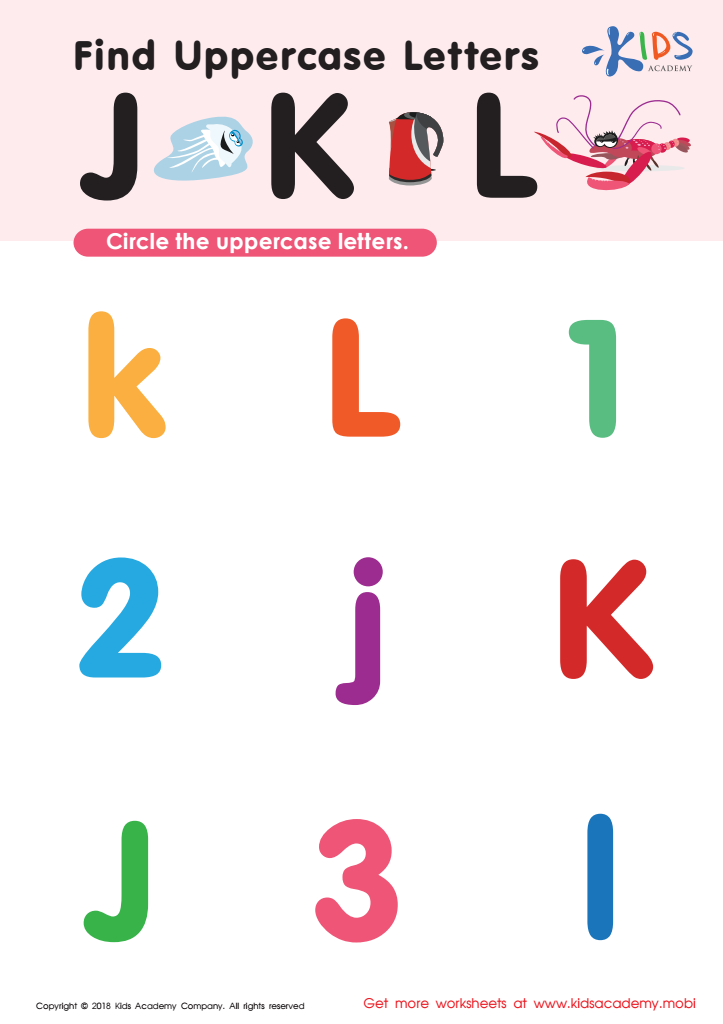
Find Uppercase Letters J, K, and L Worksheet
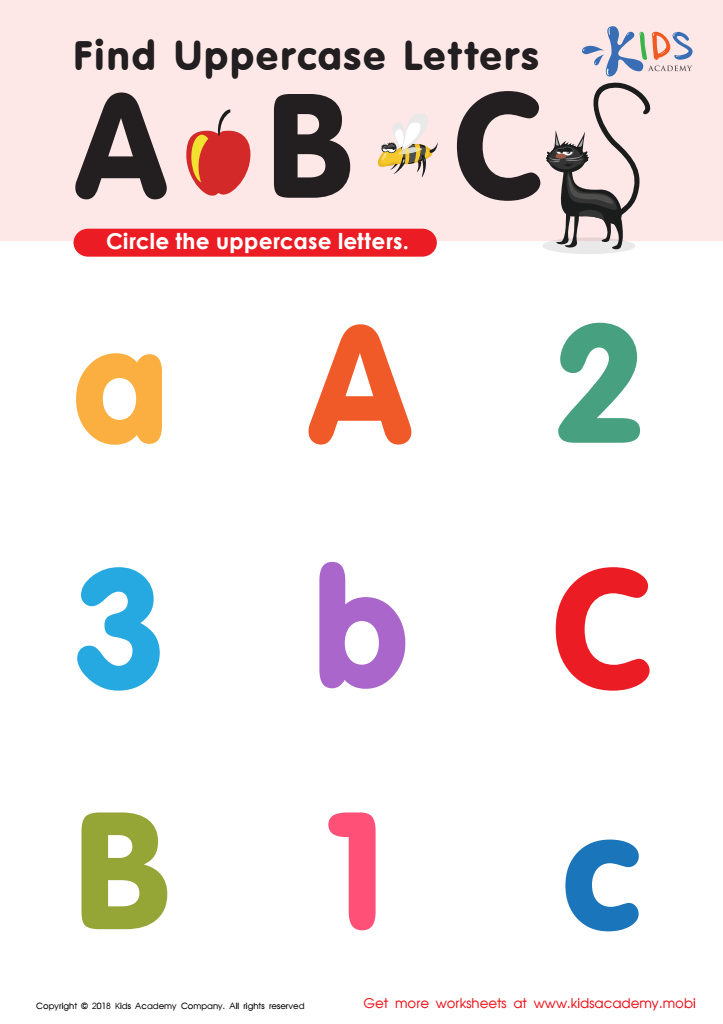
Find Uppercase Letters A, B, and C Worksheet
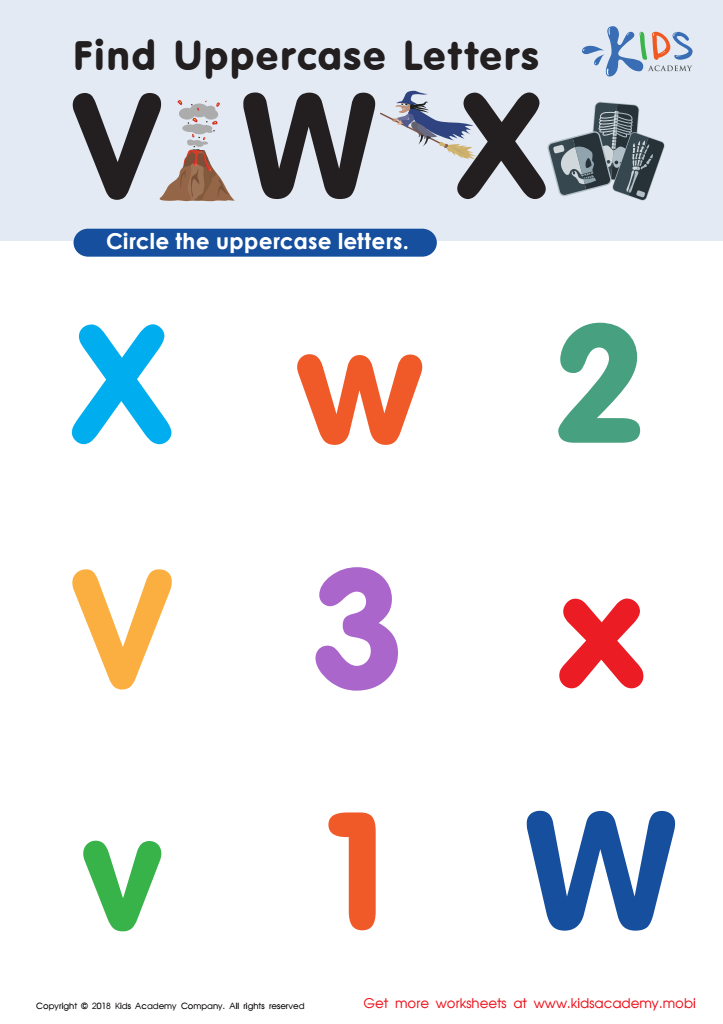
Find Uppercase Letters V, W, X Worksheet
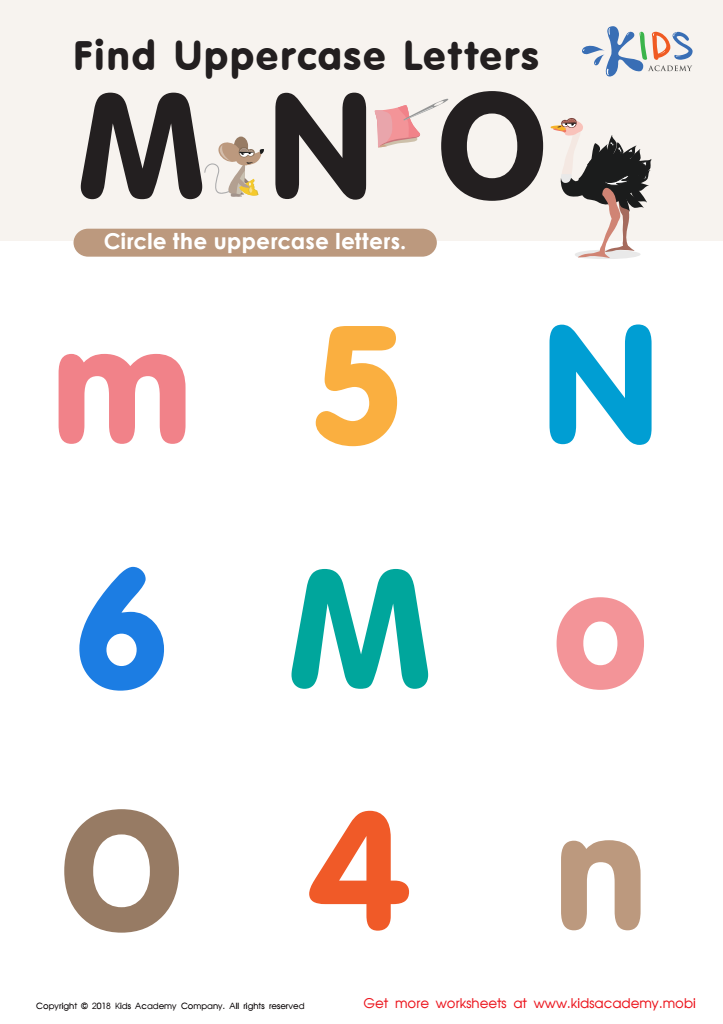
Find Uppercase Letters M, N, and O Worksheet








Uppercase identification is a fundamental literacy skill for children aged 4-5, and it holds considerable significance for both parents and teachers. At this age, children are developing their language and cognitive skills, and recognizing uppercase letters is a crucial step in learning to read and write. Uppercase letters often appear more frequently in texts than lowercase letters, especially at the beginning of sentences, and in names, and titles.
By focusing on uppercase identification, parents and teachers can set a strong foundation for further literacy development. Proficiency in recognizing these letters enhances a child’s ability to decode words and improves their reading fluency. Additionally, distinguishing between uppercase and lowercase letters fosters writing skills, as children learn proper formatting and the aesthetic components of words.
Engaging children in uppercase letter identification can also be a fun and interactive process. Games, songs, and hands-on activities can motivate children and make learning enjoyable. Moreover, this skill builds their self-esteem as they achieve milestones in literacy, ultimately laying the groundwork for lifelong learning. Therefore, it's important for parents and teachers to remain active participants in promoting uppercase letter recognition, facilitating a critical aspect of early education.








