Reading comprehension Normal 2D Shapes Worksheets for Ages 4-5
4 filtered results
-
From - To
Introducing our engaging "Reading Comprehension - Normal 2D Shapes Worksheets" designed specifically for children aged 4-5! These worksheets combine fun and learning, helping young learners develop essential reading skills while exploring basic 2D shapes. Each activity features vibrant illustrations and age-appropriate texts that not only spark interest but also enhance comprehension abilities. Children will learn to identify shapes like circles, squares, and triangles, all while practicing their reading skills through interactive questions and exercises. Perfect for at-home learning or classroom activities, these worksheets make learning enjoyable, ensuring that kids build a strong foundation in both shapes and reading comprehension!
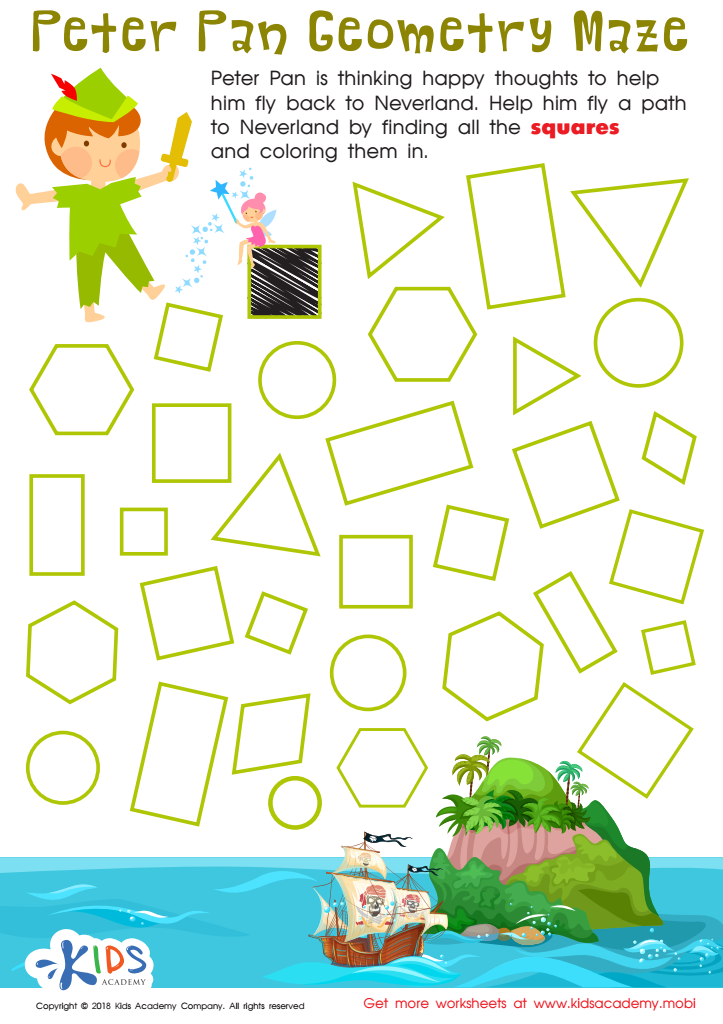
Peter Pan Worksheet
 Assign to My Students











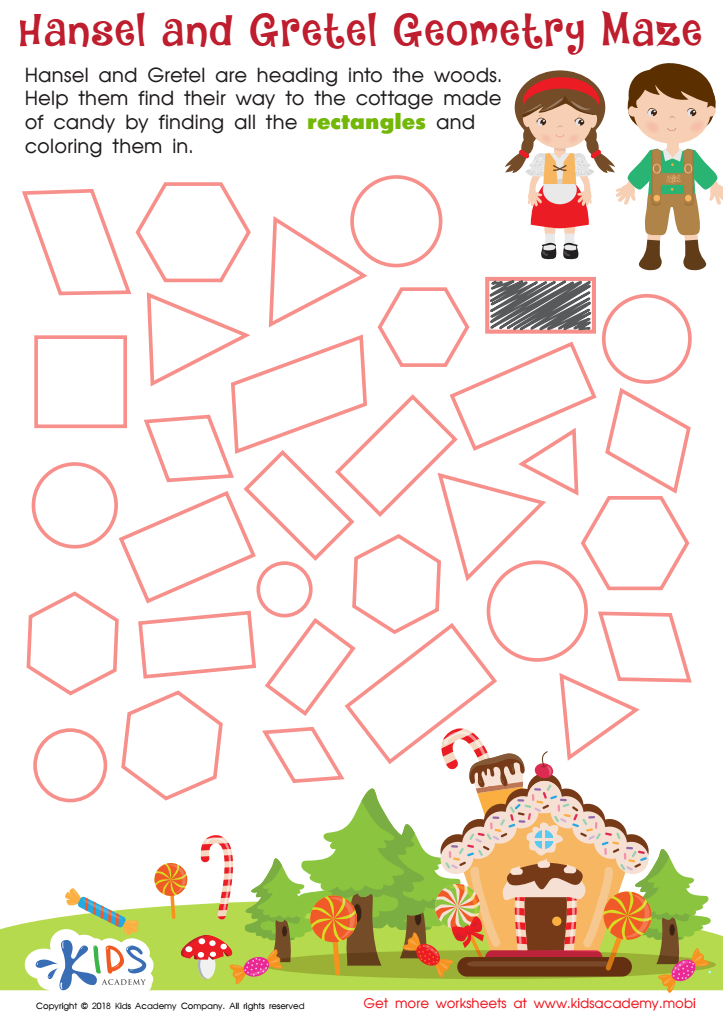
Hansel and Gretel Geometry Maze Worksheet
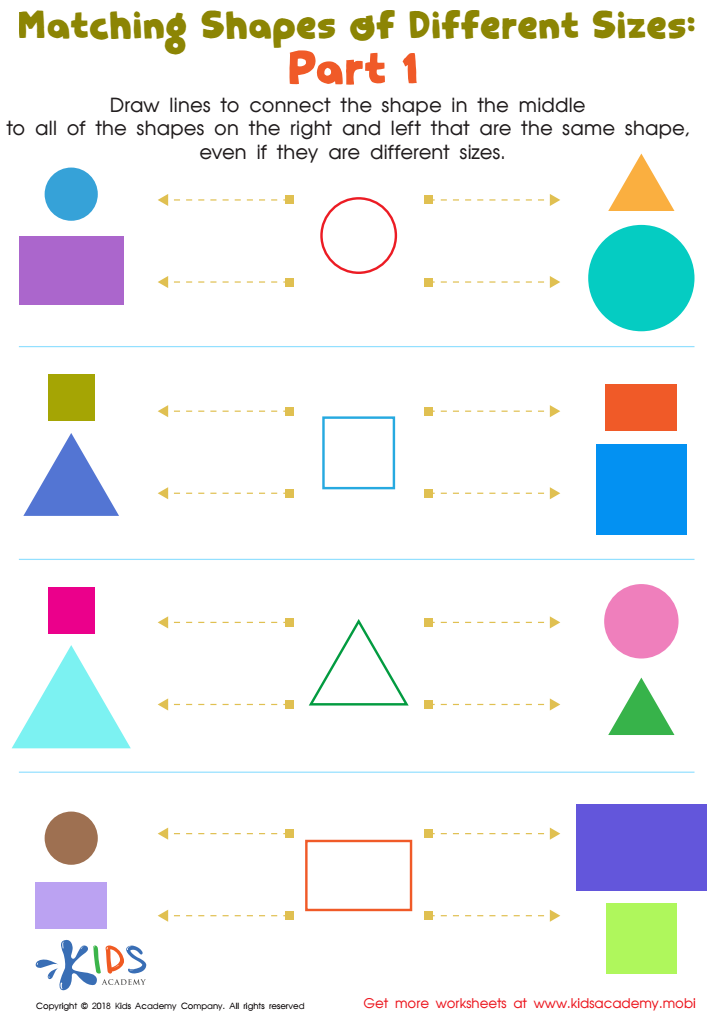
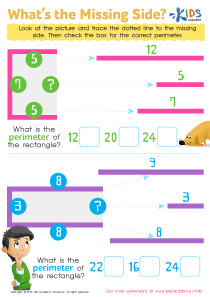
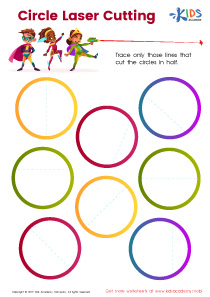
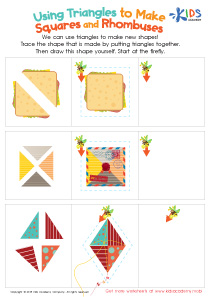
Geometry: part 1 Worksheet
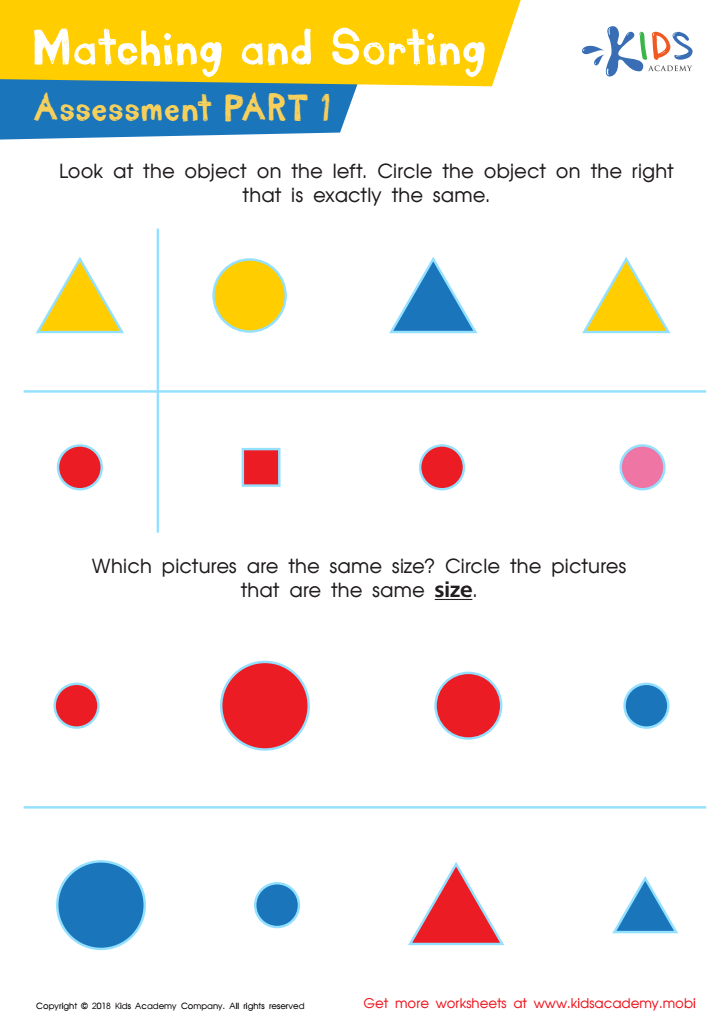
Matching and Sorting for Kindergarten: Assessment 1 Worksheet








Reading comprehension and understanding normal 2D shapes are foundational skills for young learners aged 4-5. Parents and teachers should prioritize these areas because they significantly contribute to a child's cognitive development and future academic success.
Reading comprehension is crucial for enabling children to grasp stories, follow instructions, and engage with educational content. It fosters critical thinking, vocabulary acquisition, and narrative understanding, setting the stage for higher-level literacy skills. When children comprehend what they read, they become more confident learners and develop a lifelong love for books.
Similarly, knowledge of normal 2D shapes—like circles, squares, triangles, and rectangles—introduces children to essential math concepts. Recognizing shapes enhances their ability to understand relationships, patterns, and spatial awareness, which are vital for later math mastery. Furthermore, shape recognition can enrich their artistic expression and design thinking during creative activities.
By focusing on reading comprehension and 2D shapes, parents and teachers create a holistic learning environment that nurtures curiosity, problem-solving abilities, and foundational skills. Engaging in activities that promote both these areas reinforces the notion that learning is interconnected, ultimately fostering well-rounded, capable individuals ready to tackle future educational challenges.