Basic Arithmetic Normal Addition and Subtraction Word Problems Worksheets for Ages 4-5
4 filtered results
-
From - To
Our "Basic Arithmetic Normal Addition and Subtraction Word Problems Worksheets for Ages 4-5" are designed to foster early math skills in young learners. These engaging worksheets present age-appropriate challenges that enhance children's understanding of basic addition and subtraction within everyday contexts. Each worksheet encourages critical thinking and problem-solving, helping kids to grasp fundamental arithmetic operations through relatable stories and scenarios. Perfect for classroom use or at-home practice, these printable worksheets support the development of essential math skills, preparing children for future academic success in a fun and interactive way.
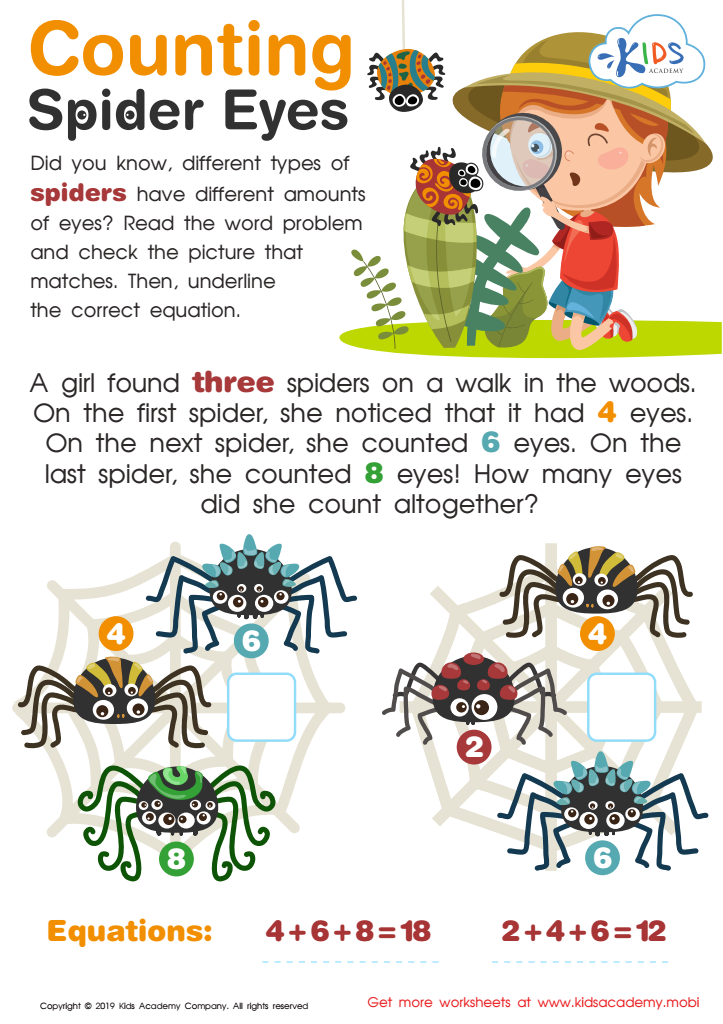
Counting Spider Eyes Worksheet
 Assign to My Students
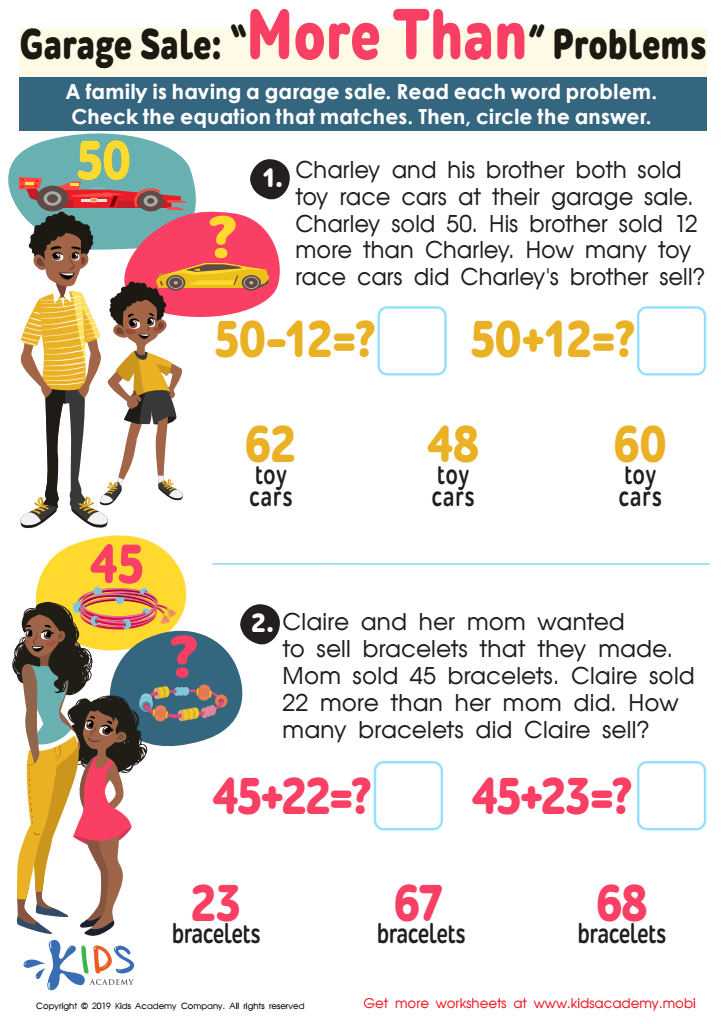
Garage Sale - More yhan Worksheet
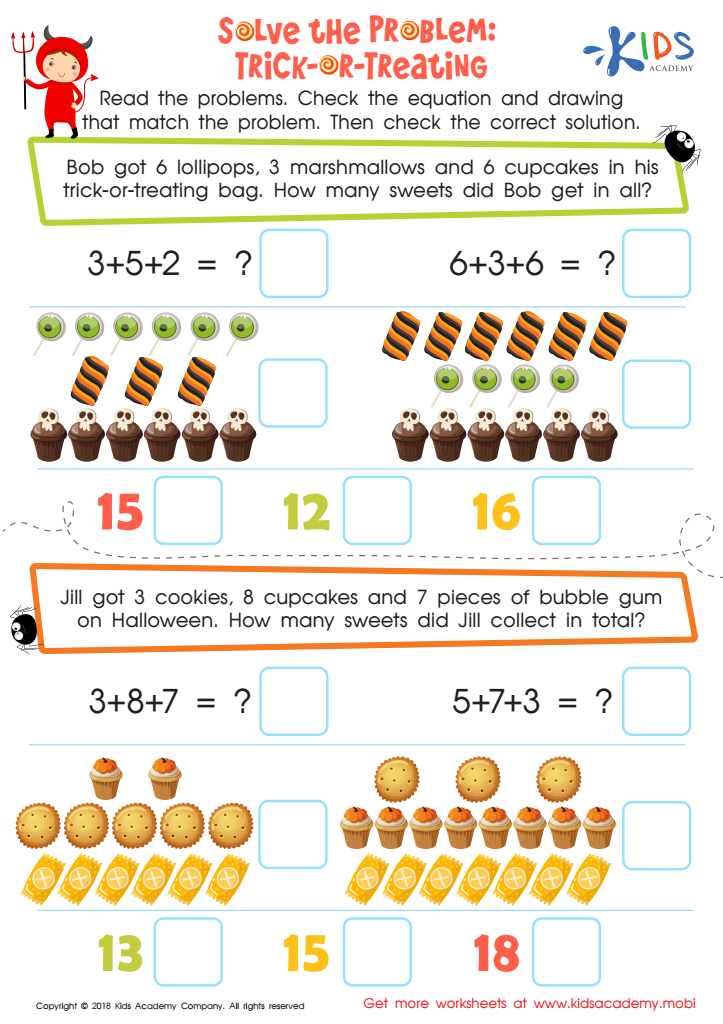
Solve the Problem: Trick–or–treating Worksheet
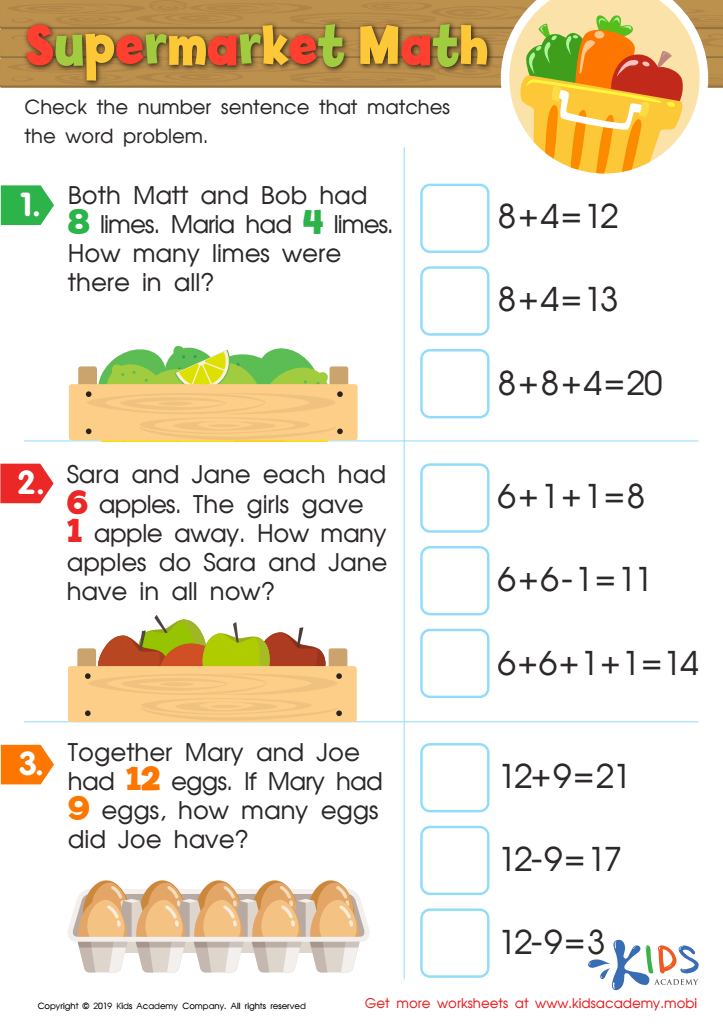
Supermarket Math Worksheet








Parents and teachers should prioritize basic arithmetic word problems for children aged 4-5 because early exposure to addition and subtraction bolsters foundational math skills crucial for future learning. At this developmental stage, children are highly receptive to new concepts. Mastering these basics builds confidence and establishes a positive relationship with math, fostering a growth mindset.
Solving word problems enhances critical thinking, requiring kids to comprehend the question, identify relevant information, and execute appropriate mathematical steps. This full-cycle comprehension underscores the application of math in real-life contexts, making learning engaging and relevant. Additionally, it encourages number sense, helping children understand the meaning behind numbers and operations, which is more beneficial than rote counting alone.
Early math success is directly linked to later academic achievement. Thus, an early grasp of basic arithmetic can set children on a path to more complex problem-solving and logical reasoning. Beyond academics, arithmetic word problems also improve listening skills, language development, and the ability to follow multi-step directions—key facets in holistic development.
In conclusion, emphasizing arithmetic word problems for young learners cultivates essential math skills, promotes cognitive development, and encourages a lifelong appreciation for learning—all essential ingredients for educational success.