Comparison Skills Normal Math Worksheets for Ages 4-5
3 filtered results
-
From - To
Our "Comparison Skills Normal Math Worksheets for Ages 4-5" are designed to make early math learning both engaging and effective. Tailored for young learners, these worksheets focus on developing essential comparison skills through fun and interactive exercises. Children will learn to compare numbers, sizes, and quantities, laying the foundation for more advanced math concepts. Our age-appropriate activities, complete with colorful illustrations, encourage kids to observe, think critically, and apply their newfound knowledge in everyday scenarios. Ideal for both classroom and home use, these worksheets support early academic success and a love for math.
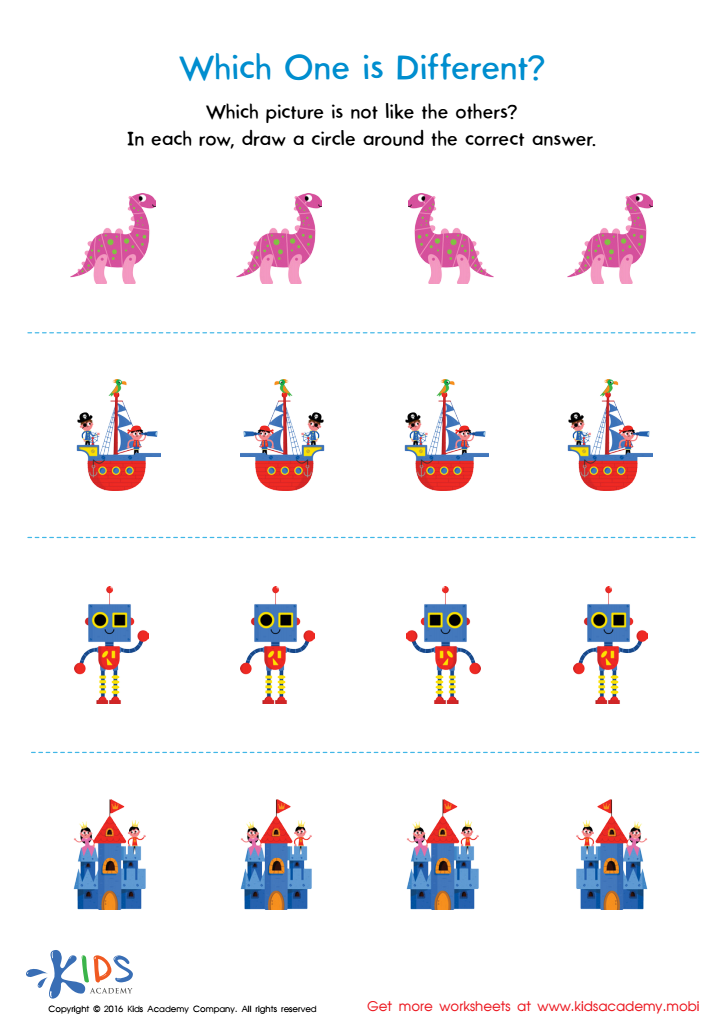
Which One Is Different Worksheet
 Assign to My Students
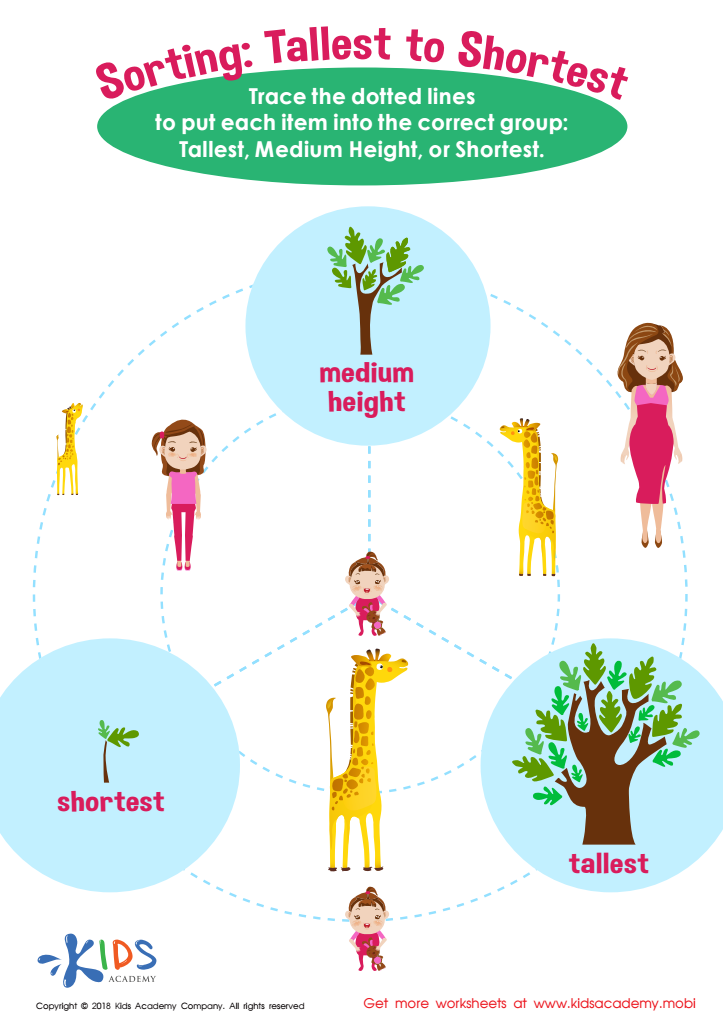
Sorting: Tallest to Shortest Worksheet








Comparison skills in mathematics lay the foundation for young children to develop critical cognitive abilities that are essential as they grow. For children aged 4-5, learning to compare quantities, sizes, and numbers involves much more than simple academic proficiency; it fosters crucial cognitive development. Understanding comparative concepts such as "more" or "less," "bigger" or "smaller," helps students grasp abstract math concepts. This hands-on learning process encourages logical thinking, problem-solving skills, and spatial awareness.
Early development in comparison skills also builds confidence. When children can comfortably articulate that five apples are more than three apples, they begin to form a positive relationship with math. This early success and confidence often translate to improved academic performance in other subjects as well.
Moreover, these comparisons reflect real-life scenarios, making math both practical and relevant. Whether deciding who has more blocks during playtime or understanding portions during snack time, these skills are pivotal. Teachers and parents play an authoritative role in guiding these lessons through engaging activities like sorting games, storytelling, and interactive play. By focusing attention on comparison skills, adults help cultivate well-rounded, analytical thinkers prepared for future educational milestones. Therefore, investing in these foundational skills at an early age is both essential and beneficial for children's holistic development.








