Explore our Mathematical Reasoning Normal Math Worksheets designed specifically for young learners aged 4-5. These engaging worksheets foster critical thinking and problem-solving skills while making math fun! Featuring colorful illustrations and stimulating activities, children will work on recognizing patterns, understanding basic operations, and enhancing logical reasoning. Our age-appropriate exercises ensure that kids develop a solid foundation in mathematics, preparing them for future learning. Perfect for classrooms or at-home practice, our printable worksheets offer a balanced approach to math, encouraging kids to think independently and approach problems creatively. Start nurturing your child's mathematical reasoning skills today!

Check out this FREE Trial Lesson on Math for age 4-5!

More Word Problems

Favorites
With answer key
Interactive
  • 4-5
  • Mathematical reasoning
  • Math
  • Normal
Using Triangles to Make Squares and Rhombuses Worksheet

Using Triangles to Make Squares and Rhombuses Worksheet

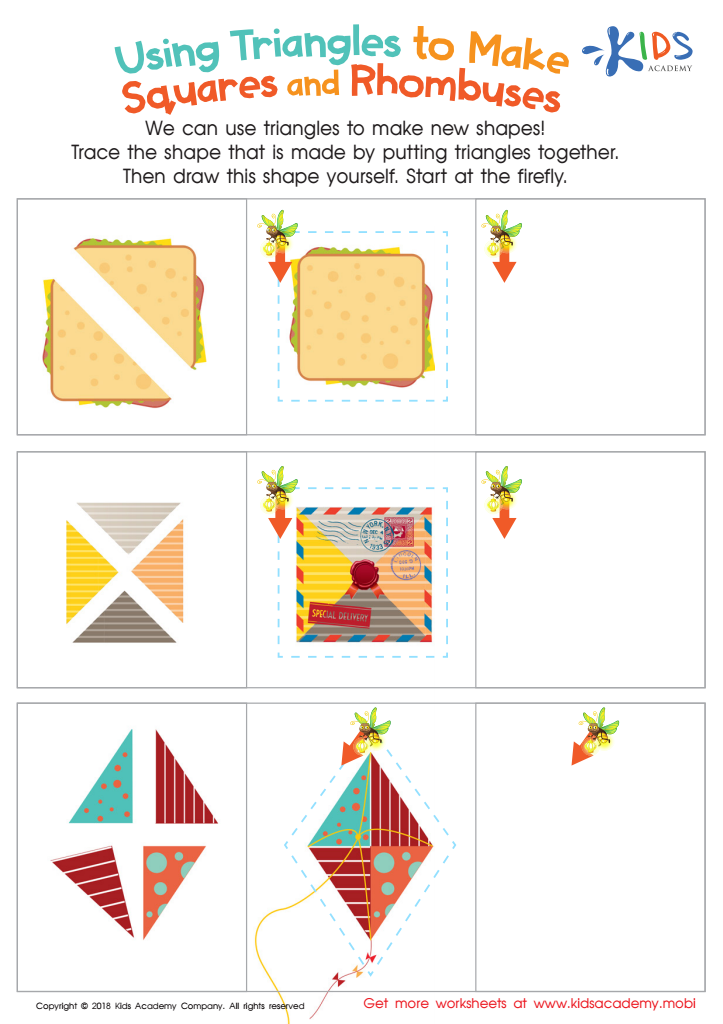
Learning shapes is a fun way to boost spatial skills and critical thinking. This worksheet shows children how to use triangles to construct squares and rhombuses. Clear illustrations and a printout help children draw the new shape. A great activity for the math classroom! 80 words.
Using Triangles to Make Squares and Rhombuses Worksheet
Worksheet
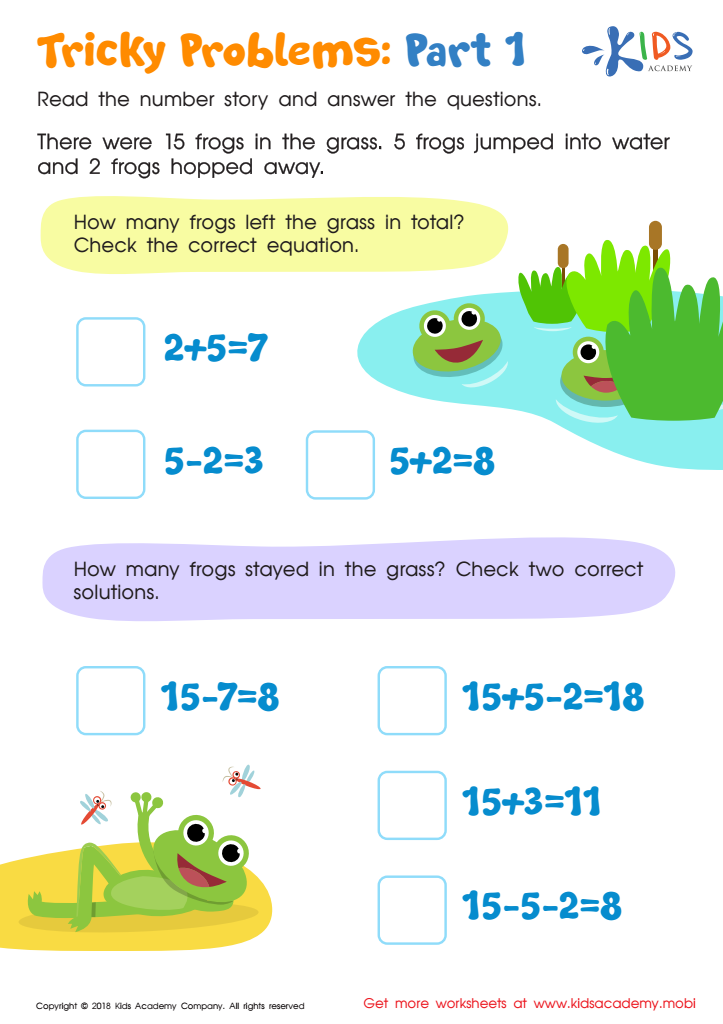
Tricky Problems Worksheet: Part 1

Tricky Problems Worksheet: Part 1

Visualizing word problems can help students solve them. This fun PDF worksheet encourages students to create mental images using math facts, then check boxes to match the equations for basic addition problems. It's a great way to build confidence in solving math.
Tricky Problems Worksheet: Part 1
Worksheet
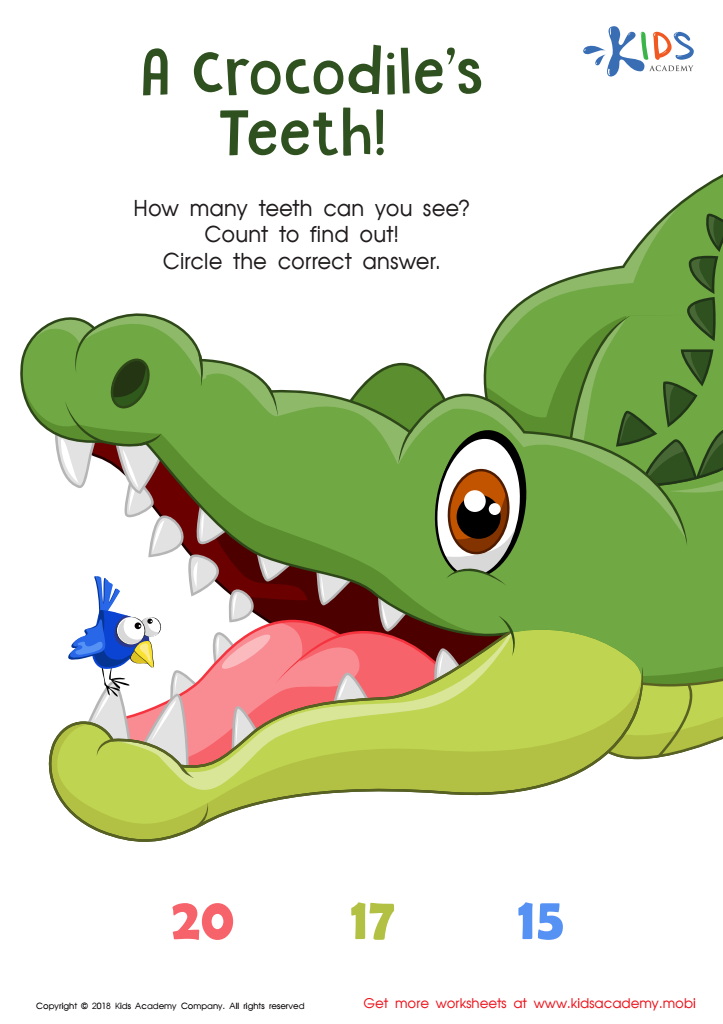
A Crocodile's Teeth Worksheet

A Crocodile's Teeth Worksheet

Show your child the animal image and ask them to identify it. If they watch animal shows, they'll likely be interested. Count the teeth together, then look at the options and help them circle the right one.
A Crocodile's Teeth Worksheet
Worksheet
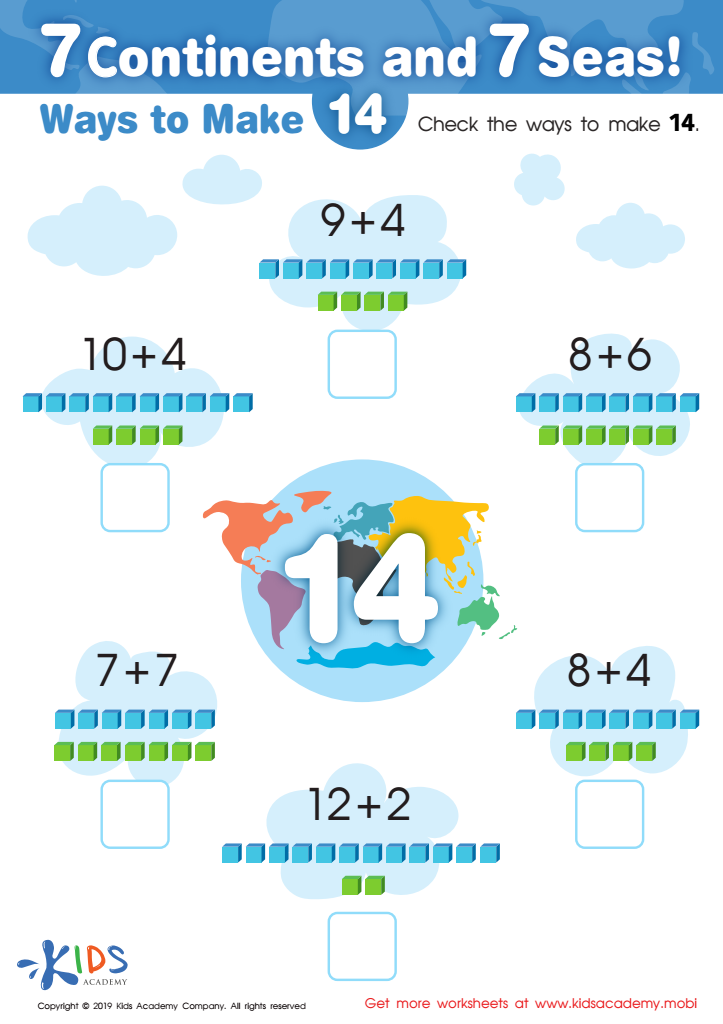
7 Continents and 7 Seas Worksheet

7 Continents and 7 Seas Worksheet

Remind kids of the continents and show them how different numbers can add up to the same figure. Give examples, like 2+2 =4, and 3+1 =4. Ask if they can provide other examples, then work through the simple additions in this worksheet with them. Ask them to circle all equations that make 14.
7 Continents and 7 Seas Worksheet
Worksheet
Magic Fives Worksheet

Magic Fives Worksheet

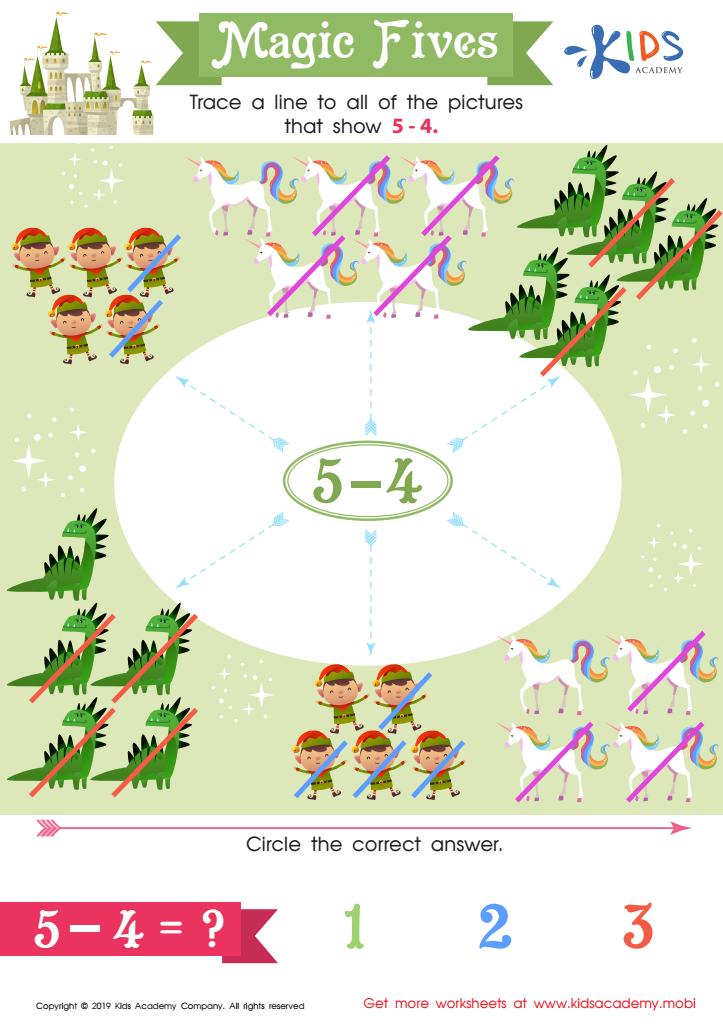
Help your students identify the objects & people in the worksheet. Point to the equation 5 -4 in the center, then get them to count the items and trace a line connecting those that add up to 5 - 4.
Magic Fives Worksheet
Worksheet
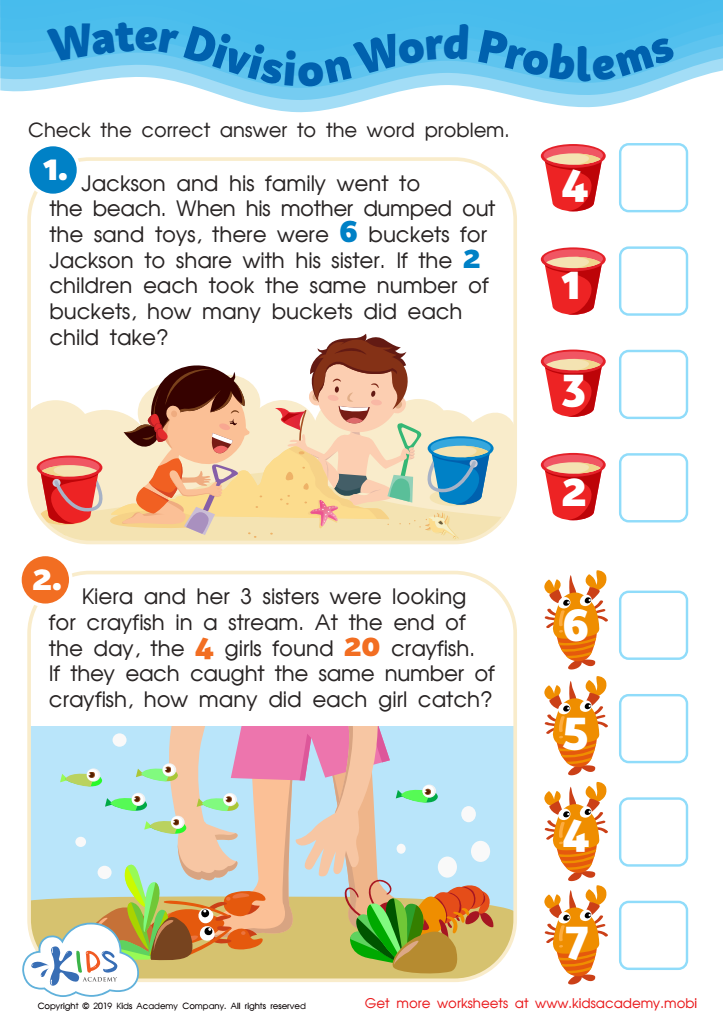
Water Division Word Problems Worksheet

Water Division Word Problems Worksheet

Kids can sharpen their math skills with this fun PDF! They'll see pictures of friends at the beach, plus bold numbers and colorful pictures. All they need to do is read and understand the problem to find the answer - without even realizing they're doing division. A great way to make math enjoyable!
Water Division Word Problems Worksheet
Worksheet
Making 17 with the Weather Worksheet

Making 17 with the Weather Worksheet

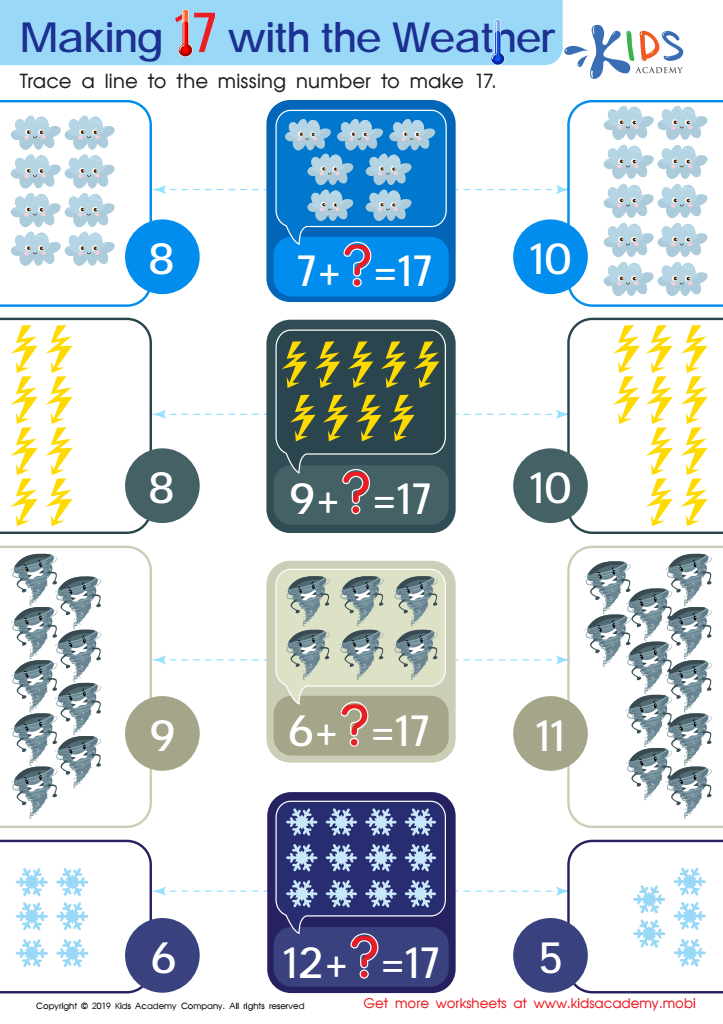
Show your kids the pictures in the worksheet and identify the weather. This exercise is to help them add simple numbers. There are 4 equations in the printout. Help them figure out the numbers to make 17, then trace a line to the missing number to complete the equation.
Making 17 with the Weather Worksheet
Worksheet
Count Back to Subtract

Count Back to Subtract Substraction Worksheet
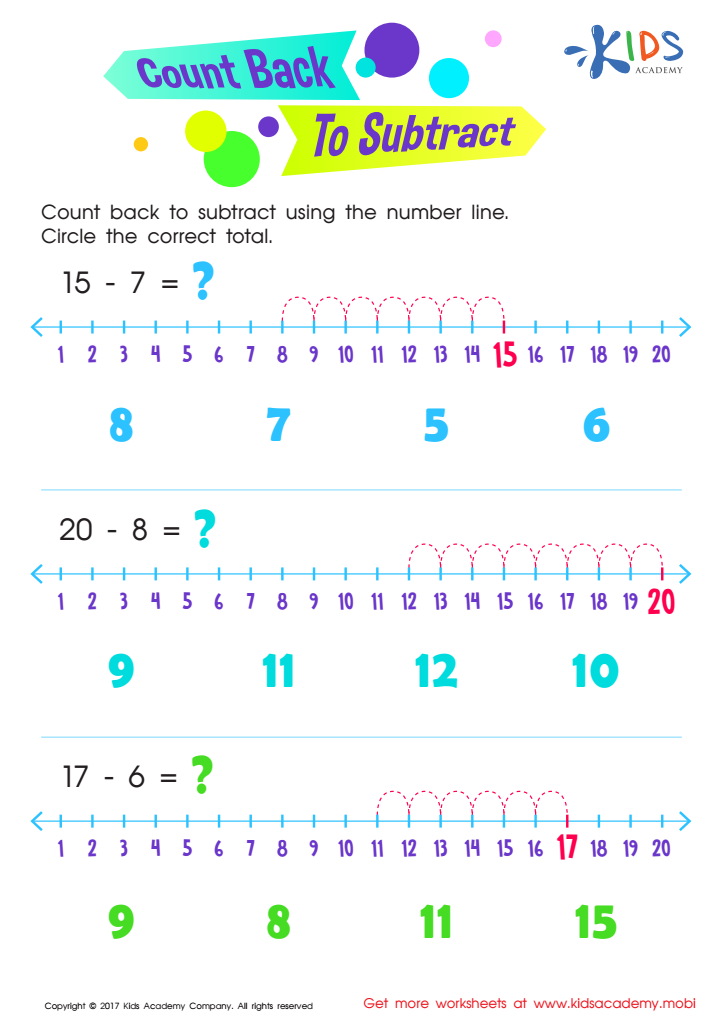
With this worksheet, your child can visually see and count each number they’re subtracting. This worksheet provides a number line to help your child master subtraction visually. Counting back on the line will give them a deeper understanding of the concept. It's a great way to teach subtraction and help children gain confidence with the subject.
Count Back to Subtract Substraction Worksheet
Worksheet
Find the Difference Worksheet

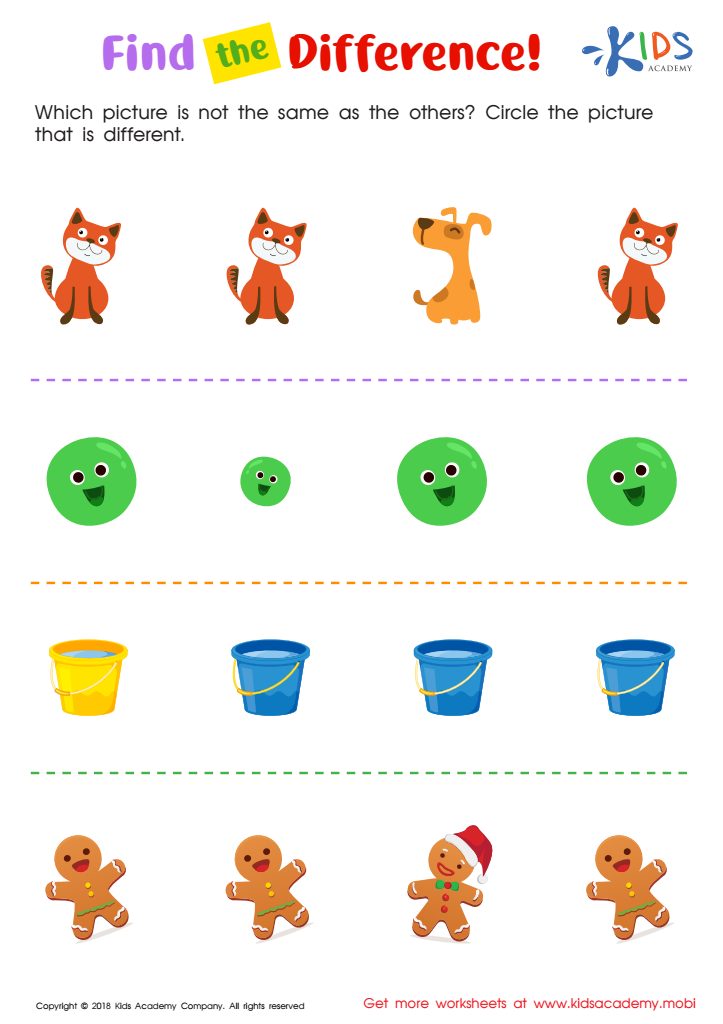
Find the Difference Worksheet

Test your kids' skills with this worksheet! Ask them to look at the pictures in each row and tell you what the objects are. Help them identify the odd item in each row by circling it. See if they can spot the difference!
Find the Difference Worksheet
Worksheet
What Makes 13 Worksheet


What Makes 13 Worksheet
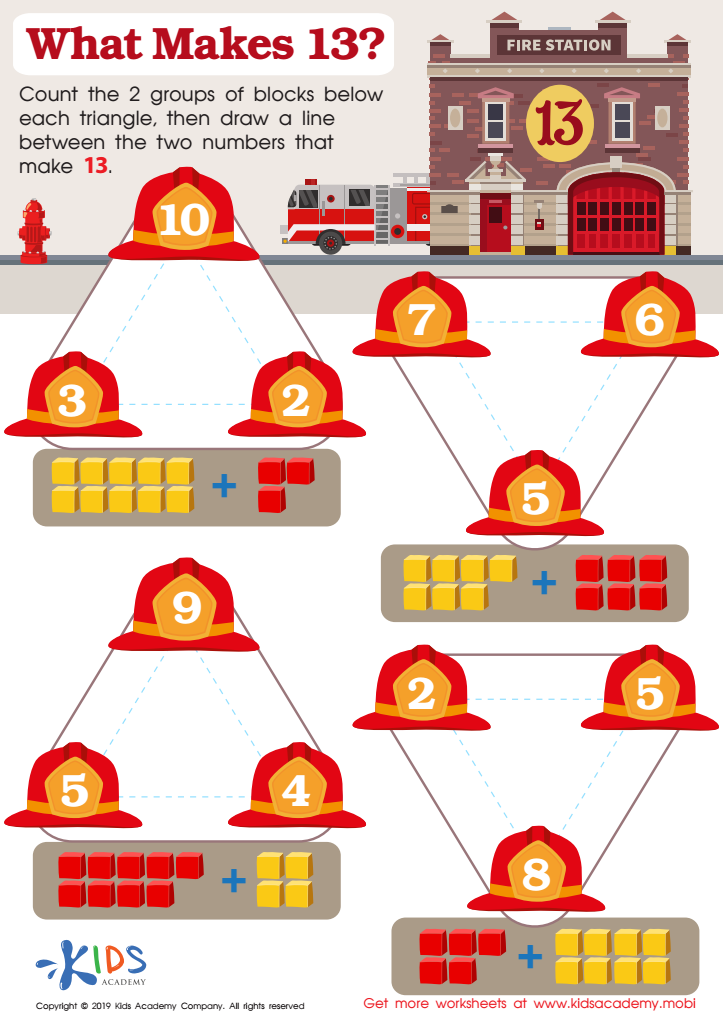
Help your kids practice maths with this worksheet! With colourful images and simple equations, your kids will be more engaged in learning. Go through the four equations and help them add up the numbers. Then, draw a line between the numbers that make 13. Doing this will aid their learning and understanding.
What Makes 13 Worksheet
Worksheet


Mathematical reasoning is a vital skill for children aged 4-5, laying the foundation for lifelong learning and critical thinking. At this age, children unknowingly engage with and develop their intrinsic mathematical abilities through daily activities, making it essential for parents and teachers to nurture this growth.

First, mathematical reasoning enhances problem-solving skills. Children learn to recognize patterns, make connections, and engage in logical thinking, which are critical competencies in all areas of life. For example, when a child sorts blocks by color or shape, they practice categorization and comparison—basic components of reasoning.

Additionally, fostering mathematical reasoning encourages confidence in young learners. When children are given the tools and opportunities to explore numbers and relationships, they become comfortable with mathematical concepts, reducing anxiety around the subject as they grow.

Moreover, strong foundational skills in mathematics translate into better performance in school. Children who engage with math reasoning at a young age are more likely to excel in future math-related tasks, setting the stage for academic achievement.

Overall, emphasizing mathematical reasoning nurtures essential skills and positive attitudes towards math, benefiting children's overall cognitive development and preparing them for future success.