Visual discrimination Normal Matching Worksheets for Ages 4-5
3 filtered results
-
From - To
Discover our Visual Discrimination Normal Matching Worksheets, designed specifically for children ages 4-5. These engaging activities help young learners enhance their visual perception skills by encouraging them to identify and match similar objects, shapes, and patterns. Perfect for preschool and kindergarten students, these worksheets support the development of critical thinking, attention to detail, and fine motor skills. Each sheet provides an enjoyable and interactive experience, making learning fun and effective. Boost your child's cognitive abilities and prepare them for future academic success with our expertly crafted matching worksheets. Visit our page to download and print now!
 Assign to My Students
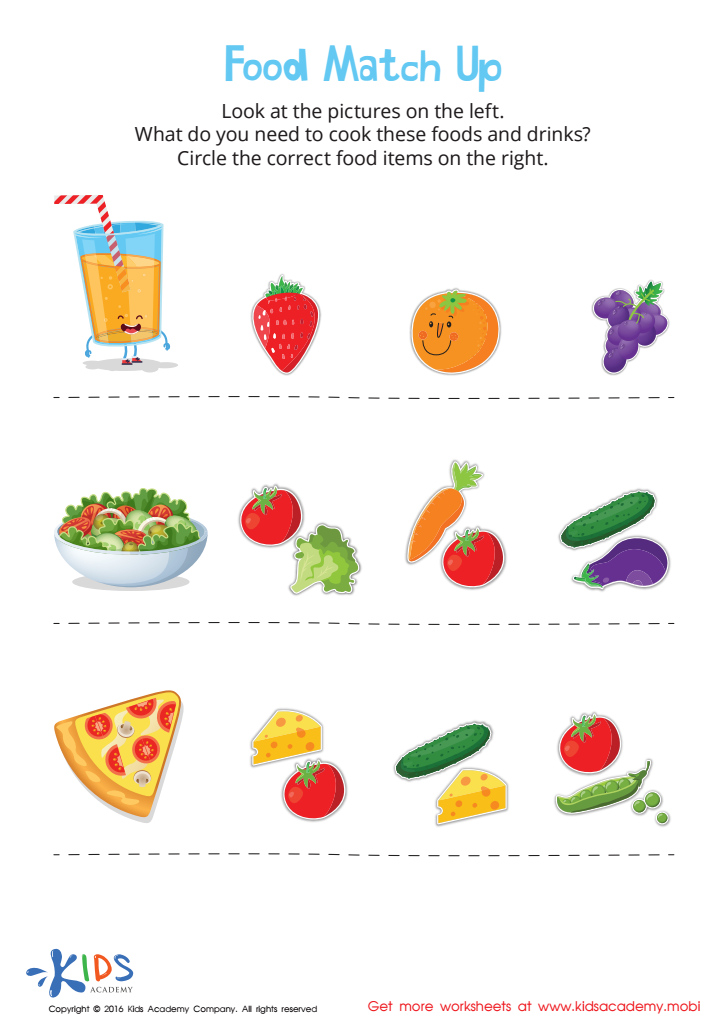
Food Match Up Worksheet
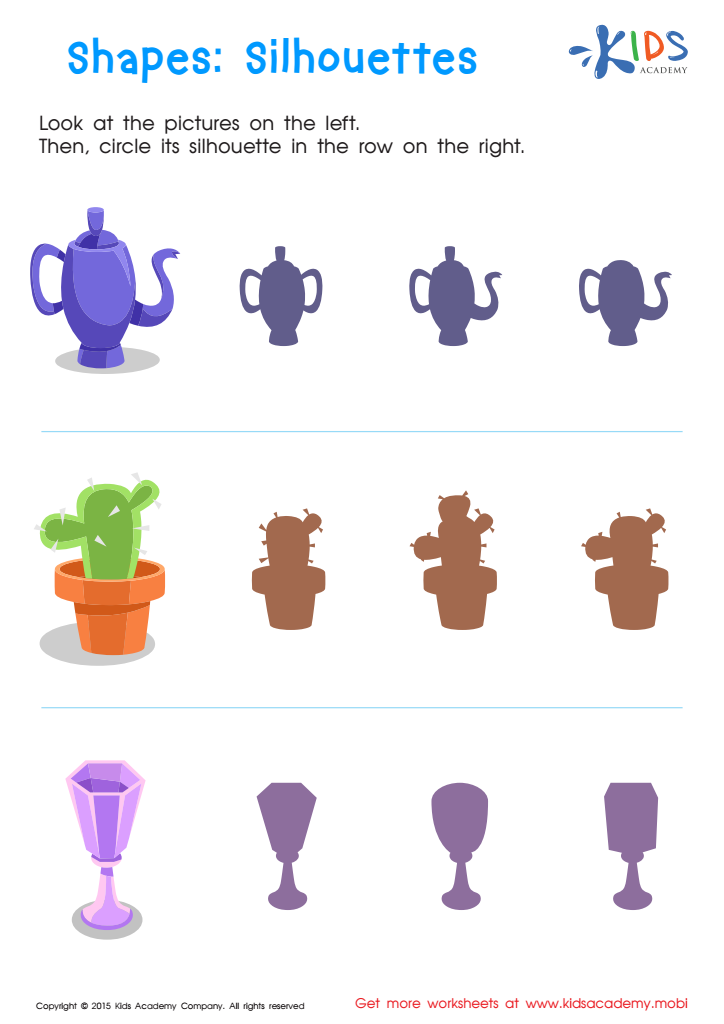
Silhouettes – Shapes Worksheet








Visual discrimination refers to the ability to recognize details in visual images, such as differences in shapes, patterns, or colors. It is a critical skill for young children aged 4-5 because it lays the foundation for numerous other abilities and future learning.
Firstly, visual discrimination plays a pivotal role in early literacy development. It helps children distinguish between letters, which is vital for reading and writing. For instance, identifying differences between 'b' and 'd' or 'p' and 'q' relies on solid visual discrimination skills. Without this ability, children might struggle with recognizing letters and forming words, thus impeding their reading progress.
Secondly, it enhances mathematical abilities. Recognizing different shapes, patterns, and sizes helps in understanding basic math concepts such as geometry and classifying objects. Children learn to sort and categorize, which are essential skills in mathematics and science.
Furthermore, visual discrimination improves daily life skills. Tasks like following a recipe, reading signs, or assembling toys become easier with improved visual recognition skills. Social skills and physical coordination also benefit as children differentiate between the faces of peers or follow along in activities requiring fine motor skills.
Therefore, both parents and teachers should incorporate activities like matching games, puzzles, and picture sorting in daily routines to nurture visual discrimination skills. These activities support cognitive development and lead to stronger academic and life skills overall.