Counting skills Normal Sorting Worksheets for Ages 4-5
3 filtered results
-
From - To
Enhance your child's counting skills with our free Normal Sorting Worksheets specifically designed for ages 4-5. These engaging and educational worksheets help young learners build a solid foundation in early math by sorting and counting objects, fostering both numerical and categorization skills. Each worksheet features fun themes and colorful images to capture your child's interest while making learning enjoyable. Ideal for preschoolers and kindergarteners, our counting worksheets support effortless progression in math concepts, ensuring that your little one develops confidence and enthusiasm in their early math adventures. Download your free set today and watch them thrive!
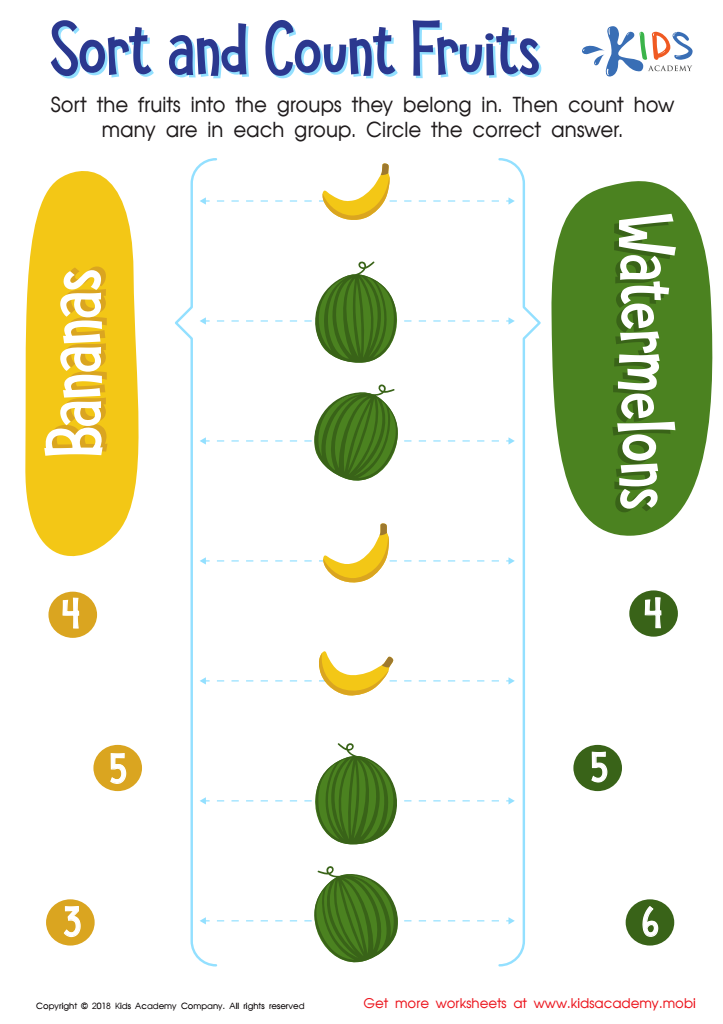
Sort and Count Fruits Worksheet
 Assign to My Students
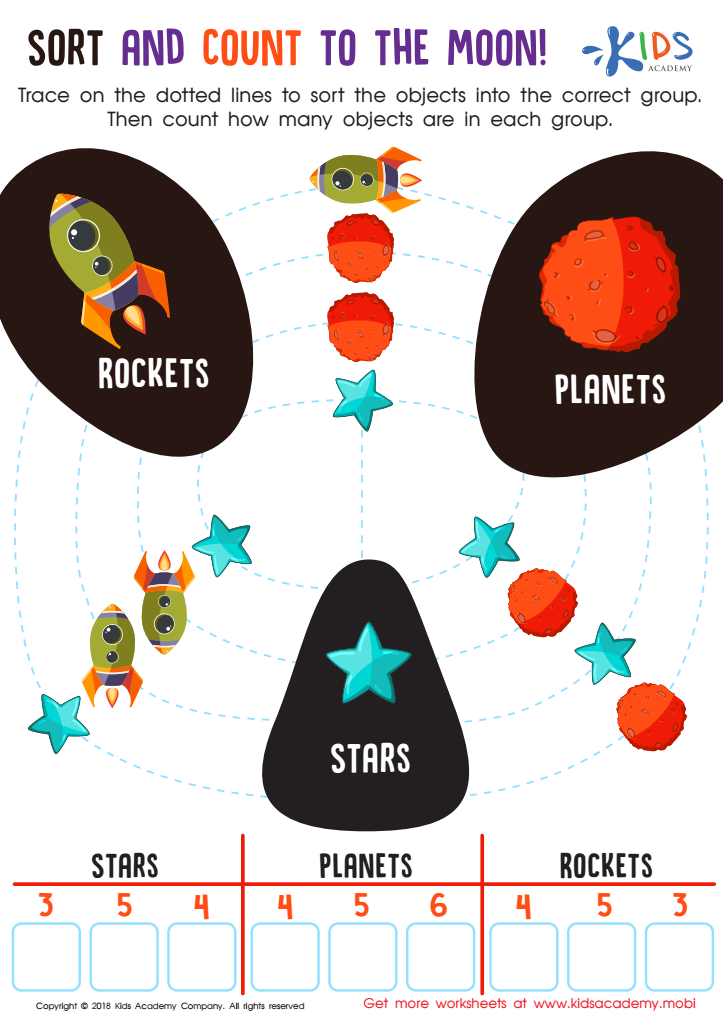
Sort and Count to the Moon Worksheet
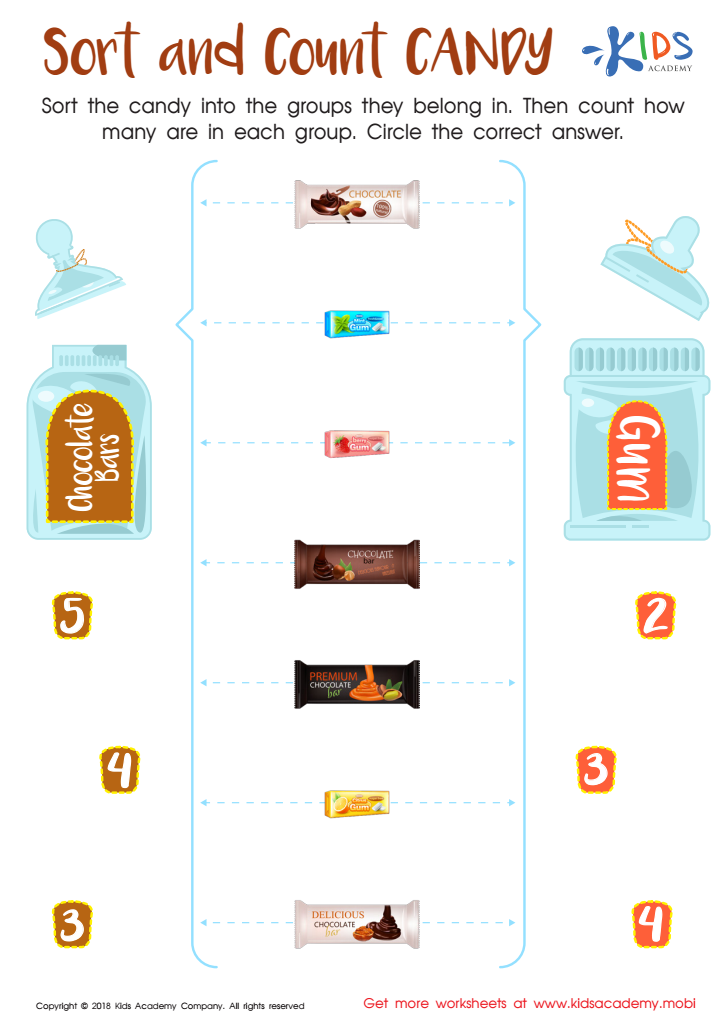
Sort and Count Candy Worksheet








Counting skills and sorting are fundamental building blocks for young children, typically aged 4-5. These skills play a crucial role in early childhood development and lay a strong foundation for future mathematical understanding and cognitive development.
Counting skills help children grasp the concept of numbers, order, and quantity. When children learn to count, they are not just reciting numbers; they are also developing one-to-one correspondence, an essential principle where each object counted corresponds to one number. This understanding aids in basic arithmetic as children grow older. Additionally, counting is a precursor to more complex mathematical concepts such as addition, subtraction, and place value.
Sorting and categorizing objects by attributes like color, shape, size, or type enhances critical thinking and problem-solving skills. These activities help children notice patterns and build organizational skills. Sorting also sharpens observational abilities and attention to detail, important skills across various areas of learning and daily life.
Moreover, these activities bolster language skills as children learn vocabulary associated with counting and sorting. They also support fine motor skills development, essential for writing readiness.
In essence, parents and teachers should prioritize counting and sorting activities because they nurture cognitive, mathematical, and fine motor development, setting children up for success in school and everyday life.








