Problem-Solving Skills Normal Building Vocabulary Worksheets for Ages 4-5
4 filtered results
-
From - To
Our "Problem-Solving Skills Normal Building Vocabulary Worksheets for Ages 4-5" are designed to cultivate early cognitive and linguistic abilities. These engaging and age-appropriate activities help young minds expand their vocabulary while developing crucial problem-solving skills. By integrating fun puzzles and word games, our worksheets encourage analytical thinking and effective communication. Perfect for at-home learning or classroom use, they provide a solid foundation for literacy and critical thinking. Equip your child with the tools they need to thrive academically and socially through consistent practice and positive reinforcement. Get started today and watch your child's skills flourish!
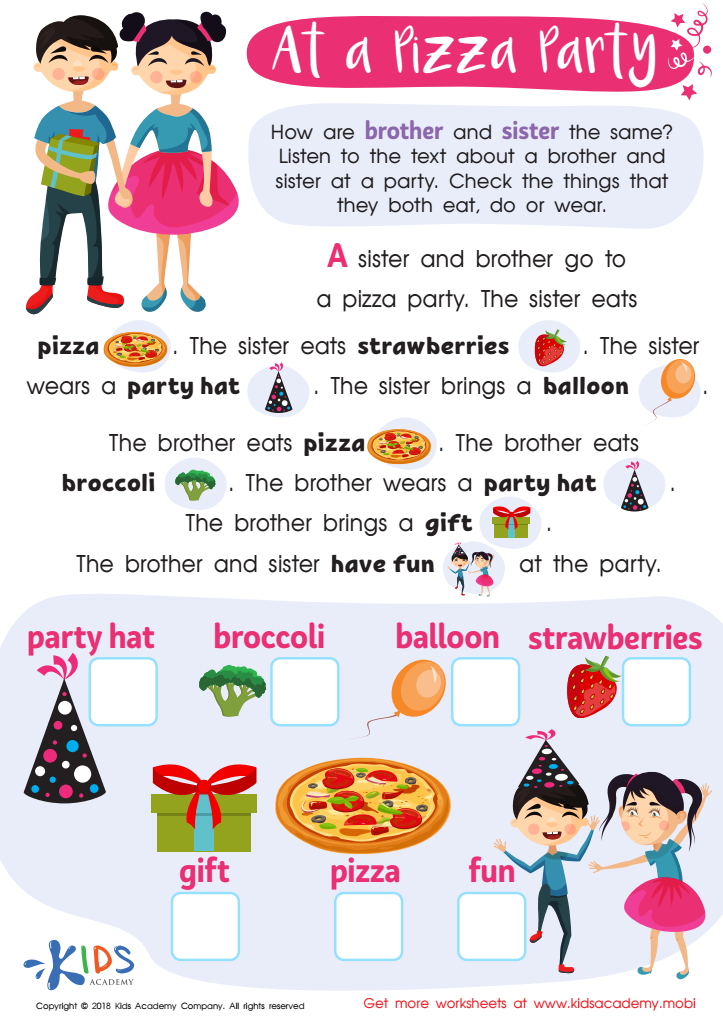
At a Pizza Party Worksheet
 Assign to My Students











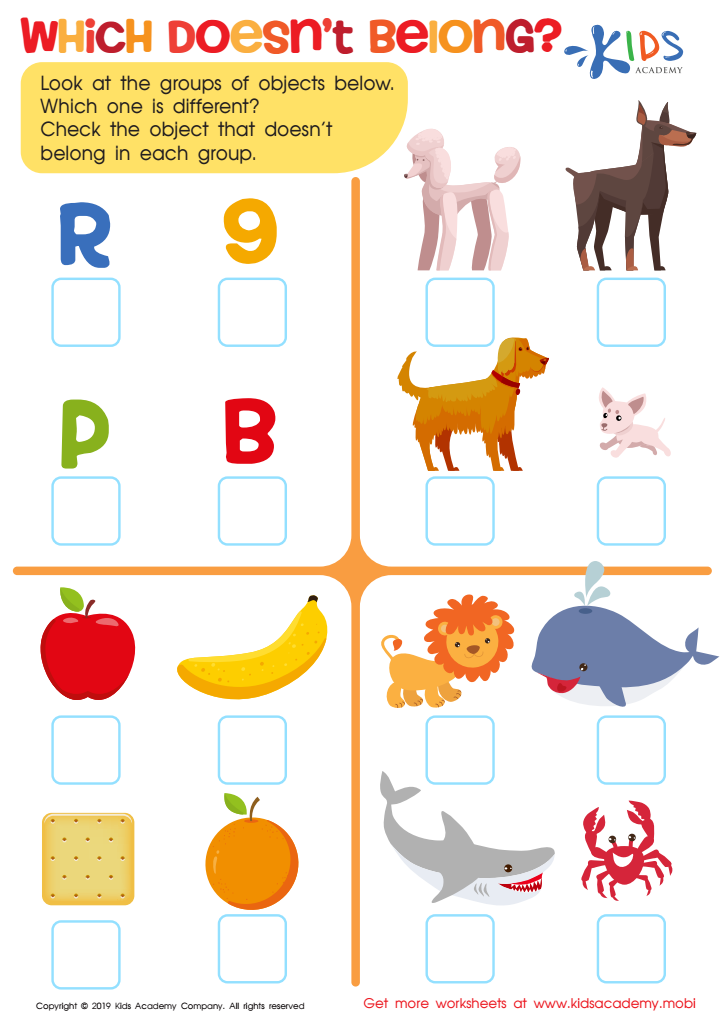
Which Doesn't Belong? Worksheet
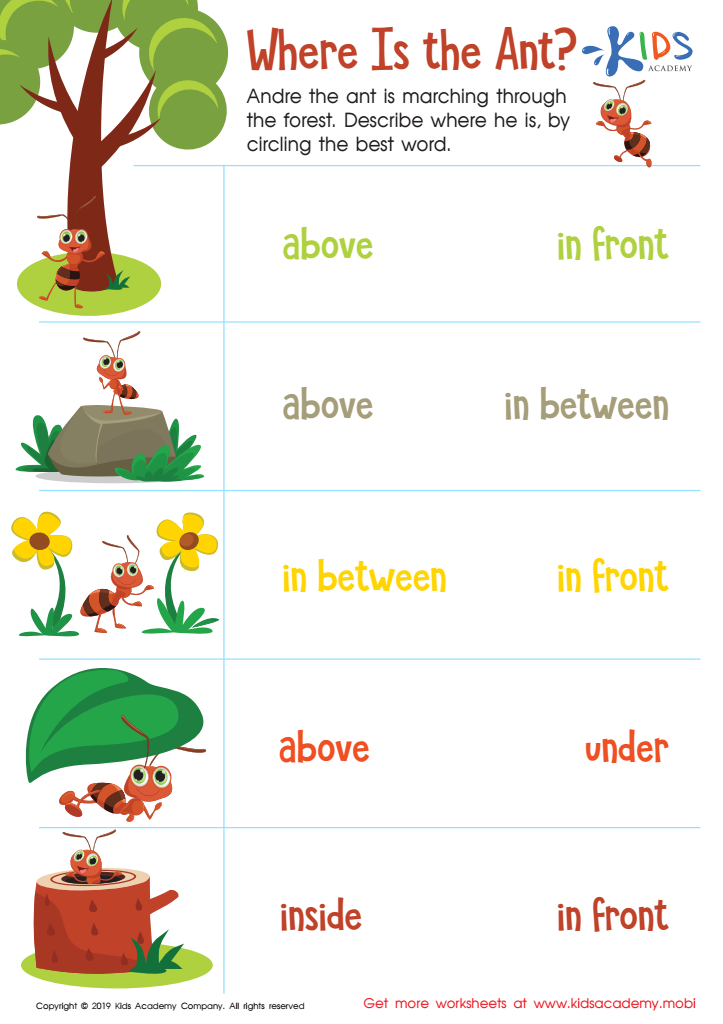
Where Is the Ant? Worksheet
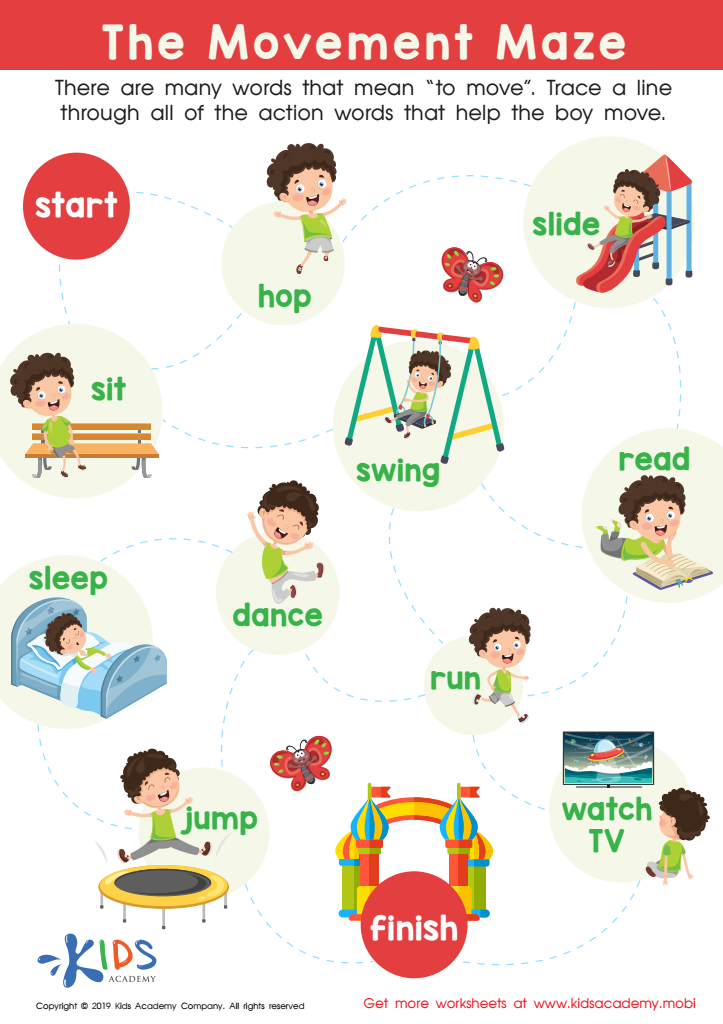
The Movement Maze Worksheet








Parents and teachers should pay close attention to building problem-solving skills and vocabulary in children aged 4-5 because these abilities are foundational for their overall cognitive development and academic success. At this stage, children's brains are highly adaptable, making it the perfect time to introduce them to critical thinking and expansive language use.
Problem-solving skills enable children to navigate daily challenges, from simple puzzles to social conflicts. Cultivating these skills early on enhances resilience, autonomy, and the ability to think creatively, laying groundwork for future academic tasks in subjects like math and science. Encouraging children to ask questions, make decisions, and engage in trial and error helps them develop a proactive mindset.
Simultaneously, building a robust vocabulary enriches children’s ability to express themselves clearly and comprehend others, which is crucial for reading and writing proficiency. A strong vocabulary fosters better communication, critical listening skills, and enhances children’s ability to follow complex instructions.
Moreover, integrating these skills within play and structured activities holds long-term benefits beyond academics. It instills a love for learning, boosts confidence, and prepares children to adapt and succeed in various environments. By prioritizing problem-solving and vocabulary development, parents and teachers equip children with essential tools that contribute significantly to their overall growth and lifelong learning.








