Analytical skills Normal Reading Fiction Worksheets for Ages 4-5
5 filtered results
-
From - To
Nurture young minds with our "Analytical Skills Normal Reading Fiction Worksheets for Ages 4-5." These thoughtfully designed worksheets help children develop critical thinking and comprehension abilities through engaging fiction stories. Each activity fosters analytical skills by encouraging kids to make predictions, understand characters' motives, and recognize story elements. Tailored for preschoolers and kindergarteners, our worksheets blend fun and education, ensuring your child enjoys every step of learning. Empower your young learner to become a keen thinker with these essential resources, perfect for building a solid foundation in reading and analysis from an early age. Available now at Kids Academy.
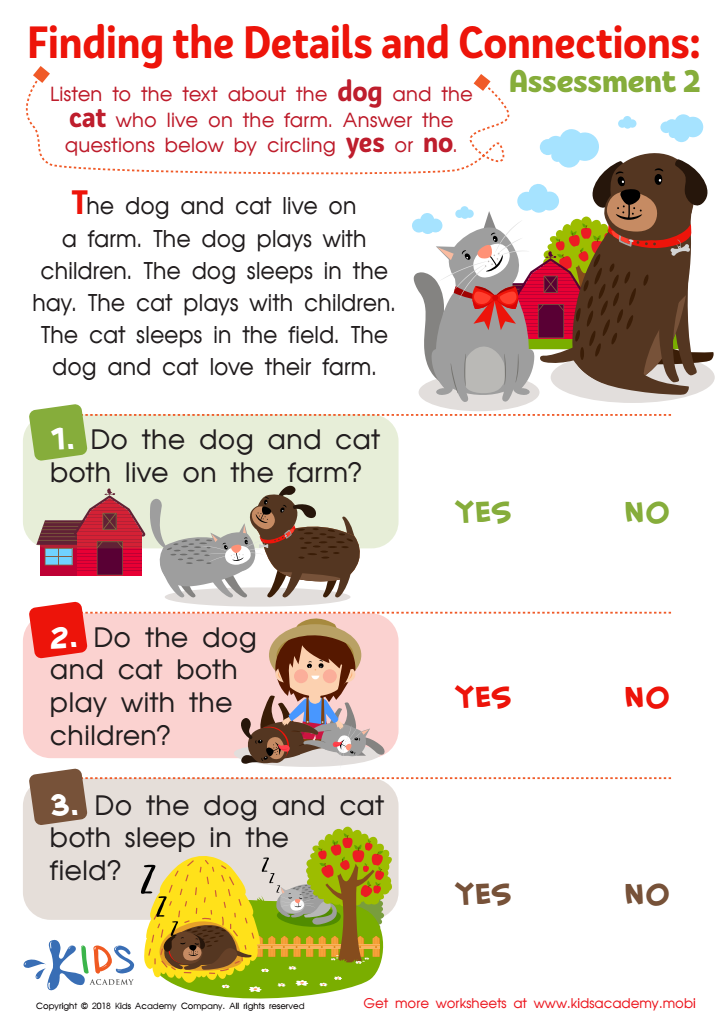
Finding the Details and Connections: Assessment 2 Worksheet
 Assign to My Students
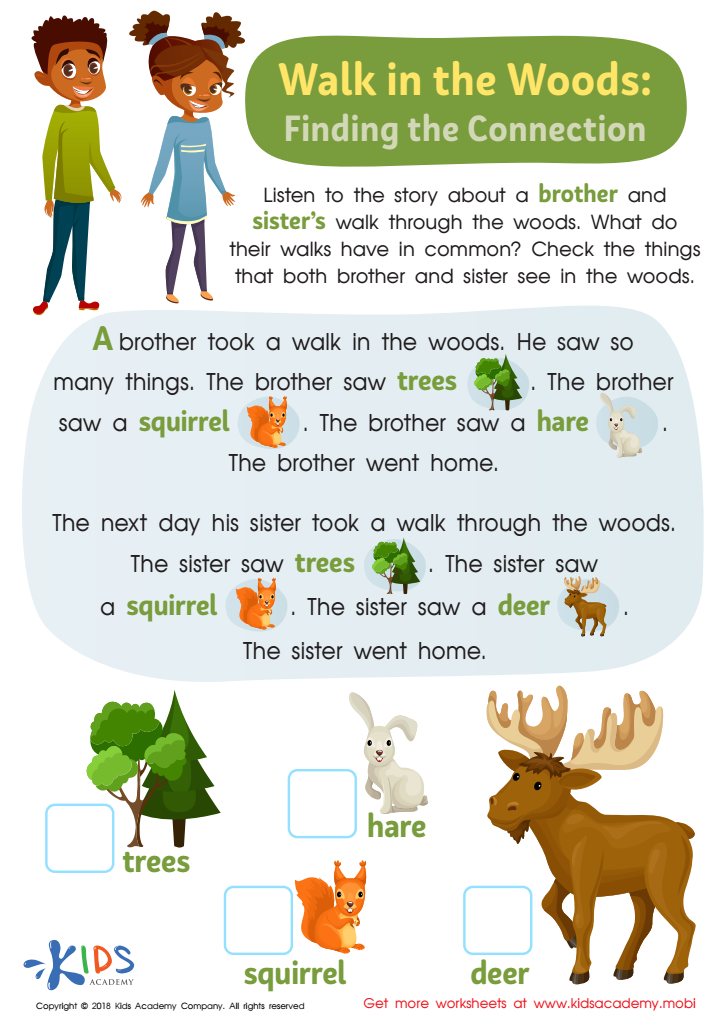
Walk In the Woods: Finding Connections Worksheet
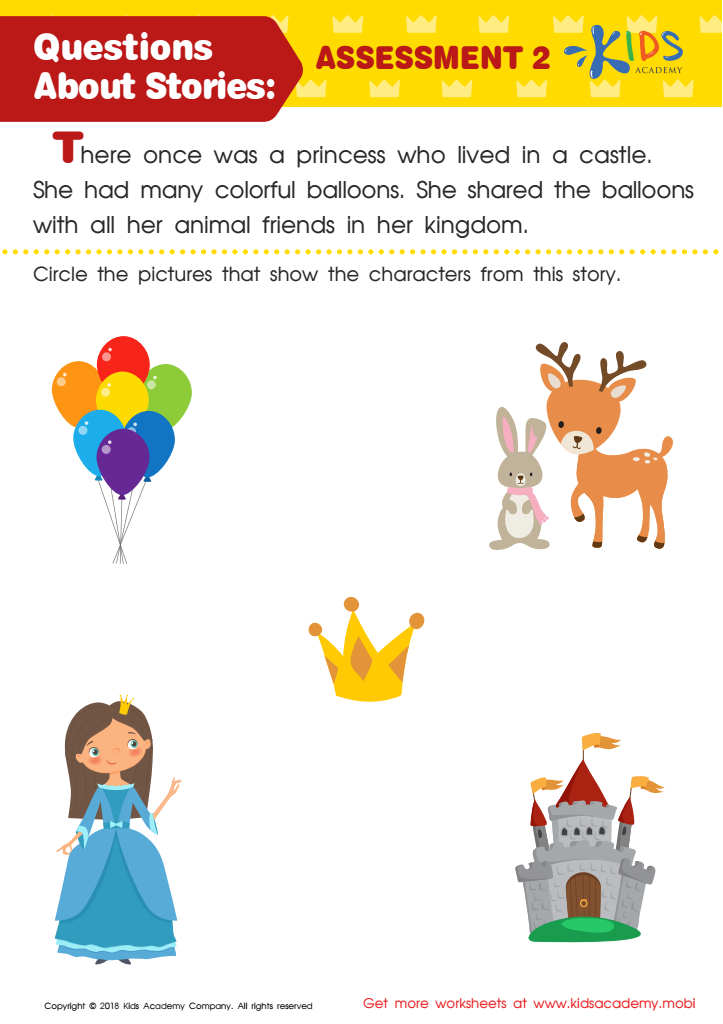
Questions About Stories: Assessment 2 Worksheet
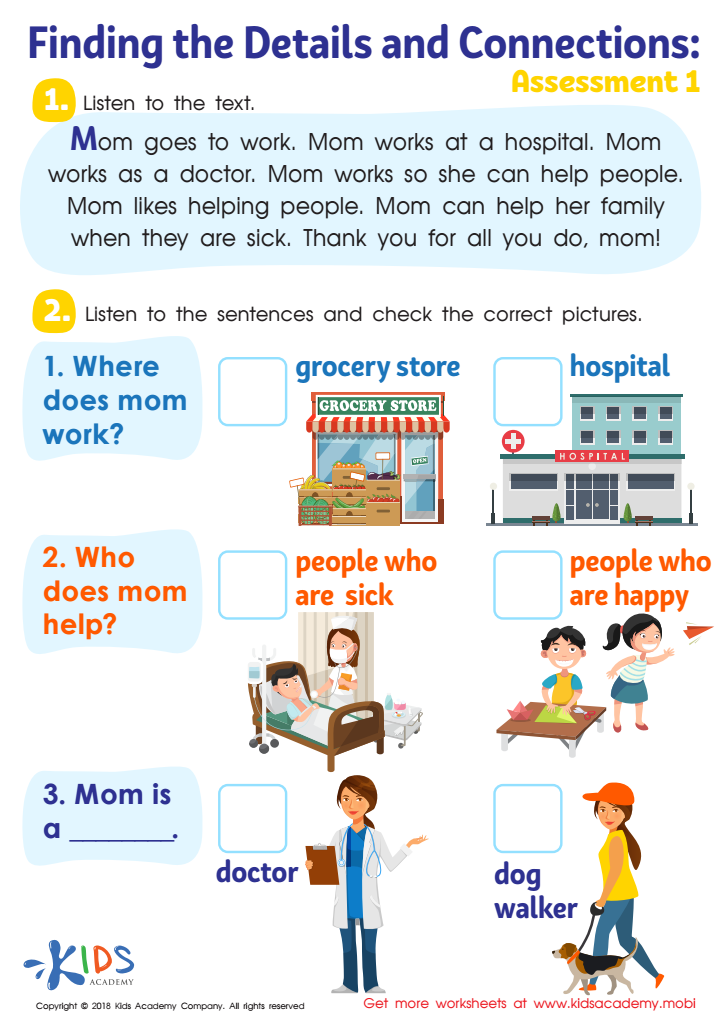
Finding the Details and Connections: Assessment 1 Worksheet
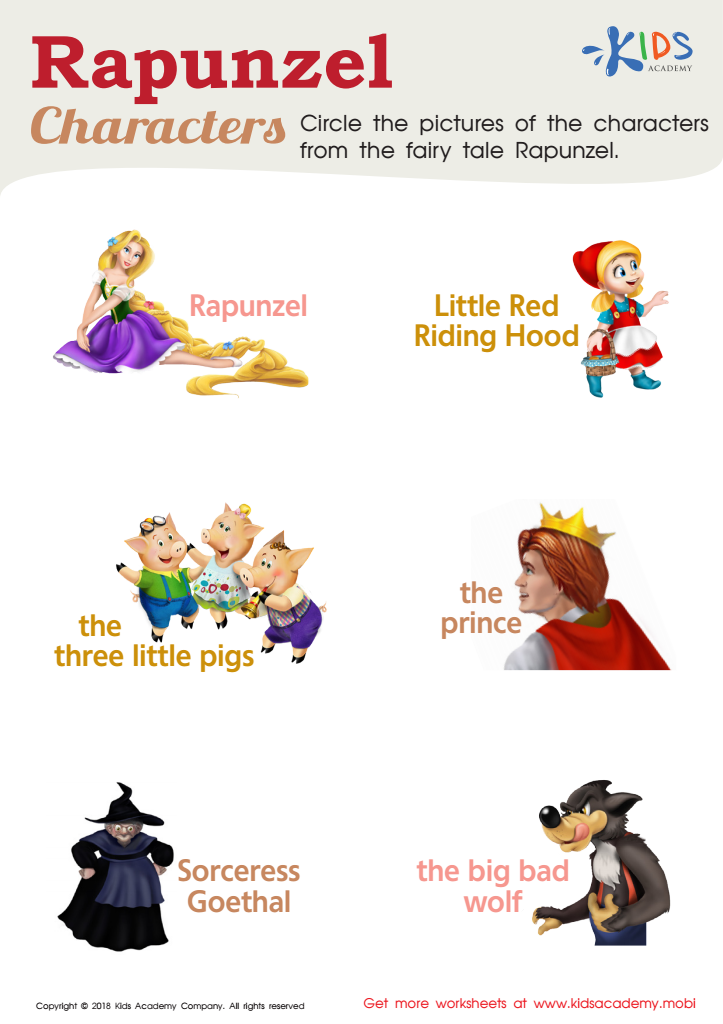
Rapunzel Characters Worksheet






.jpg)

Parents and teachers should prioritize analytical skills and normal reading fiction for children aged 4-5 because these formative years are crucial for cognitive development. At this stage, children's brains are remarkably adaptable and open to learning new concepts. Encouraging analytical thinking fosters problem-solving abilities, critical thinking, and a deeper understanding of interactions in their daily lives. Analytical skills enable children to recognize patterns, make connections, and understand the cause-effect relationships, laying a strong foundation for future academic success.
Introducing fiction at this age nurtures imagination and creativity while simultaneously enhancing language skills. Characters, plots, and settings in stories stimulate children's curiosity and wonder. Reading fiction aloud helps build vocabulary, comprehension, and listening skills. It's also a valuable bonding experience, enhancing emotional intelligence through empathy and understanding others' experiences.
Combining analytical skills with reading fiction can lead to integrated learning. When children analyze characters' motives or predict story outcomes, they practice applying logic in real-world scenarios. This dual focus helps them become critical thinkers, effective communicators, and better learners overall. By imparting these skills early, parents and caregivers equip children with tools that will benefit them throughout their educational journey and life.







