
Animal recognition Normal Science Worksheets for Ages 4-5
3 filtered results
Difficulty Level
Grade
Age
-
From - To
Subject
Activity
Standards
Introduce young learners to the fascinating world of animals with our engaging Animal Recognition Normal Science Worksheets for Ages 4-5. Designed to captivate and educate, these worksheets help preschoolers identify and learn about various animals, reinforcing their recognition skills in a fun, interactive way. Each thoughtfully crafted sheet features vibrant pictures, simple descriptions, and fun activities that promote curiosity and a love for science. Perfect for home or classroom use, these printable resources support early science education, enhancing observation skills and cognitive development in your little learners. Enjoy exploring the animal kingdom together!
Favorites
With answer key
Interactive
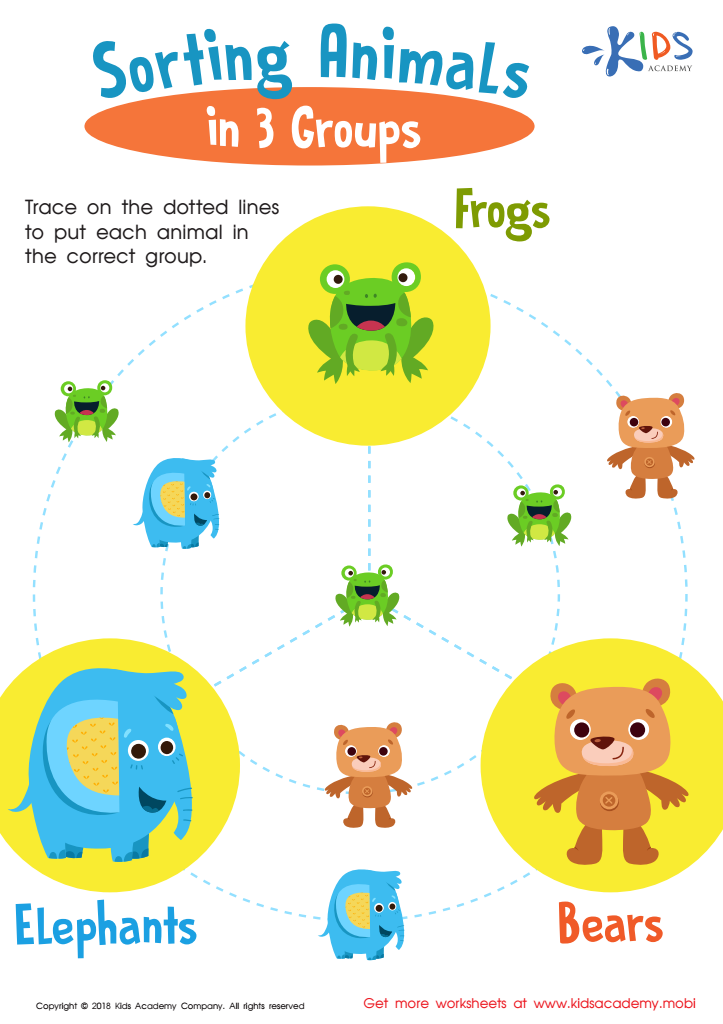
Sorting Animals in 3 Groups Worksheet
Let your kids practice and build skills for future Venn Diagrams with this PDF worksheet. They'll trace lines to match and group animals, and learn the differences and similarities of animals by categorizing with pictures and words. Plus, it's a great way to develop fine motor skills.
 Assign to My Students
Sorting Animals in 3 Groups Worksheet
Worksheet
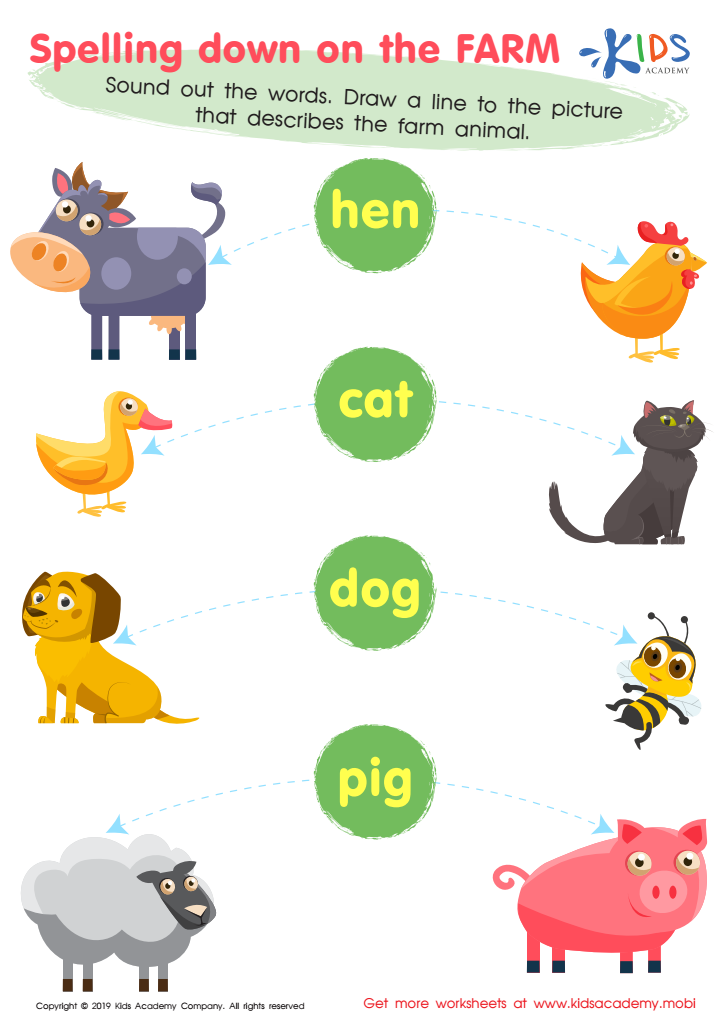
Spelling Down on the Farm Worksheet
Want to help your kids nail their spelling? Introduce them to this farm animal worksheet! Get them to look at the animals in the tracing sheet, name them and then sound out the words. Have them draw a line to the picture that describes it. You'll be surprised at how quickly their skills improve.
Spelling Down on the Farm Worksheet
Worksheet
Join Kids Academy for Free
Who is primarily going to use this learning content?







Animal recognition activities, categorized as "Normal Science" for children aged 4-5, hold significant value for both parents and teachers. At this developmental stage, children are naturally curious about the world around them, making it an ideal time to introduce basic scientific concepts through engaging, hands-on experiences. Familiarity with animals, their names, habitats, and traits forms a foundation for later scientific learning that can foster a lifelong interest in the natural world.
For parents, these activities offer a constructive way to spend quality time with their children while expanding their vocabulary and cognitive skills. Recognizing animals and articulating their characteristics can advance language development, comprehension, and enhance children’s ability to categorize and understand the diversity of life.
Teachers, on the other hand, can use animal recognition to align with early childhood education standards, emphasizing observational skills and critical thinking. It prepares young learners to make sense of more complex scientific ideas and encourages curiosity and confidence in asking questions and exploring answers. Furthermore, these activities frequently promote social-emotional learning by teaching empathy and respect for living creatures.
In summary, prioritizing animal recognition for children aged 4-5 supports a holistic approach to early education, combining language, cognitive, and social-emotional development in an accessible and enjoyable manner.







