Understanding directions Normal Science Worksheets for Ages 4-5
3 filtered results
-
From - To
Explore our "Understanding Directions Normal Science Worksheets" designed specifically for children ages 4-5! These engaging worksheets help young learners grasp important science concepts while enhancing their directional skills. With colorful visuals and simple instructions, kids will enjoy following directions as they complete fun activities that promote critical thinking and fine motor skills. Our thoughtfully crafted resources encourage exploration and curiosity about the world around them. Perfect for both classroom settings and at-home learning, these worksheets lay a strong foundation for future learning. Download and watch your child thrive as they discover the fun in science while mastering essential skills!
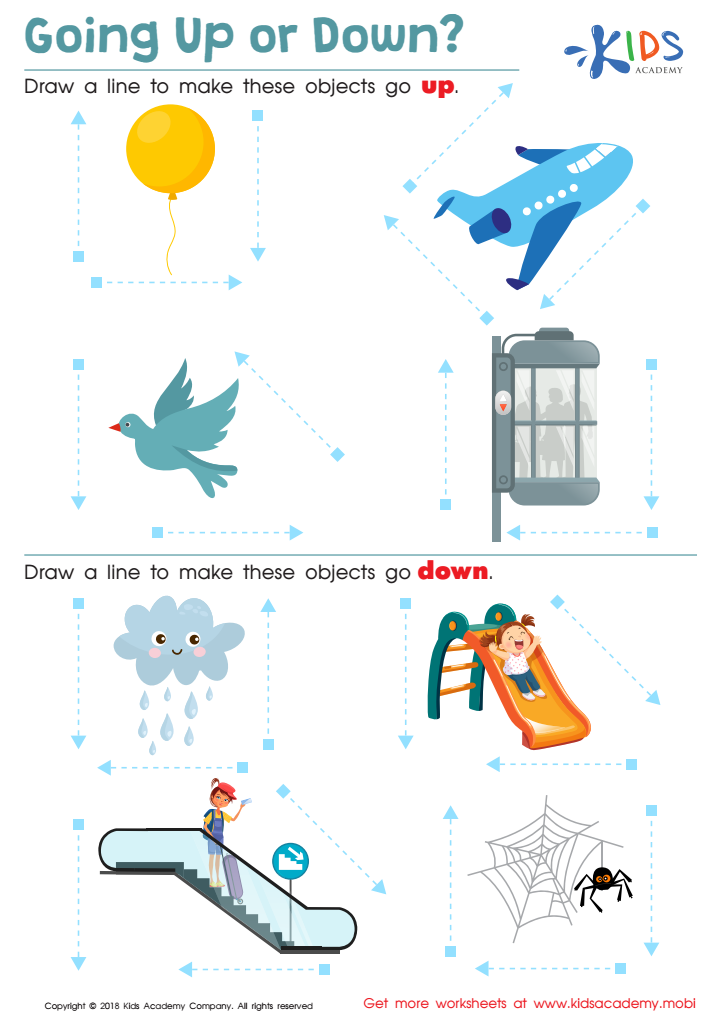
Going up or Down? Worksheet
 Assign to My Students
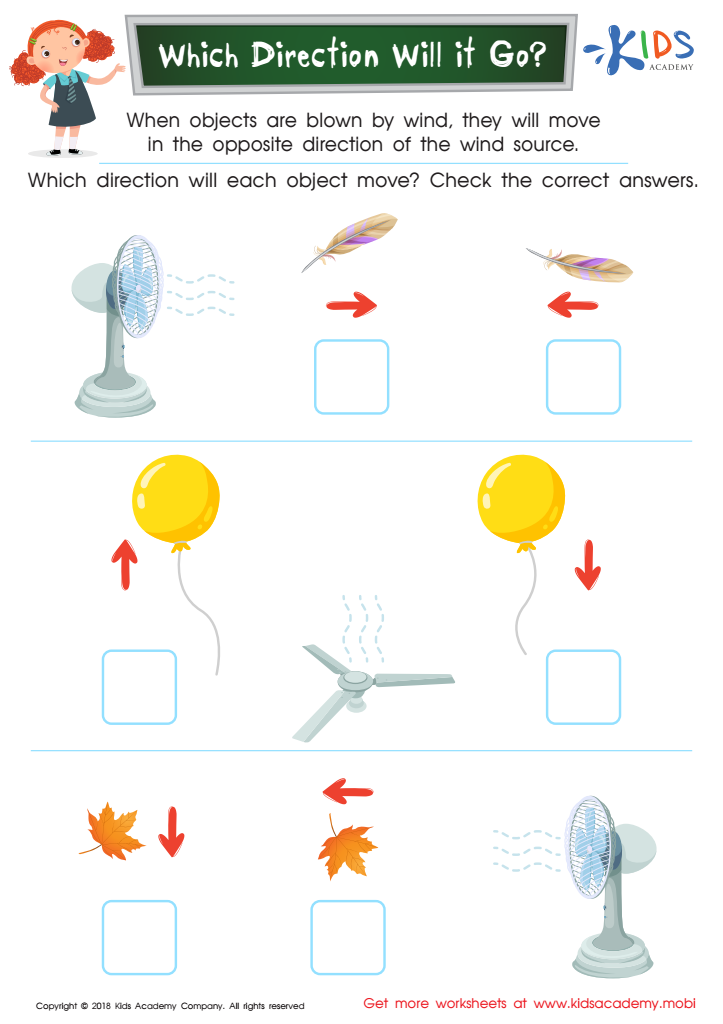
Which Direction Will it Go? Worksheet
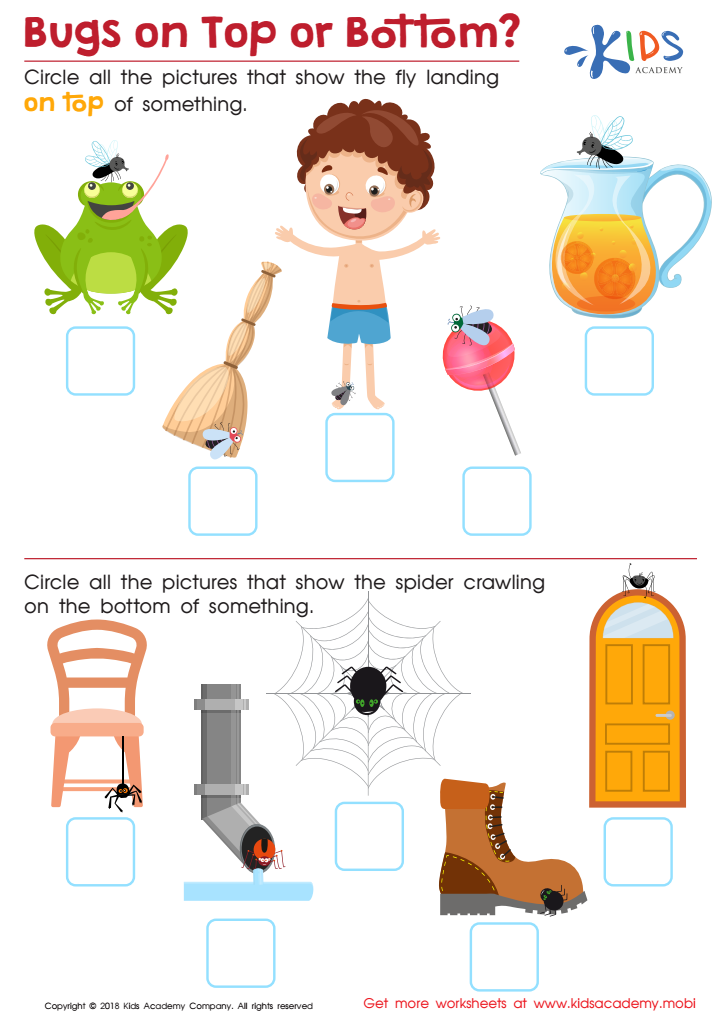
Bugs on Top or Bottom? Worksheet






Understanding directions in early science education is vital for children aged 4-5, as it lays the groundwork for their critical thinking and problem-solving skills. At this age, children are naturally curious and eager to explore the world around them. Science education helps them gain a better understanding of concepts like cause and effect, observation, and inquiry.
By caring about teaching these foundational skills, parents and teachers can nurture a child's imagination and creativity. When children learn to follow directions in engaging science activities, they develop cognitive skills that enhance their overall learning. This ability also fosters independence, as children learn to experiment and explore on their own.
Moreover, a strong emphasis on understanding directions in science can have lasting effects on a child’s educational trajectory. It promotes persistence and resilience as they encounter challenges in experiments or projects. Parents and teachers who prioritize these skills are often helping to cultivate future innovators and thinkers.
Incorporating simple, hands-on experiments not only excites children about science but also provides an interactive learning experience. By investing in understanding directions in early science, we empower the next generation to become informed, inquisitive, and engaged learners.







