Vocabulary development Normal Community Worksheets for Ages 4-5
4 filtered results
Difficulty Level
Grade
Age
-
From - To
Subject
Activity
Standards
Unlock your child's potential with our engaging Vocabulary Development Worksheets for Ages 4-5, designed specifically for normal community contexts. These worksheets focus on enhancing language skills through fun activities, helping young learners expand their vocabulary while exploring their surroundings. Ideal for early grade teachers and parents alike, the resources encompass relatable themes and scenarios that children encounter daily. Each worksheet promotes active learning through colorful designs and interactive tasks, making vocabulary acquisition both enjoyable and educational. Discover the perfect tools to support your child's early literacy journey and empower them to communicate effectively within their community! Visit us for more enriching content.
Favorites
With answer key
Interactive

Let's Go to the Library! Worksheet
How often does your child visit the library? If they're a frequent visitor, they'll breeze through this worksheet. It requires them to look at pictures that depict activities done in the library and activities not allowed. Ask them to circle the correct picture. It's a fun way to reinforce library knowledge.
 Assign to My Students
Let's Go to the Library! Worksheet
Worksheet
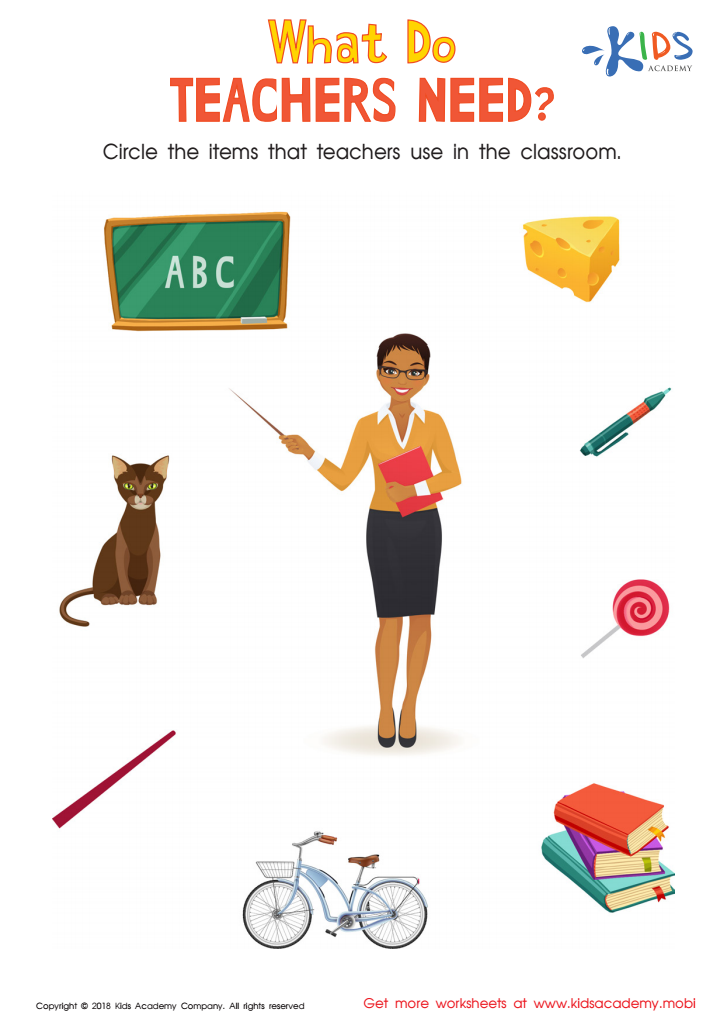
What Do Teachers Need Worksheet
This interactive worksheet tasks kindergarten students with identifying essential items a teacher needs in a classroom. They will be asked to circle items, helping them learn what teachers need to have in their classrooms.
What Do Teachers Need Worksheet
Worksheet
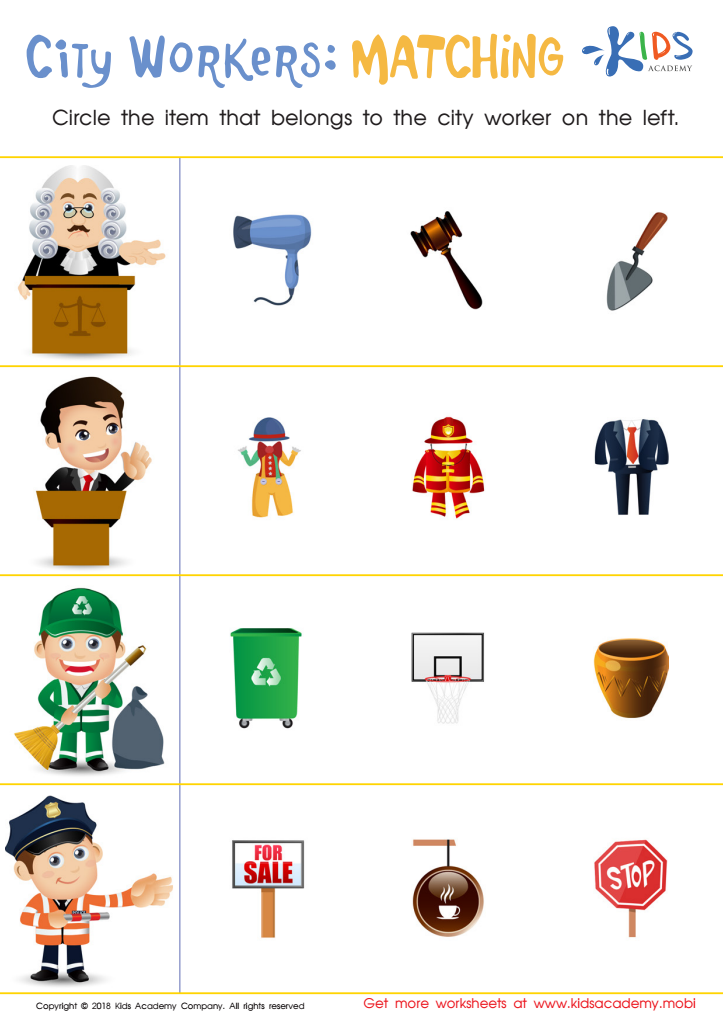
City Workers: Matching Worksheet
Examine the worksheet with your kid. Identify the individuals on the left and their jobs. Have your child circle the correct items on the right that pertain to the city workers. Help your child learn about city workers with this activity.
City Workers: Matching Worksheet
Worksheet
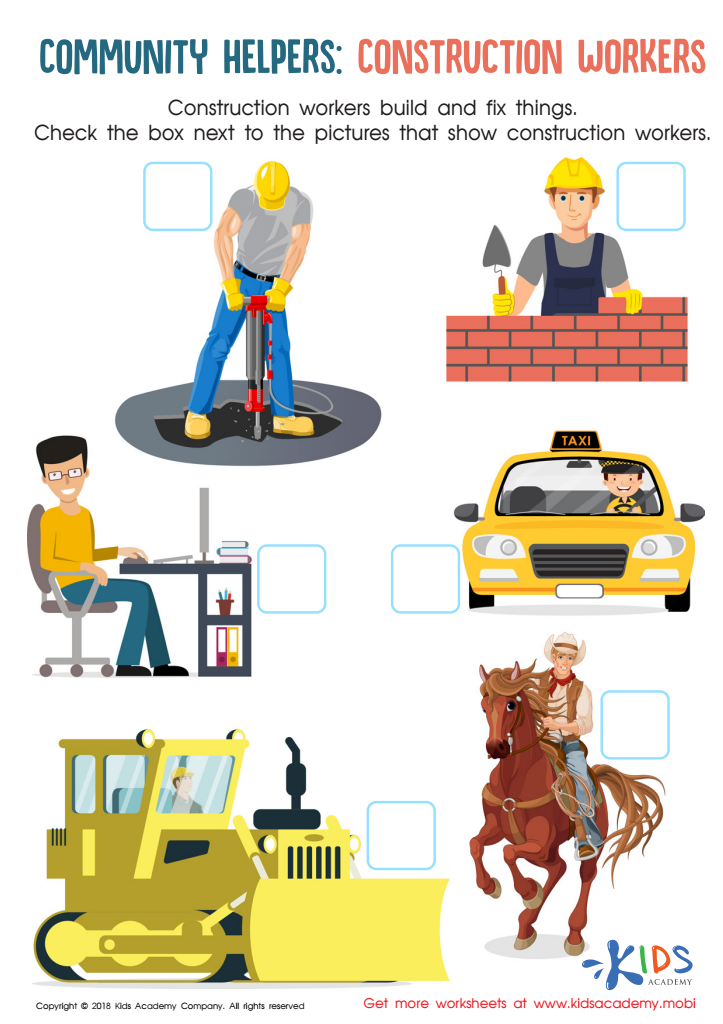
Construction Workers Community Helpers Worksheet
Construction workers build and repair roads, keeping them accessible for the community. Ask your child if they've ever seen one at work, and talk about what they do. Go through the worksheet together and check the pictures that show construction workers in action.
Construction Workers Community Helpers Worksheet
Worksheet
Join Kids Academy for Free
Who is primarily going to use this learning content?








Vocabulary development is crucial for children aged 4-5, as it lays the foundational skills for their future academic success and social interactions. During these formative years, children are rapidly absorbing language, and a rich vocabulary enhances their ability to express thoughts, understand others, and engage effectively in conversations.
Parents and teachers should care about vocabulary development because it significantly impacts a child’s literacy skills. A strong vocabulary helps with reading comprehension and writing proficiency, which are essential as children enter formal schooling. Moreover, children's vocabulary exposure influences their confidence and willingness to participate in classroom discussions, helping them build social skills and friendships.
Additionally, vocabulary development is intertwined with cognitive growth. Learning new words encourages curiosity, critical thinking, and problem-solving abilities. Engaging in conversations, reading together, and introducing new words in play scenarios are effective ways to promote this development.
Furthermore, focusing on vocabulary early is essential for bridging educational gaps. Children from diverse backgrounds may have varying levels of vocabulary exposure. By prioritizing vocabulary development, parents and teachers can support all children in reaching their potential and foster a lifelong love for learning. In short, a robust vocabulary empowers young learners, preparing them for success both inside and outside the classroom.