Weather Vocabulary Normal World Around Us Worksheets for Ages 4-5
3 filtered results
-
From - To
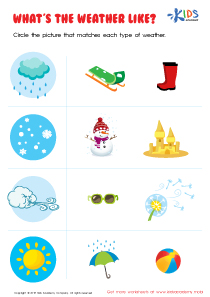
Introduce your little learners to the fascinating world of weather with our "Weather Vocabulary Normal World Around Us Worksheets" for ages 4-5. These engaging, printable worksheets are designed to enrich young minds with essential weather-related terms while bolstering their observation and critical thinking skills. As children explore sunny days, rainy forecasts, and breezy winds, they’ll build a strong vocabulary foundation in a fun, interactive way. Perfect for preschoolers, these activities will effortlessly blend learning with play, setting the stage for a lifetime of curiosity about the world around them. Start discovering and mastering weather vocabulary today!
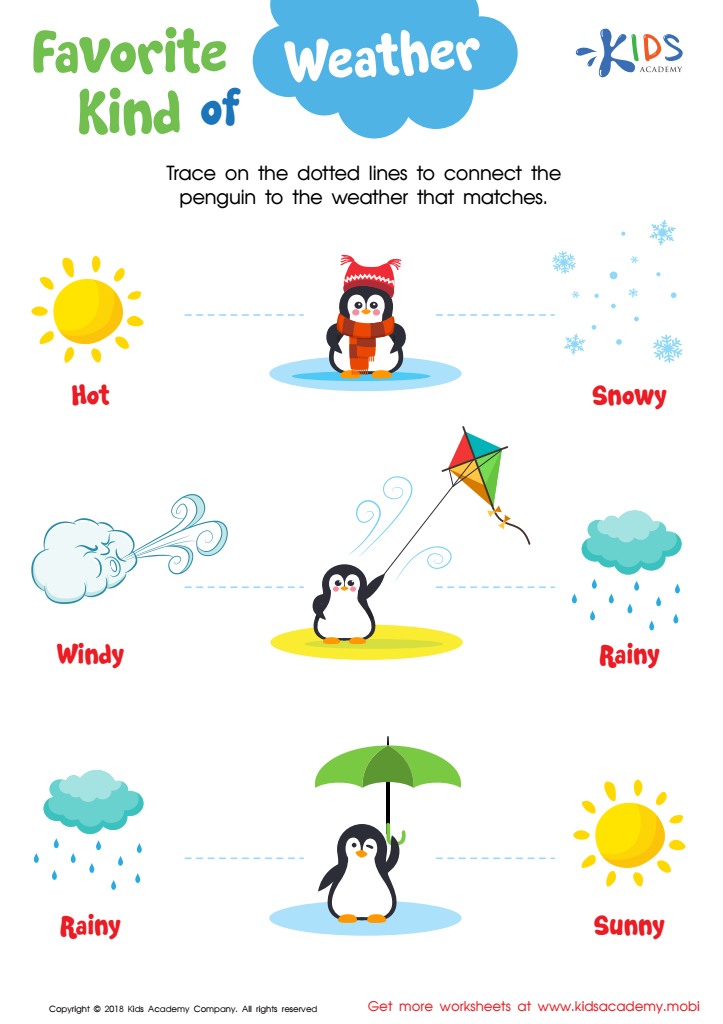
Favorite Kind of Weather Worksheet
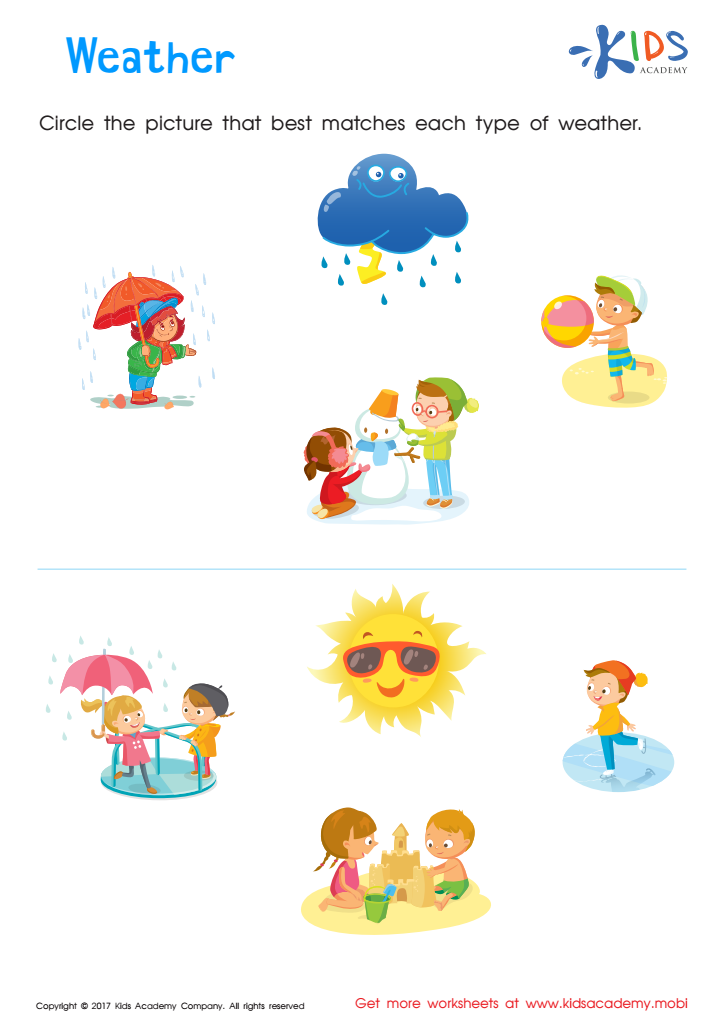
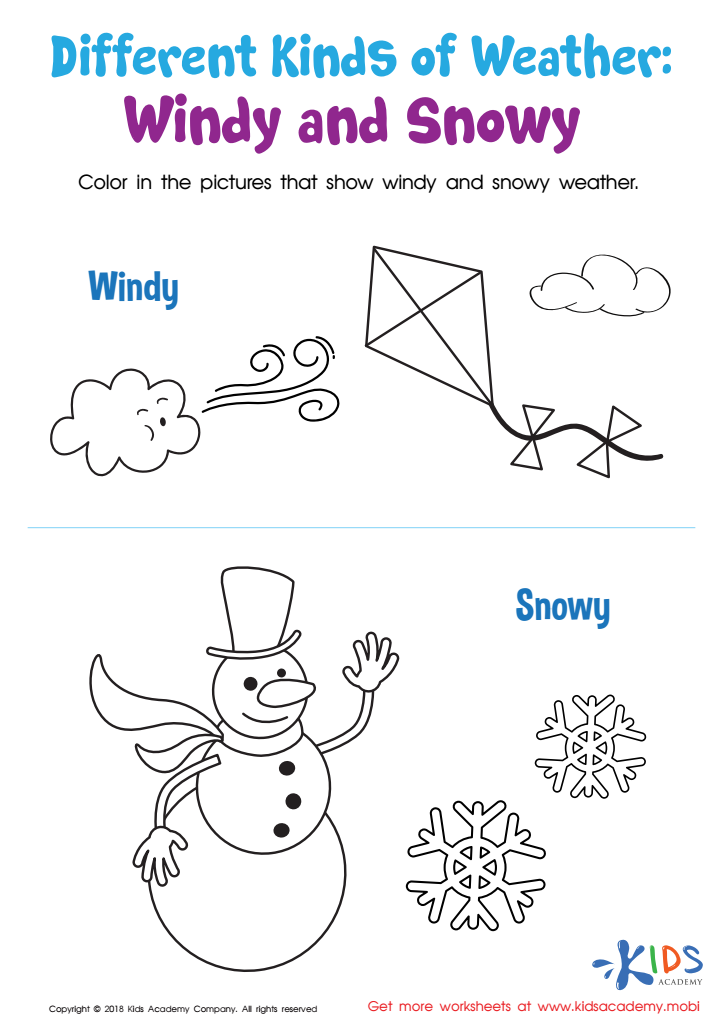
Different Kinds of Weather: Windy and Snowy Worksheet
 Assign to My Students







Understanding weather vocabulary is crucial for young children, ages 4-5, as it provides them with the language and knowledge needed to navigate and interpret the world around them. Since the weather affects daily activities and the immediate environment, having a grasp of basic weather terms enables children to make sense of their experiences.
From a developmental standpoint, learning weather vocabulary enhances cognitive skills such as memory, observation, and critical thinking. For example, recognizing words like "sunny," "rainy," "cloudy," or "windy" allows children to describe what they see and anticipate changes in their surroundings, fostering a sense of security and preparedness.
Weather vocabulary also supports early science education by introducing children to fundamental concepts about the natural world. When children discuss weather patterns, they develop an understanding of cause-and-effect relationships, such as how rain nurtures plants or why the sun feels warm. This foundational knowledge promotes a lifelong interest in science and the environment.
Moreover, incorporating weather vocabulary into conversations and teaching moments provides rich opportunities for language development. Learning new words, expressions, and concepts bolsters vocabulary, improves communication skills, and encourages curiosity and inquisitiveness.
In essence, early exposure to weather vocabulary equips children with essential language tools and knowledge, paving the way for better comprehension of their environment and fostering a deep, enduring curiosity about the world.